Monday, 29 December 2025

Karma by Sadhguru (Book Review: 4.75*/5) !!!


24th Book of 2025

Whenever I feel that my life is not on the right trajectory, the one thing my mind, body, and every element within me naturally gravitates towards is spirituality. And the one go-to person I trust the most on this subject is Jaggi Vasudev—Sadhguru. His previous books have had a deep impact on me, such as Inner EngineeringBody, Mind & SpiritAdiyogiDeath, and others. Finally, I picked up one of his most popular books, “Karma”, which carries the tagline A Yogi’s Guide to Crafting Your Destiny. This 336-page book was published in 2021, and I honestly don’t know how it took me four years to finally read and complete it.


This also marks my final book for the 2025 reading challenge of 24 books. I couldn’t have asked for a better way to complete this target than with such a soulful and spiritual read—one that added a new dimension and perspective to my thought process. We often use the word karma very casually, without reflecting on the deeper meaning and philosophy it carries. Sadhguru makes a sincere effort to explain how complex and layered the science of karma truly is, while simultaneously presenting it in a way that feels accessible and easy to grasp.


The narration and division of chapters are well executed, making it easier for readers to navigate the book without feeling overwhelmed. I read it in multiple sittings, and not once did I feel disconnected or lost despite the breaks. Kudos to both the author and the editor for maintaining such clarity and flow throughout the book.


Each chapter begins with a quote that is deep and impactful in its own way. These quotes gently push the reader to dive deeper into the chapter that follows. The way the book is structured reminded me of college textbooks—where we are first given the background, followed by definitions, and then gradually introduced to the complexity of the subject with each progressing chapter.


Sadhguru discusses karma from the perspectives of genetics and memory, which was particularly intriguing. It is surprising to learn how people from the same genetic lineage can experience certain benefits when even a few individuals within that lineage engage in karmic purification practices. Often, when Sadhguru begins a chapter, you may wonder how it connects to the book’s central theme—but as you keep reading, the connection unfolds naturally and convincingly.


He also provides context on how physical relationships contribute to bodily karma, explaining why ascetics traditionally avoid them in order to minimize karmic attachments. Similarly, he briefly explains why it is advised not to engage in multiple physical relationships. One entire chapter focuses on why the spiritual path must be walked alone—because only then can an individual fully work on releasing their own karma.


The Shankaran Pillai episodes are, as always, humorous and refreshing. In several chapters, there are sections titled Sadhana, which describe simple spiritual practices that can help release karma in everyday life. These sections add great value by emphasizing practical application rather than limiting the book to theoretical understanding alone.


Overall, this is one of the finest books by Sadhguru, offering profound insights into karma and various spiritual dimensions. I would rate this book 4.75 stars out of 5. It is definitely recommended.

 PURCHASE THE BOOK HERE

Thanks!


WRITING BUDDHA

Tuesday, 16 December 2025

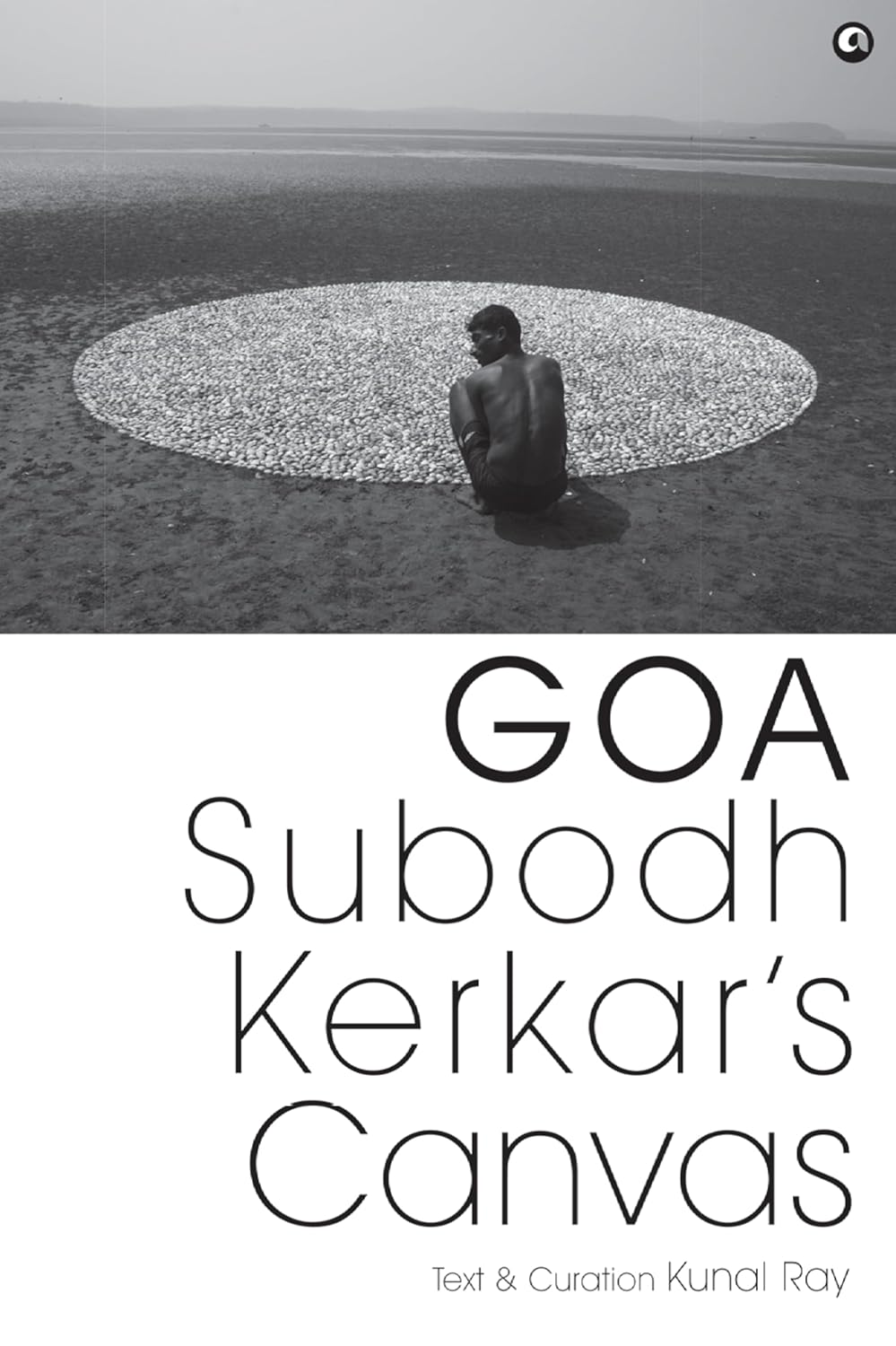
Goa : Subodh Kerkar’s Canvas by Subodh/Kunal Ray (Book Review: 4.5*/5) !!!


23rd Book of 2025

Some books are not meant to be read in a hurry; they ask to be absorbed the way one absorbs a place—slowly, through layers of memory, emotion, and silence. Goa: Subodh Kerkar’s Canvas is one such book. It does not merely document art; it meditates on a land, its waters, and the long shadows of its history. When I had received this book, I had thought that I would finish it within 15 minutes because of 35-pages text and rest of it displaying the artwork of the author but when I started reading it, these 35 pages took an hour for me to read. It sounded so poetic and serene that I really felt that the whole Goa and its history, silence, peace and ocean are running in front of my eyes.


Subodh Kerkar’s Goa is not the postcard paradise we are conditioned to admire. It is alive, bruised, playful, and deeply introspective. Through paintings, installations, and experimental works, Kerkar turns Goa into a living archive—one where beauty and discomfort coexist without apology. The book gently reminds us that art need not always soothe; sometimes, its role is to disturb just enough to awaken thought.


What makes this collection compelling is the artist’s refusal to separate aesthetics from responsibility. Alongside lyrical representations of houses, boats, and coastal life, there exists an unflinching engagement with darker chapters of Goan history—colonial violence, the Inquisition, and the exploitation that arrived with foreign rule. Yet, Kerkar never allows the narrative to become heavy-handed. There is wit, irony, and even playfulness—most memorably in works that reimagine historical figures through absurd, almost childlike symbolism.


Kerkar’s gaze is observant and democratic. Fisherfolk, food, shells, laterite, sand, and sea are all granted equal dignity. His choice of material—terracotta, crochet, ink, light, even living oysters—blurs the line between art and environment. The ocean is not a backdrop here; it is a collaborator. Nature breathes through these works, reminding us that culture and ecology are inseparable.


Reading this book feels like walking barefoot along a beach scattered with memories—some warm, some sharp. It urges the reader to look again at Goa, beyond tourism and nostalgia, and to recognize it as a space of resilience and resistance. In doing so, Goa: Subodh Kerkar’s Canvas becomes more than an art book; it becomes a quiet philosophical statement on place, identity, and the enduring power of creative dissent.


It has been for the very first time that I have read a book based on painting where the author’s intent and approach is mentioned first and then the book is full of his artwork that speaks for itself. The book made me feel like visiting author’s museum in Goa as well. If you have ever travelled to Goa or it’s your favorite destination like me, please get this book as your coffee table favorite. I give this 4.5* out of 5.

 PURCHASE THE BOOK HERE

Thanks!


WRITING BUDDHA


The Rabbit in the Moon by Meena Arora Nayak (Book Review: 3.25*/5) !!!


22nd Book of 2025

Some books do not rush to impress; they sit quietly beside you, like a wise elder, waiting for the reader to slow down. The Rabbit in the Moon by Meena Arora Nayak is one such book. Rooted in the timeless wisdom of the Panchatantra, it brings back stories many of us may have heard in fragments during childhood, yet presents them with a freshness that feels both comforting and relevant.


The book retells two powerful tales: The Tale of How the Bedbug’s Selfishness Cost the Louse Her Life and The Tale of How the Rabbit in the Moon Saved His Relatives. Though simple on the surface, both stories gently unfold deeper truths about life, choices, and consequences. The author’s language is lucid and unpretentious, allowing the moral to emerge naturally rather than being forcefully stated. This makes the reading experience meditative rather than instructional.


What stands out is how effortlessly these ancient stories mirror modern realities. The tale of the bedbug and the louse is a quiet reminder of how reckless behavior, impatience, and selfish ambition can destroy not only the wrongdoer but also the innocent. It speaks subtly about the dangers of bad company and poor judgment—lessons that remain painfully relevant in today’s fast-paced, outcome-obsessed world.


On the other hand, the story of the rabbit offers a soothing counterbalance. It celebrates intelligence, calm thinking, and moral courage over brute strength. The rabbit’s wisdom becomes a metaphor for leadership rooted in compassion and clarity, reminding readers that true power lies in presence of mind rather than physical dominance.


Meena Arora Nayak deserves appreciation for preserving the soul of the Panchatantra while making it accessible to young readers and equally meaningful for adults. The Rabbit in the Moon is not merely a children’s book; it is a gentle pause, a reflective read that invites us to look inward.


In a world that constantly urges us to run faster, this book softly asks us to think wiser—and that, perhaps, is its greatest strength. The biggest drawback of the book is its cost- Rs. 250 which I believe is quite much considering it has just two short stories for little Kids. Publishers must think something about this. Overall, I give this book 3.25* out of 5.

 PURCHASE THE BOOK HERE

Thanks!


WRITING BUDDHA

Monday, 15 December 2025

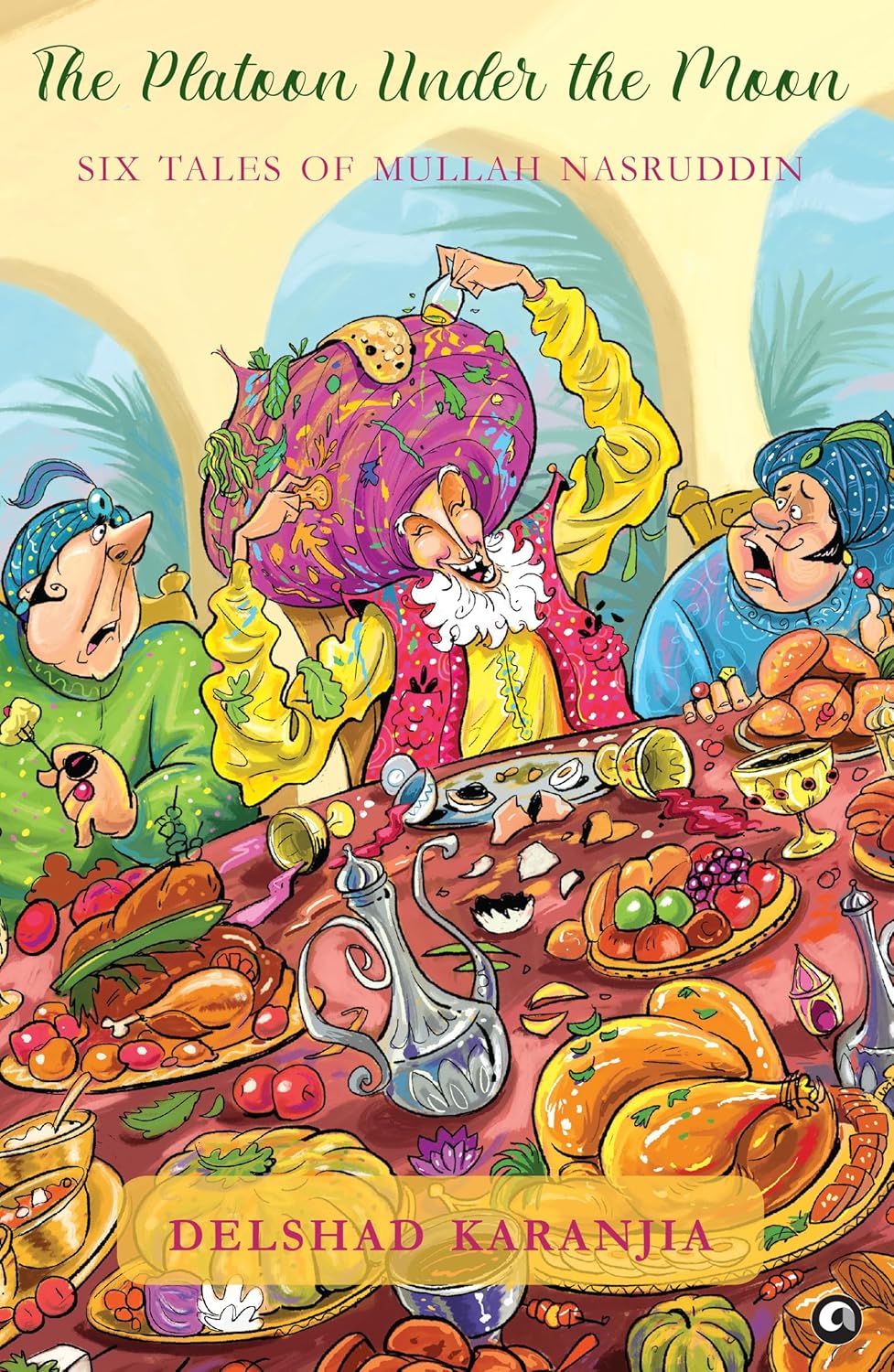
The Platoon Under the Moon by Delshad Karanjia (Book Review: 4.25*/5) !!!


21st Book of 2025

Another book by Delshad Karanjia was finished within half an hour, with a smile on my face. Another set of six tales based on the character of Mullah Nasruddin felt like reading funny WhatsApp messages shared by a friend. There are many books written for children with the intention of teaching values or lessons, but Delshad’s attempt here highlights why it is equally important to tell stories to children purely for fun, without attaching any strong educational agenda to them.


Of course, the narration, story structure, and language still help students learn the art of storytelling, writing, and visualization. However, the author’s primary intention—to simply make children laugh through these stories—is what makes this book special. In this collection, Mullah Nasruddin’s six tales are crafted in a way that showcases how cleverly he outwits both the good and the bad people in society.


Through two of the stories, we see how he troubles his teacher and a shopkeeper, while another story humorously conveys how he makes the host of a party realize that people should be valued more than their rich attire. The story that shares the book’s title is another amusing take, highlighting how Mullah sometimes chooses not to use his brain at all.


The illustrations are well done and can also encourage children to draw and add their own colours. These are stories that children will not only enjoy reading but will also eagerly share with their friends, spreading laughter all around. I give this book 4.25 stars out of 5.

 PURCHASE THE BOOK HERE

Thanks!


WRITING BUDDHA

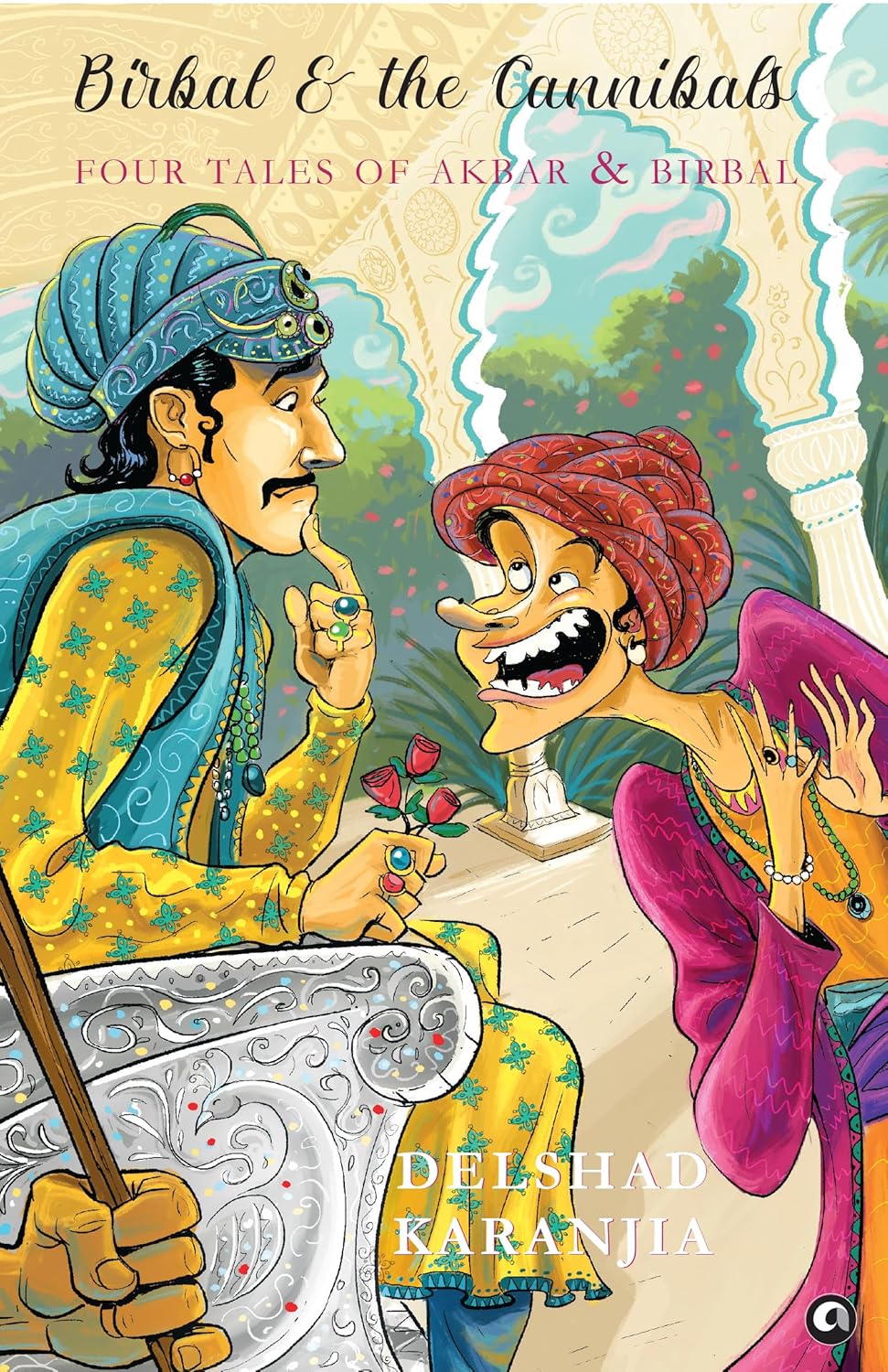
Birbal and the Cannibals by Delshad Karanjia (Book Review: 4.5*/5) !!!


20th Book of 2025

2025 has been a year of nostalgia and revisiting my childhood. I find myself picking up children’s books and, before gifting them to their future owners, ending up reading them myself. This time, I read “Birbal & the Cannibals,” which consists of four tales of Akbar and Birbal, beautifully rewritten and narrated by Delshad Karanjia. I am truly in awe of both the author and Aleph Publications for bringing these timeless stories back for the new generation.


All four stories in this book primarily highlight Birbal’s intellect and wit in an optimistic manner, making it an engaging read as one sees how he proves himself time and again. In one story, Akbar becomes furious after getting injured during a hunting expedition. However, the very same incident later saves him, and Birbal’s clever explanation of how these events ultimately helped both of them makes Akbar bow to him once again in respect.


In another story, the jealousy of the court members towards Akbar’s favoritism of Birbal is portrayed well. This leads to a situation where they are challenged to identify the real mother tongue of a man who can fluently speak multiple languages. When no one is able to determine his native language, Birbal comes up with a completely unique method to reveal the truth, once again proving in front of everyone why he is unmatched.


Similarly, one of the stories depicts how Birbal breaks a friendship to ensure that both the parents of the children involved are happy, so that the children can focus on their careers. This episode clearly reflects his sharp-mindedness and practical wisdom. The final story revolves around a painting competition between Birbal and Akbar’s brother-in-law, based on the theme of peace. Birbal’s artwork appears to be completely opposite to the theme at first glance, but the way he explains his perspective highlights the philosophical depth of his thinking. This story also helps children understand the deeper meaning behind art and creativity.


Overall, this book stands out as one of the best children’s books published by Aleph in recent times. I give it 4.5 stars out of 5.

PURCHASE THE BOOK HERE

Thanks!


WRITING BUDDHA


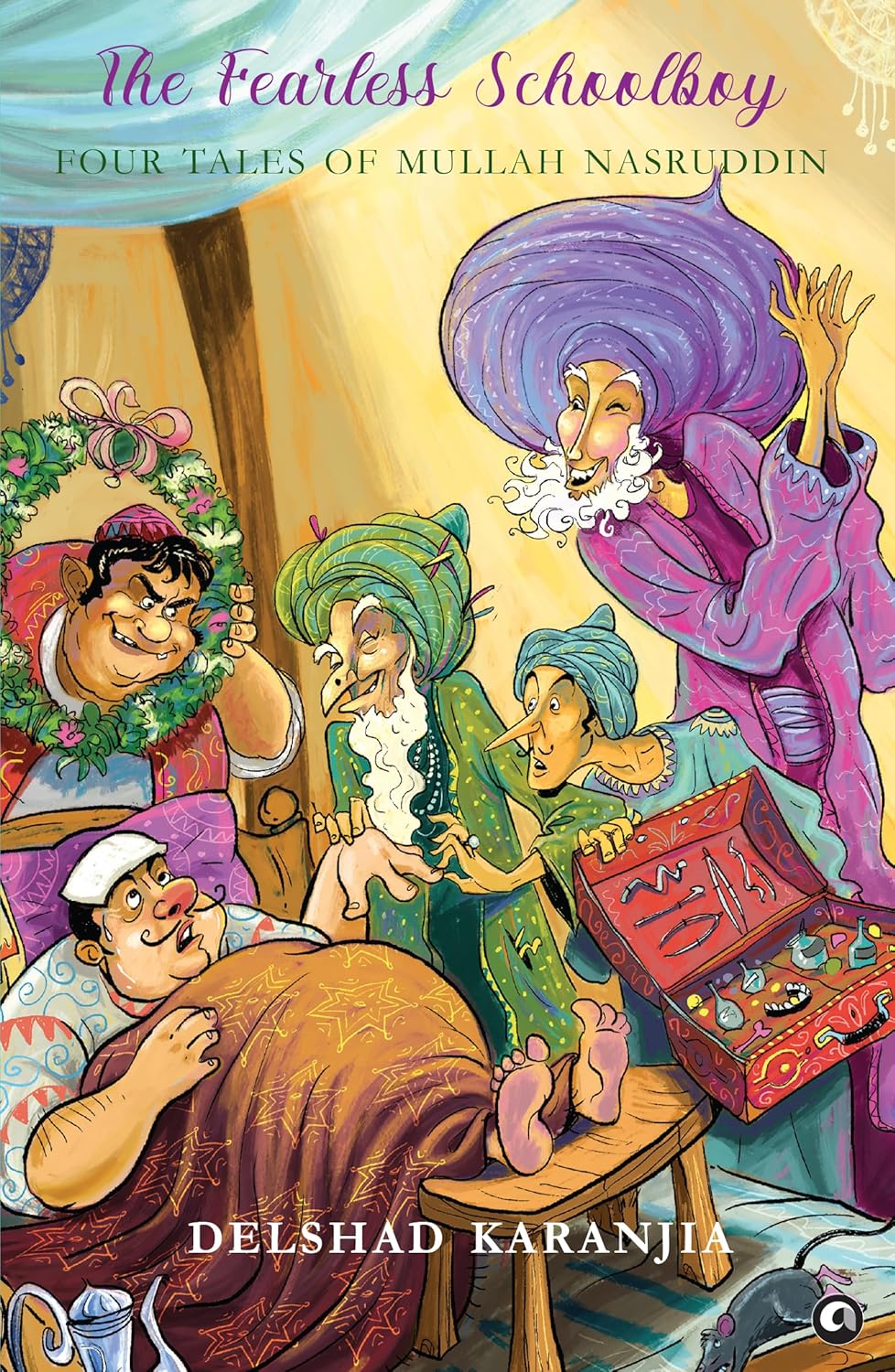
The Fearless Schoolboy by Delshad Karanjia (Book Review: 4.5*/5) !!!


19th Book of 2025

I have just completed reading Aleph Publication’s children’s book titled “The Fearless Schoolboy”, written by Delshad Karanjia. This is a short anthology consisting of four tales featuring Mullah Nasruddin. The book includes four different stories with Mullah Nasruddin as the main protagonist, portrayed through a humorous caricature where he acts smart in some stories and completely plays dumb in others. However, all the stories are designed to provide entertainment along with a meaningful message, helping children understand important life lessons through simple examples and storytelling.


The four stories included in this book are Cha and ChatNo Shortage of AdvicePreacher’s Block, and Planning Ahead. The first story did take me some time to adjust to the author’s writing style, but the remaining three stories completely engaged me as a reader. The second story, No Shortage of Advice, lives up to its title perfectly. It cleverly highlights how people never stop giving advice or pointing fingers, no matter what you do. The humorous tone of the story keeps the reader hooked throughout.


The third story, Preacher’s Block, is another amusing take on how the protagonist behaves lazily while performing his duties, assuming that no one is monitoring his actions. This continues until he is finally reprimanded. The moment an ultimatum is given, the sudden shift in his behaviour, driven by fear, leads to a funny and satisfying conclusion.


The fourth and final story, Planning Ahead, is once again a humorous tale where the protagonist follows his master’s instructions like a robot, without understanding the context. This blind obedience ultimately results in a laugh-out-loud ending.


Overall, this book is a great choice for children to enjoy light-hearted reading while also developing a sense of humour along the way. I give this book 4.5 stars out of 5.

 PURCHASE THE BOOK HERE

Thanks!


WRITING BUDDHA


Sunday, 14 December 2025

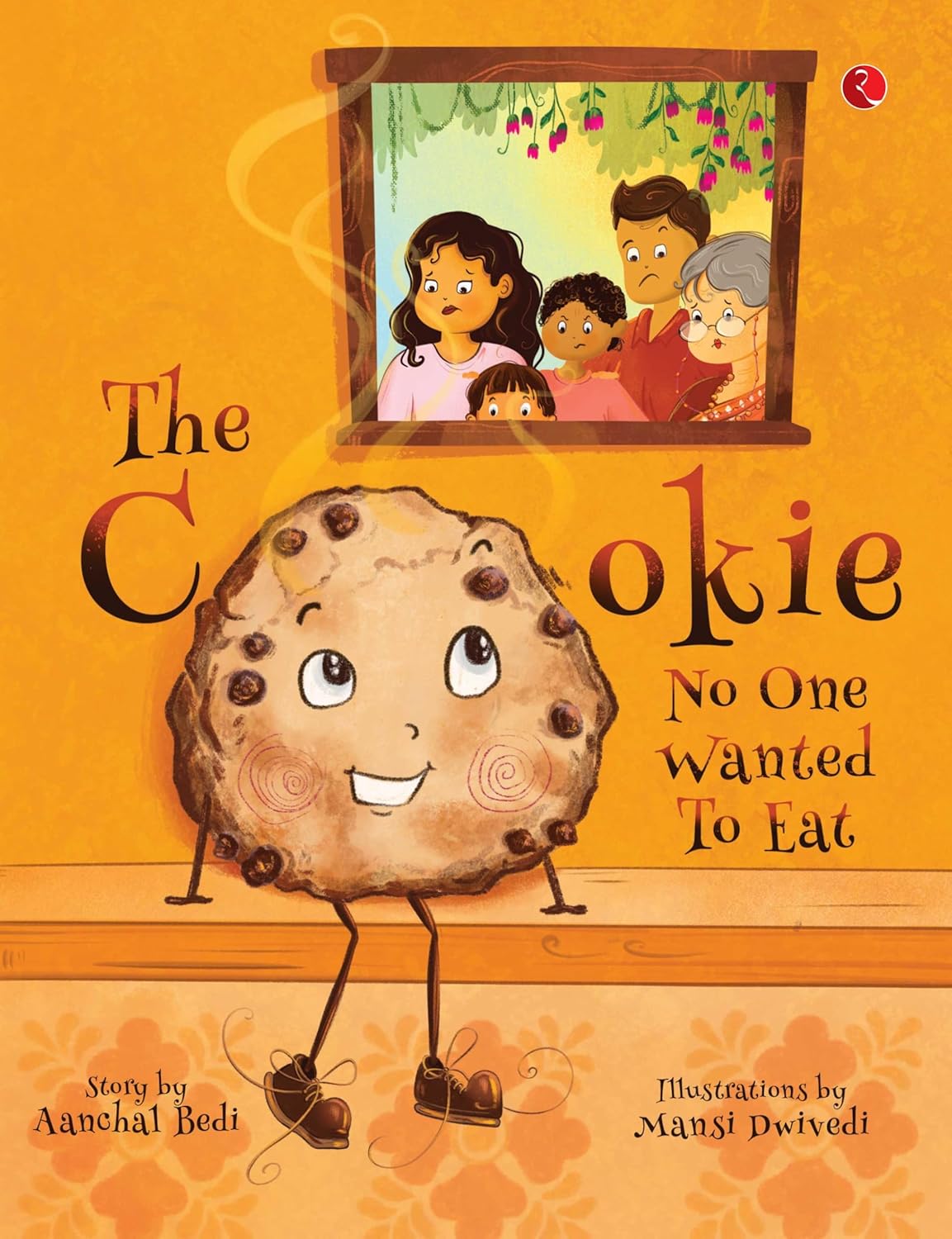
The Cookie No One Wanted To Eat by Aanchal Bedi (Book Review: 4.5*/5) !!!


18th Book of 2025

Children’s books often appear simple on the surface, but the best ones manage to carry messages that stay with readers long after the final page—sometimes even more so for adults than for children. The Cookie No One Wanted to Eat is one such book. It may be written for young readers, but its underlying message about self-worth, acceptance, and empathy feels relevant across age groups. The book is written by the authoress- Aanchal Bedi and beautifully illustrated by Mansi Dwivedi.


The story revolves around a freshly baked cookie that only wants to be loved and enjoyed. However, everyone who encounters it finds a reason not to accept it—too hot, too crunchy, too strong in flavour, or simply not to their liking. Through this repeated rejection, the cookie slowly begins to question its own worth. What works well here is how naturally the author mirrors a very human experience through a non-human character. The cookie’s confusion and disappointment feel familiar, even though the setting is playful and light-hearted.


The book uses rhyme effectively, making the narrative engaging and easy to read aloud. This rhythmic flow helps maintain a gentle pace, allowing children to stay attentive while absorbing the emotions embedded in the story. Without becoming heavy or preachy, the book subtly introduces the idea that not being accepted by everyone does not mean one lacks value. This is an important lesson, especially for children growing up in an environment where comparison and validation often begin early.


What I particularly liked is how the story does not rush towards its conclusion. The cookie’s emotional journey is given enough space to unfold, making the eventual realization feel earned rather than forced. When acceptance finally comes, it arrives not from those who initially rejected the cookie, but from those who truly needed it. This shift quietly reinforces the idea that belonging is not universal—it is personal.


The illustrations complement the narrative well, adding emotional depth without overpowering the text. The expressions, colours, and details help young readers connect with the cookie’s feelings, making the experience more immersive. Additionally, the activities, prompts and exercises at the end of the book are a thoughtful inclusion. They extend the story beyond reading, encouraging reflection, discussion, and emotional awareness—something parents and educators will appreciate.


Overall, The Cookie No One Wanted to Eat succeeds because it respects its young audience. It does not simplify emotions or offer unrealistic optimism. Instead, it acknowledges hurt, confusion, and rejection, while gently guiding readers towards self-acceptance and kindness. It is a book that can open meaningful conversations—about confidence, empathy, and the importance of being gentle with oneself.


This is a warm, thoughtful read that works equally well as a bedtime story or a classroom discussion starter. Sometimes, the simplest stories leave the deepest impressions, and this book is a good reminder of that. Overall, I give the book 4.5* out of 5. Get it for your younger ones!

PURCHASE THE BOOK HERE

Thanks

WRITING BUDDHA


The Legendary Diamantaire: The Life of Kirtilal K. Doshi by Bakhtiar K. Dadabhoy (Book Review: 4.25*/5) !!!


17th Book of 2025

Reading autobiographies and biographies has always been my biggest passion when it comes to reading, across all genres. Reading about individuals who have transformed entire scenarios with their vision, hard work, and attitude brings me a lot of confidence during tough situations in my own life as well. It becomes even more interesting and intriguing to read about personalities who have made an impact comparable to other inspirational figures but aren’t well-known due to limited media or PR coverage. One such biography that I read this week is “The Legendary Diamantaire”, written by Bakhtiar K. Dadabhoy, based on the life of Kirtilal K. Doshi.


The author very intelligently begins the book without directly diving into the birth details of the central figure. Instead, he starts by explaining how the diamond industry has functioned over centuries across the world and particularly in India. I liked how he described India’s prowess in this business and, more specifically, the unique contribution of the Palanpuri Jains. The way their skill set made even Austrians and other Europeans look towards Indians for their mastery in diamonds makes for a compelling opening to the book.


The author then moves into the life of Kirtilal’s father, Kalidas, who actually laid the foundation for the family. The journey of how he and his brother Shantilal started together under their father’s guidance is fascinating, as Kalidas himself emerges as an inspiring personality. Even in the early years, the family values come to the forefront—especially in the respectful and dignified manner in which the business was eventually divided between the two brothers. This explains why many family-run businesses in India have stood the test of time.


Gradually, the author introduces us to the pioneering journey of Kirtilal Doshi, detailing how he went on to build one of India’s most respected jewellery brands—Kirtilals, known for diamonds, gold, and fine craftsmanship—and how he played a crucial role in professionalizing and modernizing the Indian jewellery trade.


It is astonishing to learn how Kirtilal Doshi understood the power of branding and positioning a business during an era when formal marketing expertise was almost nonexistent. This speaks volumes about his mindset and business acumen. His contribution to the diamond industry, not just as a businessman but as a visionary, is remarkable—especially his role in shaping regulations, constitutions, institutions, SOPs, and ethical standards within the industry.


Similarly, the book highlights how his organization became the first to introduce several initiatives in the diamond industry—be it manufacturing advancements, branding strategies, or the use of laser technology for diamond shaping. These examples reflect the competitiveness and foresightedness that defined his leadership. The book clearly demonstrates how a family business can break traditional limitations and evolve into a global brand.


The final chapters shift focus from Kirtilal Doshi the businessman to Kirtilal Doshi the individual. The author provides insight into how influential personalities conduct themselves in their personal lives, with family and friends. His views on ethics in business make for an especially impactful chapter. Equally inspiring is his attitude during his later years, when his business faced difficult phases—rather than succumbing to despair, he supported his son by writing several motivational letters. His perspectives on marriage and the letter he wrote to his grandchildren about leading a balanced life after marriage further reflect his belief in maintaining a simple, peaceful, and healthy family life.


I could go on, but overall, this book is essential reading for students in business schools, professionals in corporate life, and even those who are retired. It teaches how an individual can pursue multiple roles in life, stay ahead of changing times, and yet not remain confined by traditional thinking. I would rate this 151-page book 4.25 stars out of 5.

 PURCHASE THE BOOK HERE

Thanks!


WRITING BUDDHA


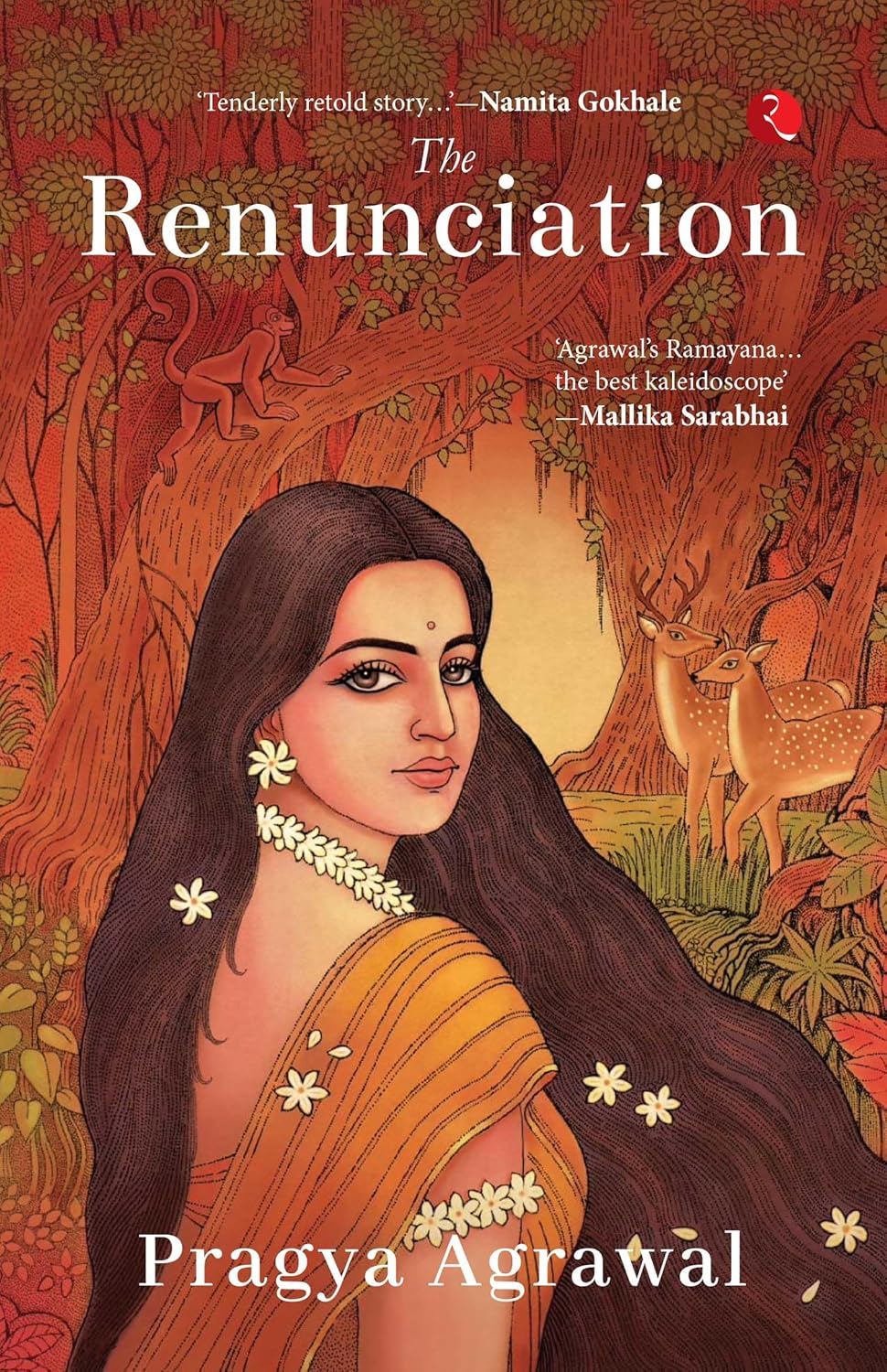
The Renunciation by Pragya Agrawal (Book Review: 3.75*/5) !!!


16th Book of 2025

Mythological retellings have become increasingly popular in recent years, but very few manage to strike a balance between reverence for the original text and a fresh, emotionally engaging perspective. The Renunciation by Pragya Agrawal succeeds in doing exactly that. Instead of retelling the Ramayana in its entirety, the book chooses to focus on one of its most painful yet profound chapters—Sita’s life after her exile, her motherhood, and her ultimate choice of dignity over belonging.


The story unfolds in the serene surroundings of Sage Valmiki’s hermitage, where Sita lives with her twin sons, Luv and Kush. Far removed from the grandeur of Ayodhya and the noise of royal expectations, this setting allows the reader to see Sita not as a divine symbol, but as a deeply human woman—one who loves fiercely, remembers painfully, and carries silence as both shield and strength. The author beautifully captures the emotional stillness of this phase of Sita’s life, making the forest almost a character in itself.


What stands out most in this retelling is the way Sita’s inner world is portrayed. Her suffering is not dramatized unnecessarily, nor is it reduced to victimhood. Instead, it is presented as lived experience—layered with love, disappointment, courage, and unwavering self-respect. The scenes between Sita and her sons are particularly touching. Her maternal instincts, her protectiveness, and her quiet fear of the truth one day surfacing are written with great sensitivity. These moments give the book its emotional core.


The narrative gains further depth when Valmiki teaches Luv and Kush to sing the Ramayana, unknowingly narrating the life story of their own parents. This irony is handled with subtlety, allowing readers to feel Sita’s internal conflict without overt exposition. The past, which she has carefully sealed away, slowly begins to resurface—forcing her to confront memories she never truly escaped.


What I appreciated most about The Renunciation is that it does not attempt to judge the epic or its characters. Lord Ram is not diminished, nor is Sita elevated through comparison. Instead, the book gently highlights the emotional gaps within the larger narrative—spaces where Sita’s voice was often unheard. Her final act of renunciation is portrayed not as defeat, but as a conscious, powerful choice—one rooted in self-worth and inner clarity. The few pages are very emotional and once the book ended, it wasn’t easy for me to keep it aside and forget. It took me lot of days to come in terms with it.


Talking about few drawbacks, I feel that the sections of the story have been over-described which makes it boring to read the complete sentences at times and you feel like skipping few lines because they don’t take the story further. Similarly, I feel that there is lot to Sita’s character which could have been explored but kept away from the scope of the book which makes the readers feel incompleteness to her complete journey.


Overall, The Renunciation is a thoughtful, emotionally resonant retelling that invites readers to pause and reflect. It is less about spectacle and more about silence, endurance, and the courage it takes to let go. For readers who enjoy mythology told through introspection rather than grandeur, this book is a rewarding and memorable read. I’ll give this book 3.75* out of 5.

 PURCHASE THE BOOK HERE

Thanks

WRITING BUDDHA


The Four Avengers Versus the Elephant: Two Tales from the Panchatantra by Meena Arora Nayak (Book Review: 4*/5) !!!


15th Book of 2025

Reading children’s books can be quite interesting when you want to read something light while having tea or coffee at someone’s home—especially when they have kids for whom such books have been purchased. I took advantage of a similar opportunity and read a book titled “The Four Avengers Versus the Elephant” published by Aleph. The book consists of two tales from the Panchatantra, retold by Meena Arora Nayak.


The book is meant for children above the age of nine, as the author has ensured that even though her stories are targeted at kids, they are written in a way that imparts knowledge beyond the basics. I, as someone in my mid-30s, could also find wisdom in the way these stories are narrated. Nayak uses conversations between animals as a medium to deliver life lessons and Chanakya-like insights. Many dialogues are written in a manner that resembles explanations of ancient Sanskrit shlokas.


The first story focuses on the qualities and responsibilities of a king. Within the same tale, the author highlights how a vulnerable animal like a hare can outsmart a mighty lion who is ready to kill and eat him. The way the hare leads the lion to his own death is told very intelligently and gives hope to anyone who considers themselves weaker than others.


Similarly, the second story narrates how four small animals and insects unite to defeat an elephant who had been troubling one of their friends. This story beautifully signifies how the power of unity can bring even the most powerful to their knees.


Overall, I loved reading this book. I rate it 4 stars out of 5. I just feel that children’s books like this shouldn’t be priced as high as they often are — hopefully, publications can find a way to make them more affordable.

 PURCHASE THE BOOK HERE

Thanks!


WRITING BUDDHA

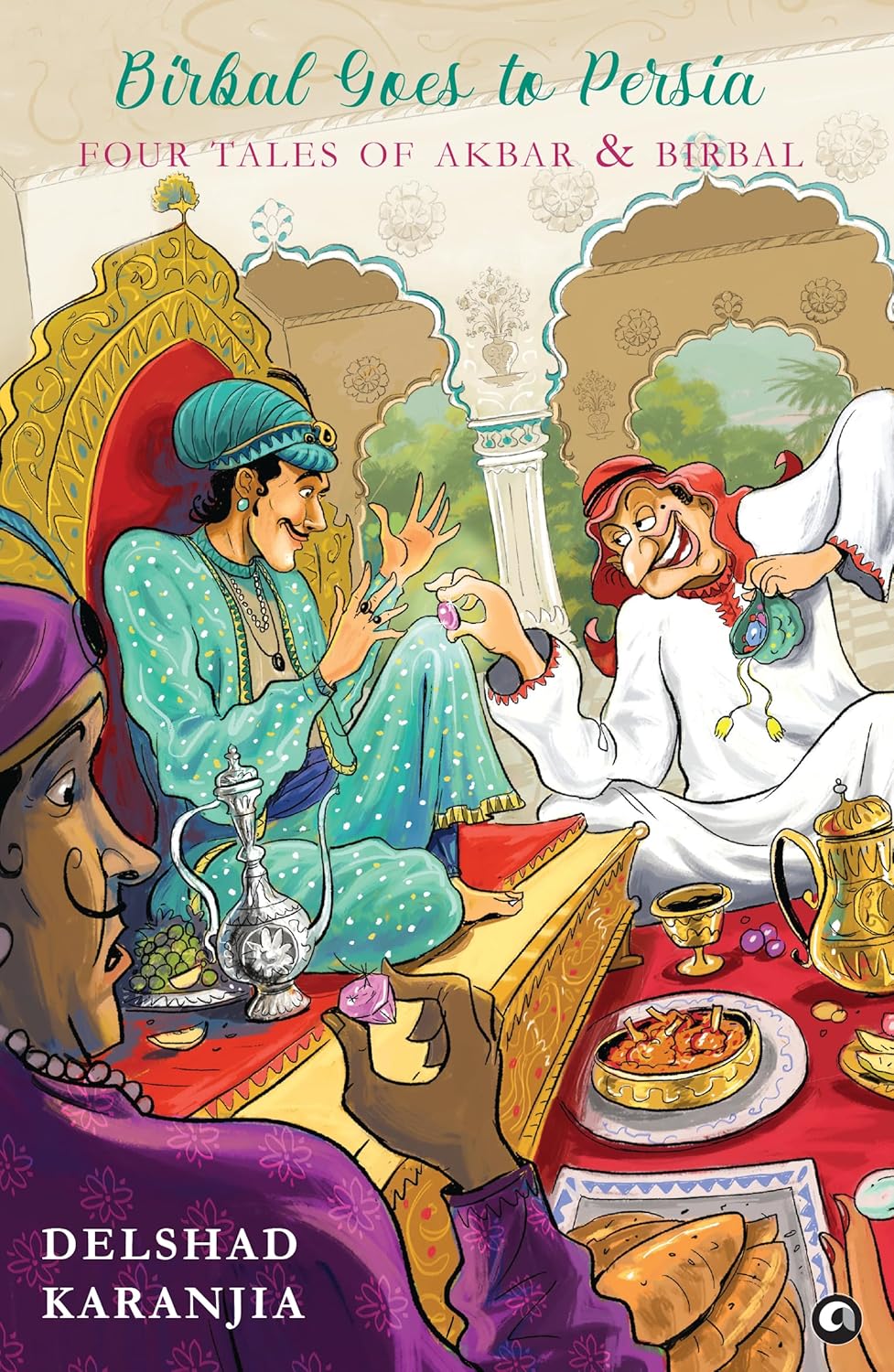
Birbal Goes to Persia: Four Tales of Akbar and Birbal by Delshad Karanjia (Book Review: 4*/5) !!!


14th Book of 2025 

I remember my father instilling the habit of reading books in me right from my primary schooling days. One of the most popular stories during those years was the Akbar-Birbal tales. I used to think that kids these days wouldn’t be reading about Akbar and Birbal, but I was pleasantly surprised when I found a few such books at one of my relatives’ homes. It took me just 20 minutes to complete this book titled “Birbal Goes to Persia,” which consists of four tales of Akbar and Birbal — all distinct from each other. The stories have been retold by Delshad Karanjia, who has been a journalist by profession.


All the stories are witty, funny, and humorous, and each provides a life lesson at the end. The first story in the book, A Lesson for the Emperor, tells a tale where Birbal gives a profound lesson to Akbar, making him realize that everything in life is temporary and that worldly possessions do not belong to anyone permanently, as every person is merely passing through Earth and must die one day.


The second story, Birbal and the Shah, is another example of Birbal’s cleverness, where he manages to impress both his own king as well as the ruler of another country by complimenting each of them in their respective presence — changing the perspective of his statements in both instances.


The third story, Catching Thieves, actually tells two different tales where Birbal faces the challenging task of finding a thief. He uses his intelligence and gives a task to the suspects, through which he cleverly identifies the real thief without conducting any formal investigation.


The fourth story, A Tax on Fools, serves as a fitting conclusion to the book. It narrates how Birbal challenges Akbar’s idea of imposing a tax on fools and, in turn, proposes imposing a tax on wise people instead. This was the first time I read this particular story, and I really liked it.


Overall, the book is engaging, and children are definitely going to enjoy it. I give it 4 stars out of 5.

PURCHASE THE BOOK HERE

Thanks!


WRITING BUDDHA


Sunday, 9 November 2025

Will India Get Rich Before It Turns 100? : A Reality Check by Prosenjit Datta (Book Review: 3.5*/5) !!!


13th Book of 2025


Anyone who regularly reads newspapers knows how often we come across discussions about India’s economic growth, its vision of becoming a developed nation, and the dream of achieving this by 2047. Most of these articles, however, feel incomplete—they leave us wondering how this progress is actually measured and when it could realistically happen. That’s exactly what Prosenjit Datta attempts to explain in his insightful book “Will India Get Rich Before It Turns 100?” Published by Aleph Book Company, the book carries the apt tagline “A Reality Check.”


This 120-page analysis is divided into three main parts. The first section explores how predictions are made, how a nation attains the “developed” status, and the role of assumptions, macroeconomic modeling, and optimism. The second section focuses on critical issues such as whether India’s demographic dividend is a boon or a curse, job scarcity, and recurring factors behind India’s economic slowdowns—wars, global disruptions, the pandemic, demonetization, and GST. The third and final section outlines policy direction and economic stability, offering Datta’s thoughts on how India might still reach its ambitious 2047 milestone.


Datta begins the book on a witty and relatable note, recalling how politicians once made short-term predictions for 2020 or 2025 but, after facing uncomfortable questions about unmet goals, have now safely shifted their forecasts to 2047 and beyond. It’s a clever and engaging start—especially for a book tackling such an academic and socio-economic topic.


Throughout the book, Datta explains various economic ratios and calculation methods used by institutions to assess India’s current and future standing. He insightfully argues that GDP alone cannot define a country’s success, as it fails to capture citizens’ quality of life and everyday realities. The book also introduces readers to several useful abbreviations and concepts that broaden one’s understanding of how multiple factors determine a nation’s growth trajectory.


One of the recurring themes Datta emphasizes is the absence of an updated census for more than a decade, which hinders effective policymaking. He also discusses Artificial Intelligence (AI), acknowledging both its overhyped expectations and its transformative potential. Impressively, Datta remains objective in his tone—he points out how under both Congress and BJP regimes, India’s economy has seen phases of stagnation rather than the continuous upward trajectory one would expect.


Overall, Will India Get Rich Before It Turns 100? offers meaningful insights and a fresh perspective on India’s developmental challenges. That said, I felt the author could have explored more dimensions to strengthen his arguments—perhaps by referencing other economists or reputed media analyses. Dividing chapters by major sectors like BankingAgricultureITManufacturingRetail, and MNCs could have further clarified how each contributes differently to India’s economic journey.


This book is a quick yet impactful read for anyone curious about India’s growth storyeconomic policy, and the country’s long-term vision.
I would rate it 3.5 out of 5 stars.

 PURCHASE THE BOOK HERE

Thanks!


WRITING BUDDHA

Thursday, 30 October 2025

Pandeymonium: Piyush Pandey on Advertising (Book Review: 3.5*/5) !!!


12th Book of 2025


We lost one of the most popular faces of India, Mr. Piyush Pandey, last week. I had always known him as an advertising guru, often coming across his newspaper articles where he would explain how he conceptualized a recent viral advertisement. Reading multiple testimonials about him last week made me curious to learn more, which led me to pick up his autobiography titled Pandeymonium, released back in 2016. I regretted not reading it then, as it was the start of my own career — a time when I could have applied many of the principles Piyush discusses in this book.


This 264-page autobiography is written with complete honesty, where you can feel that whatever Piyush shares about himself is transparent and real. He doesn’t try to pretend or hide the behind-the-scenes moments that went into creating some of his most loved advertisements. Thankfully, most of the famous ads from my childhood — such as Fevicol, Asian Paints, Vodafone, Ponds, Center Shock, Close-Up, Cadbury, etc. — were released by the agency Ogilvy, of which Piyush was a part. Hence, reading about their ideation, execution, release, and success stories is both entertaining and nostalgic.


The author begins the book by briefing us about his family, going into detail and helping us get acquainted with each of his family members — parents and siblings. He had a large family, and he explains how their respective professions, ideologies, and interactions served as no less than Google for him. Similarly, he shares how his train journeys and cricket-viewing experiences taught him the nuances of human behavior, which later helped him immensely in drawing inspiration from real life and converting those moments into reels.


In the corporate world, people often talk about the varied experiences of working in a corporate setup versus a family-based organization. Many see family businesses as undesirable workplaces. Piyush busts this myth by narrating an experience where a puja was organized for an employee leaving for better opportunities elsewhere. He also references Nita Ambani’s working style, mentioning how she ensures everyone’s comfort and participation before proceeding with serious discussions during meetings.


Along similar lines, he explains how tough it is to work with Bollywood actors, as most of them don’t arrive on time and show little interest in understanding the organization or its vision through the advertisement. He cites the examples of Mr. Amitabh Bachchan and Aamir Khan, who are extremely professional and ensure they fully understand the product’s background and the intent of the advertisement before beginning the shoot.


The author shares several professional and corporate insights that I truly enjoyed reading and highlighting. He defines what a liberal manager truly is and how such leaders can achieve targets without being assertive or aggressive. His take on various aspects such as MNC culture, the awards and rewards system, milestones, and organizational hierarchies is enlightening and provides valuable insights that can be implemented in one’s own work life.


Talking about the drawbacks — I must say that the first half of the book is very personal, where we get to know Piyush, the human being. However, the second half loses that essence and begins to feel more like a promotion of his organization rather than his personal story. It becomes slightly monotonous after that. The last 25–30% of the book may not appeal to a general reader, as he briefly discusses his colleagues, many of whom are not known to the public.


Similarly, I was expecting him to discuss advertising as an expert, but his bias toward content generated by Ogilvy is evident, as he doesn’t cover or mention advertisements created by other agencies. There is also no mention of his personal life, family members, or friends in the second half of the book, which leaves you feeling deprived of knowing more about the man behind the professional persona.


Overall, this is a fine book — one you’ll enjoy reading, though it leaves you wanting more and never quite provides a fully satisfying experience. I would rate this book 3.5 stars out of 5.

PURCHASE THE BOOK HERE

Thanks!
WRITING BUDDHA

Tuesday, 28 October 2025

Lead Smart in the AI Era by Amit Kumar Jain/Surbhi Jain (Book Review: 4.5*/5) !!!

 11th Book of 2025


Whenever I consider reading a non-fiction book, it generally falls into typical sections such as autobiography/biography, self-help, or spiritual books. Very rarely does an author attempt to write on a niche topic that draws from vast experience and extensive research. It becomes even more valuable when the topic relates to your own profession or area of interest. I recently got my hands on Amit Kumar Jain and Surbhi Jain’s new book titled Lead Smart in the AI Era, published by Rupa Publications, spanning around 244 pages.


Artificial Intelligence has been the hottest topic for the last two years, involving everyone in one way or another—directly or indirectly. Everyone wishes to learn about it. But rather than diving into its technical terms and jargon, one needs to understand how technology and innovation have evolved over the years and become a part of our lives. This makes it easier for us to decipher how to adopt AI without being intimidated by it. The author duo guides us through this, chapter by chapter, explaining numerous concepts and the evolution of technologies, making this book a perfect page-turner. I had never imagined that this book would turn out to be so engaging that I would end up reading it as swiftly as a fiction novel.


The authors emphasize that in today’s volatile, uncertain, complex, and ambiguous (VUCA) world — one that’s further transformed by artificial intelligence — business leaders must leverage digitalization to its fullest potential while remaining vigilant against growing risks such as fake data, cyberattacks, and fraud. They underline that in this new era, data and AI have become the defining factors of success. However, truly mastering them goes beyond merely collecting and analysing information; it also requires the wisdom to recognize and address the biases hidden within.


After every chapter, the authors provide context on how VUCA leaders need to act upon respective areas of technological advancement to reach a stage where they can adopt AI seamlessly. Following the discovery of electricity, the authors take us back in time to show how it inspired multiple innovations — proving that humanity always explores more solutions after one major breakthrough.


The case studies of Kodak and Blockbuster — and how they lost their edge by failing to adapt to emerging technologies — are presented in a way that feels fresh and engaging. Even though these stories are well known, the authors’ narration makes them feel as though you’re encountering them for the first time.


The section on the AI vs EI (Artificial Intelligence vs Emotional Intelligence) debate is particularly thought-provoking. The authors highlight how no algorithm or robot can truly replicate human emotions, biases, or the ability to make value-based decisions.


The comparison between the delayed identification of the cholera epidemic in the past and the real-time tracking of a modern-day pandemic using AI-driven tools is both powerful and eye-opening. The authors also delve into the concept of Responsible AI, referencing definitions provided by leading AI bodies and outlining practical steps organizations can take to ensure ethical and accountable use of artificial intelligence.


Towards the end of the book, the authors discuss various kinds of risks that may arise as leaders embark on digital transformation journeys, along with strategies to tackle them effectively. This book is one of the most practical and insightful reads I have come across recently. It should be read by all industry leaders and corporate professionals, as it provides a valuable perspective on how to grow one’s career in the age of AI. The steps to incorporate in different scenarios become much clearer while reading the book.


The first few pages might feel slightly dense, but the language soon becomes friendlier. The authors ensure that their writing remains simple and accessible, making the reading experience smooth and enjoyable. They help readers develop a mindset of agility, adaptability, innovation, and data-driven thinking — qualities essential to staying ahead in the corporate race of the 21st century.


Overall, I would rate this book 4.5 out of 5 stars.

 PURCHASE THE BOOK HERE

Thanks!
WRITING BUDDHA


Saturday, 25 October 2025

Answers to the Biggest Questions About Sanatan by Amishi Seth (Book Review: 4.25*/5) !!!


10th Book of 2025!


The reading list of any year feels incomplete if it doesn’t include enough books on religion or spirituality. There was a time when grandmothers would narrate religious and mythological tales to their grandchildren. These days, however, we hardly get time to sit with our elders due to study or work pressure. Hence, the only way left to connect with our culture and roots is by reading such books ourselves whenever we get the chance. This very quest makes me pick up religious and mythological books regularly. This time, I chose a very aesthetic book with a beautiful cover titled “Answers to the Biggest Questions About Sanatan.”


The book is written by Amishi Seth and published by Rupa Publications, spanning around 325 pages. Amishi seems to understand that most people aren’t looking for something deeply philosophical but rather wish to learn the basics of Sanatan Dharma. Accordingly, she has structured the book around questions that many of us have — even after reading or watching Ramayan and Mahabharat. The book is divided into three main sections:

1. From the Epics and the Purans

Here, she covers topics whose answers can be found in these ancient texts. It includes queries related to RamayanMahabharat, and other Hindu deities described in the Purans.

2. From Sanatan Dharma

This section is particularly engaging, as it explores questions we rarely encounter while reading epics or puranic stories. The author clarifies many intriguing aspects — such as the reason behind multiple Gods and Goddesses, the meaning of Shivling, why certain Hindu deities have animal faces, the significance of fasting, the concept of afterlife, and much more.

3. Basics

In around 15 pages, the author answers some fundamental questions such as the meaning of the word AUM, the daily duties of a Sanatani, the three paths for self-realization, and the concept of the four Yugas.


The book concludes with a glossary and references section, which helps readers understand the meanings of several difficult Hindi and Sanskrit terms used throughout. One of the most fascinating chapters is where the author discusses Sanatan’s connection with modern science, and it also happens to be the longest one in the book. It seems this very concept might have inspired the book’s creation.


Amishi highlights references from various shastras that mention modern scientific concepts long before they were formally discovered — something truly insightful. For instance, the Chhandas Shastra discusses literary rhythm, the Garbha Upanishad explains foetal development, the Vaisheshika Darshan explores atomic structure, Ayurveda delves into medicine and life sciences, Dhanur Veda talks about the science of warfare, and Vaimanika Shastra touches upon aeronautics.


I thoroughly enjoyed reading this book for its simplicity and sincerity of intent. You can feel the author’s genuine devotion and curiosity in the way she presents each answer and story. This is one of the best books for anyone wanting to understand the essence of Sanatan Dharma, even if they are not avid or regular readers.


Talking about the drawbacks — a few explanations lack proper references to the original scriptures, which makes them somewhat debatable. Some interpretations seem to reflect the author’s personal beliefs due to the absence of cited sources. A few chapters also feel quite brief and could have delved deeper into their subjects. I believe the author could have researched certain topics further to make the book feel more authoritative, almost like a religious text in itself.


Overall, I would rate this book 4.25 stars out of 5.

 PURCHASE THE BOOK HERE

Thanks!


WRITING BUDDHA

The Fierce and the Free by Virender Kapoor (Book Review: 4.5*/5) !!!


9th Book of 2025


This Independence Day, I decided to revisit my childhood and read the kind of books that shaped those years. I picked up “The Fierce and the Free” by Virender Kapoor, published by Rupa Publications. The tagline itself tells you what the book is about — “25 True Tales of India’s Boldest Freedom Fighters.” Kapoor has written a book that can be equally engaging for a child in 4th grade as well as for a 70-year-old reader.

Year after year, we keep reading and hearing about the same prominent figures — Mahatma Gandhi, Jawaharlal Nehru, Bhagat Singh, Subhash Chandra Bose, and a few others. But there are countless lesser-known heroes who were equally instrumental in securing India’s freedom. Kapoor revives their stories and introduces readers to these forgotten fighters, allowing us to rediscover the freedom struggle from a fresh perspective.

At one point, the book highlights famous figures like Rani Lakshmibai, Bal Gangadhar Tilak, and Bhagat Singh, while at another, it brings to light inspiring yet lesser-known names such as:

  • Sido and Kanhu Murmu – who led the Santhal Rebellion of 1855–56 against British rule and exploitative landlords.

  • Matangini Hazra – who, even when shot by the police, continued chanting “Vande Mataram.” Her courage at an advanced age remains a symbol of indomitable spirit.

  • Baji Rout – India’s youngest martyr, only 12 years old, from Odisha. He was shot dead by British police for refusing them passage across a river during a protest. His fearless act became a rallying symbol of youth resistance.

Each chapter is dedicated to one freedom fighter and doesn’t extend beyond five pages, making it easy to read and grasp the essentials of their stories. For readers who wish to explore further, it’s a great starting point — for example, after reading about Baji Rout, I couldn’t resist researching more about him online.

Virender Kapoor doesn’t follow a typical biographical style listing parents’ names, birthplaces, or dates of birth. Instead, he divides each chapter into clear sub-sections and narrates the most defining events from each person’s journey in India’s struggle for freedom.

The book also reveals how many of these revolutionaries were connected — either by geography, ideology, or shared missions. A few fascinating interrelations that I learned from the book include:

  • Sido and Kanhu Murmu, Mangal Pandey, Rani Lakshmibai, Tantia Tope — all part of or inspired by the 1857 Revolt, India’s first organized rebellion against British rule.

  • Tilak, Pal, and Lala Lajpat Rai formed the Lal–Bal–Pal trio, symbolizing early assertive nationalism.

  • Tilak’s writings inspired younger revolutionaries like Savarkar, who later founded secret societies in London and India.

  • Chittaranjan Das influenced Bengal’s revolutionary network, which produced figures like Khudiram Bose.

  • Kartar Singh Sarabha (Ghadar Party) inspired Bhagat Singh, who called him his “guru.”

  • Bismil, Ashfaqulla Khan, Rajguru, Sukhdev, and Azad were all linked through the Hindustan Republican Association (HRA), later renamed Hindustan Socialist Republican Association (HSRA).

  • Khudiram Bose, Basanta Biswas, and Amir Chand were part of Bengal’s earlier revolutionary network that influenced the HRA’s strategies.

  • Sardar Udham Singh admired Bhagat Singh and drew inspiration from his ideals of revenge and justice.

  • Captain Lakshmi Sahgal headed the Rani of Jhansi Regiment under Subhash Chandra Bose’s leadership.

Now, speaking of drawbacks — I feel the author could have managed these interconnections between fighters more cohesively. At times, the repetition of overlapping events makes a few chapters sound familiar, as similar incidents are retold from different perspectives.

Other than that, this is a perfect book for school students — something you can gift them without hesitation. It’s informative, patriotic, and inspiring without being heavy or monotonous.

I give this book 4.5 stars out of 5.


PURCHASE THE BOOK HERE

Thanks!
WRITING BUDDHA