Sunday, 27 September 2020

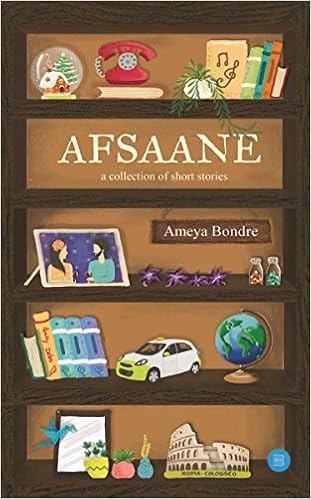
Afsaane by Ameya Bondre (Book Review: 4*/5) !!!

 30th Book of 2020!


I have generally stopped reading short stories and poetry books but I am glad I tried one recently which didn’t disappoint me. The book is titled as “Afsaane” written by Ameya Bondre consisting of 11 short stories. It is published by Bluerose Publications in around 190 pages. The book is very interesting with each story giving a totally different dimension to the situation through human emotions which doesn’t stay balanced at few crucial points of one’s life. The author’s writing style represents the Indian-ness which makes it easy to relate with the stories. Even when one of the story shows a character migrating to a foreign land, author keeps his narrating and story-telling style similar to other stories without getting influenced by the set-up of the location.


All the stories have a basic premise on which author has scripted this whole book i.e. Human emotions. How, in a relationship or in difficult circumstances, each person behaves differently is what has been highlighted in the stories which shall also make you nostalgic as you shall end up remembering vulnerable incidents from your life. Author has used very simple language to tell all his stories without trying to be nazi by introducing unwanted tough vocabulary. He has only played with his characters which tells about how much time he must have taken to draft each one of them. Most of his stories are based on the life of a couple -where either they are in love, hatred, involved in relationship with no commitment, betrayal, extra-marital affairs, trial of reinvesting in the relationship etc.


Talking about the few stories that impressed me- “Distance”- the very first chapter is nicely written about the final day of a couple when they are heading for separation. How Ameya has used nature as a form of teacher in this story is a nice example of philosophy embedded in the storyline. “Dreams” is also written in a very unique style which sends the message of how an Indian woman has to sacrifice her dreams for family and has to await their permission for every dream she wants to fulfil post marriage.


“Blinkers On” was an eye-opener for me as I didn’t know that few couples have to face challenge from the family itself when they take decision of adopting a baby. The conversation of boy with his parents for the same tells a lot about our society even in this era. “Trapped” is a very unique narration as author uses a non-living thing as a character which speaks in first voice about how a human being gets addicted with it and is unable to stop even when life is about to change for good.


“A Healthy Home” tells us about the rural India and how a mother has no information about how to feed the baby post-birth which always keeps her worried regarding why her baby is not consuming food. Author also gives insight about the human behaviour where a mother is told about what shall be good for her baby but still she is resistant about it. “Long Lost” is a very nice closure to the book which is a very beautiful story about a couple who meets years after breaking-up in a different country altogether. The awkwardness of both the characters are very well represented.


Overall, all the stories in the book give you a good feeling. No story confuses you with its timeline or difficult narration. Yes, I would say, in few stories the beginning is little complicated but I think that is purposefully done by author for readers to concentrate to understand the scenario of the story. Few stories have potential of being in a full-fledged novel. I would give this book 4 stars out of 5. This book is not like other short story compilations where you get to read simple love stories. If you are a short story lover, go for this one.


<iframe style="width:120px;height:240px;" marginwidth="0" marginheight="0" scrolling="no" frameborder="0" src="//ws-in.amazon-adsystem.com/widgets/q?ServiceVersion=20070822&OneJS=1&Operation=GetAdHtml&MarketPlace=IN&source=ss&ref=as_ss_li_til&ad_type=product_link&tracking_id=a07e2-21&language=en_IN&marketplace=amazon&region=IN&placement=B083715QK3&asins=B083715QK3&linkId=3f614f2e320ac72e8196424414b74a13&show_border=true&link_opens_in_new_window=true"></iframe>


Thanks.


WRITING BUDDHA 


Thursday, 3 September 2020

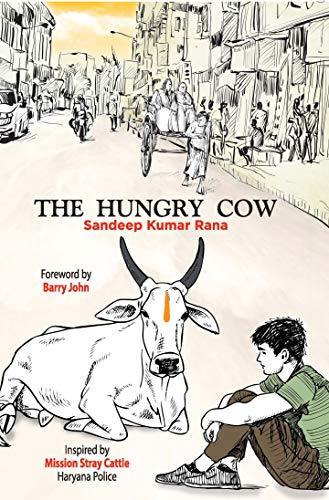
The Hungry Cow by Sandeep Kumar Rana (Book Review: 4*/5) !!!


29th Book of 2020!


There are times when you want to read a short book in between of your long reads for refreshment and you just expect a short good story from this book and not some kind of “Moral of the Story” as generally, authors write short books just for telling the story without any mission behind it. But the one I picked up last evening surprised me with its content- The book is named “The Hungry Cow” and is written by Sandeep Kumar Rana. Sandeep has written this book based on the Haryana Police’s initiative called “Mission Stray Cattle”. The book can be a very great influencer as it talks about how we, as human beings, treat animals with no empathy and just to ensure that we get as much benefits out of them without worrying about their emotional and health conditions.

The book is of around 1.5-2 hours read which is written in a very simple language with an equally easy narration. The great part about the book is that it can be read even by an eight years old kid or someone who is aged as well - as it speaks about the concern that has resonated all of us once in our life – how badly we treat animals. When I was a kid, I had no empathy towards animal until I saw a kid loving and caressing a puppy after it got hurt by some vehicle. It changed my mindset completely towards animal and since then I have never thrown stones towards them or kicked them out of frustration. In fact, I have started thinking as to how I shouldn’t end up causing them any kind of trouble. This book just brings the same emotions to you right from its first chapter.

I was amazed as to how even in such a small story, author has been able to add multiple characters such as the protagonist – 11-year-old Raju, his father – Gopal, Qasim – Raju’s friend, Rehman – Qasim’s father and the veterinary doctor along with many other policemen and people with authority. The USP of the book is the character of Gaura Maan – who is a cow domesticated by Gopal with a unique quality of talking like us. This makes us understand how a Cow sees human beings and why they are being referred as “Mother” by Hindus. She is capable of telling stories and discussing life with Raju as he loves her like a real mother unlike his father who just wants milk from her for selling and doing business without even worrying about how she will eat and have proper diet required for an animal.

The book portrays how human being has classified itself as a superior creature and all the other beings into a classification of “Animals” who are only supposed to provide human beings comfort without human beings doing anything for them. How we let cows and other animals eat stray and garbage which leads into hurting them as they end up eating sharp items like blades etc. and we don’t even blink an eye towards them. How important a Cow is for the religious people following Hinduism is also portrayed in one of the chapters. How cow vigilantes are only behind creating ruckus but aren’t actually caring for the cows is also portrayed in one of the chapters which discusses the current scenario of cow lynching. How a Muslim family supports a Hindu family in ensuring the cow can be saved tells us that at the end we are brethren and there is nothing to fight about it. The book makes you emotional at many occurrences and through cow, it lets you understand the plight of all the animals around us.

Now, talking about the drawbacks – the only complaint I have is that the book is very short which is actually good as many children will end up reading it and getting influenced for good but this story had potential for more considering the cow being a character who can talk which could have conveyed a lot many things about religion, spirituality and human’s attitude towards cows and how they think about us in any scenario. I wish if this could have been a full-fledged novel.

Overall, this is a great book for kids and youngsters and gives a strong and essential message. I give the book 4 stars out of 5.

<iframe style="width:120px;height:240px;" marginwidth="0" marginheight="0" scrolling="no" frameborder="0" src="//ws-in.amazon-adsystem.com/widgets/q?ServiceVersion=20070822&OneJS=1&Operation=GetAdHtml&MarketPlace=IN&source=ss&ref=as_ss_li_til&ad_type=product_link&tracking_id=a07e2-21&language=en_IN&marketplace=amazon&region=IN&placement=B08H1RDSTR&asins=B08H1RDSTR&linkId=a1d85831cf00e85ff09facb662510704&show_border=true&link_opens_in_new_window=true"></iframe>

Thanks.

WRITING BUDDHA 


Saturday, 22 August 2020

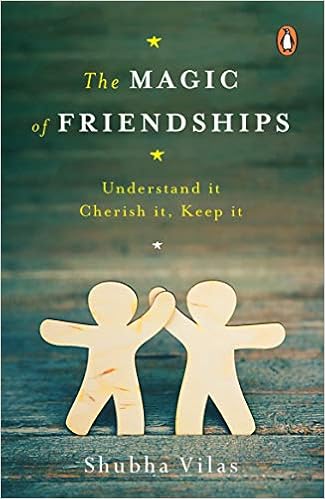
The Magic of Friendships by Shubha Vilas (Book Review: 3.25*/5) !!!


28th Book of 2020!

When I turned towards spirituality few years back, the monks who are part of Iskcon foundation intrigued me a lot and I wanted to know so much about them. This made me search for few of them who have turned writers too. One of them is Shubha Vilas and at that point of time, he had written his first book in the Ramayan series and I had liked it a lot. I also read another non-fictional book written by him namely “Open-Eyed Meditations” which also helped me understand certain concepts I wasn’t aware of. So, I was waiting for him to release another new book and I am glad that he did which I have just finished reading. It’s another non-fictional attempt – “The Magic of Friendships”. The book is of around 204 pages published by Penguin books.

The writing style of Shubha Vilas is very simple which makes it easy even for a reader of 12 years of age or someone who has not been into convent schooling. His purpose of spreading his knowledge and perception about Friendship to as many people as possible becomes certain with the slow narration that he has used in defining each and every point. He doesn’t hurry with chapters and concepts and give ample of time to each of them to ensure that the readers grasp them completely.

There is nothing spiritual or deep in this book in case you are scared that after picking this book up, you shall not be able to relate with it. The chapters speak about Friendship as a concept and how it can be a boon to our life and lifestyle. Author speaks in brief about how friends can become catalyst in our life and can make it both – Good from Bad or Bad from Good considering the kind of company you have. Author doesn’t shy away from giving multiple examples- some real stories – some Vedic and Epic stories while some made-up stories to ensure that we get the understanding right rather than assuming few things by ourselves. Some of these short stories of 1-3 pages touch you seriously.

Author rather than pointing only at your friends regarding how grateful or back-stabbing they are – tends to highlight that we should focus in improving ourselves in the relationship first before expecting or judging our friends. One thing I am glad about is that author doesn’t end up giving traditional ideas about the same as I was little worried considering his monk background that he might be too harsh on our generation but he wasn’t. Haha!

Book covers some great insights in seven different chapters that talks about how joyful friendship should be, judging yourself as a friend, the power of empathy and the magic it can bring with itself, how friendship shouldn’t be treated as competition between you and your friends but how you can help each other grow together, how peer pressure and self-esteem issues can be handled with good friends around us and about how Friendship can be developed not only with your typical friends but with other relationships in your life too.

The book shall be very impactful for the new generation who are still in their educational or early-job phase as they have still not seen much world and some of them keep on wasting time on friendships without it being of any value of the same to their life. In fact, sometimes, it only causes destruction for them. This book shall really open their eyes regarding how fruitful and productive this relationship can be. For the people who have matured up – for them, the fictional short stories shall be enjoyable as they have some great tales to tell with which you can relate. I could relate with lots of them.

Now talking about the drawbacks of the book – I felt that author didn’t explore many more dimensions which could have been used in this book considering its topic. Author could have talked about how physically meeting friends rather than having video and textual interactions through their smartphones is more recommended. Author should have talked about how to isolate yourself from “Friends” with whom you want to end your friendship after knowing about their bad attitude without causing much damage to your life. It should have also covered how to approach friendship when you are about to convert it into a romantic relationship considering the sensitive topic that it is. And how to face rejection and still keep the friendship going strong. Similarly, the role of spouse and sibling as friends in your life is completely left out from the scope of the book. How to say “No” in Friendship and also to accept the same could have also been covered. Also how to handle friendship when you have patched up after a very big issue between you and your friend.

Except the few points above, I feel that the book is a great teacher for the people who are yet to mature in this concept called friendship and feel that they always get back-stabbed or are unable to carry their friends for long. I give this book 3.25* out of 5.

<iframe style="width:120px;height:240px;" marginwidth="0" marginheight="0" scrolling="no" frameborder="0" src="//ws-in.amazon-adsystem.com/widgets/q?ServiceVersion=20070822&OneJS=1&Operation=GetAdHtml&MarketPlace=IN&source=ss&ref=as_ss_li_til&ad_type=product_link&tracking_id=a07e2-21&language=en_IN&marketplace=amazon&region=IN&placement=014344655X&asins=014344655X&linkId=083cddf5f0e6ef7a72af02eba97bb846&show_border=true&link_opens_in_new_window=true"></iframe>

Thanks.

WRITING BUDDHA 


Friday, 21 August 2020

Kapil Dabur: "We grew up watching Ramayana and Mahabharat and it still fascinates us when we watch it on television" (Author Interview)


Kapil Dabur recently released his book- "The Signet Ring" in a way that it talks about both - Mythology and Modern World. I read the book and found the story very intriguing which made me speak with the author and have this interview in place so that we can get a bit into his mind.

Today, the author is celebrating his 39th Birthday and we wish he keeps on writing such great stories for us which can make us aware about our God and the tale that we haven't still heard.

It's time for all of you to cherish the interview now...

Hi Kapil, can we know something about your background before getting into our questions on you becoming the author.
I was born in Ghaziabad. My Dad worked as an Engineer in PWD department with UP govt. I studied across cities as Dad got transferred every 2-3 years. I completed my Bachelors in Commerce and then went to IIM Bangalore for my MBA. I worked in Blue chip firms like Airtel, Reebok and Vodafone for almost 8 years before launching my first start-up. I ran it for about two years and then came back to Corporate world. I joined Home Lane and then moved to Arrivae. My wife Ruchi is an interior designer. We have a son, Aditya. 

So how did you get into writing.
It has its origins in my first Start-up. I was working as Retail head with Vodafone in Ahmedabad when I decided to launch my own Start-up in the Home improvement industry. Being a first-generation entrepreneur, it was a lot of struggle, hard work and learning on the job. I used to compare and contrast my daily experiences as an entrepreneur with the ones when I worked in the Corporate world. I decided to combine my experiences and those of a close friend of mine and wrote my first book, Unusual choices. That’s how it started.

Please let us know something about your book- The Signet Ring.
I was always fascinated with mythology. I used to read a lot about Greek mythology, the Greek gods, the way they are epitomized in numerous ways. I did some research on that and zeroed on Lord Hanuman. I studied lot of books, articles on the internet about these topics and simultaneously worked on my concept note. It took me about six months to do so. This book picks up the life and stories about Lord Hanuman, his devotion and relationship with Lord Rama and goes on to create a story line embedded in the present times.

How tough was it for you to learn about mythology, religion and epic tales to prepare for this book?
It was not difficult at all. We grew up watching Ramayana and Mahabharat and it still fascinates us when we watch it on television. I am an avid reader and I thoroughly enjoyed my research for this book.

How were you able to speak such an intriguing thrilling story within 170-odd pages as I believe it had potential for a much bigger novel?
I kept working on the core idea of the book till I could summarize it as succinctly as possible. I decided to include only the most relevant incidents, facts that fit in genuinely with the plot. I deliberately kept it a sub-200 pages novel.   

As per your belief and knowledge, who came first or who is bigger- Lord Vishnu or Lord Shiva?
I strongly believe that they are the same. Both of them are manifestations of the one supreme energy. Both epitomize different aspects of creation. Lord Vishnu is more about nurturing life and Lord Shiva is more about destroying the excesses that endanger life. 

Also, I would like to know from you- Ram believed in having relationship with just one woman whereas Krishna is believed to have married many women – can you please explain this theory to us?
Lord Rama wanted to symbolize ideal living that’s why he took oath to marry only once during his current avatar. This is why he married only Sita.  When it comes to Krishna, he had eight primary wives. All of them are the divine forms of Mahalaxmi, the primary consort of Lord Vishnu.   

What are you writing the next?
I am working on a mythological fiction. 

What would you like to say to the readers who have trusted in picking up your first book?
I would first like to thank them for appreciating my work.  I hope to surpass their expectations with my upcoming books.

<iframe style="width:120px;height:240px;" marginwidth="0" marginheight="0" scrolling="no" frameborder="0" src="//ws-in.amazon-adsystem.com/widgets/q?ServiceVersion=20070822&OneJS=1&Operation=GetAdHtml&MarketPlace=IN&source=ss&ref=as_ss_li_til&ad_type=product_link&tracking_id=a07e2-21&language=en_IN&marketplace=amazon&region=IN&placement=9389759803&asins=9389759803&linkId=75af5842533e18103aed16519fa83c41&show_border=true&link_opens_in_new_window=true"></iframe>


 WRITING BUDDHA 


Thursday, 20 August 2020

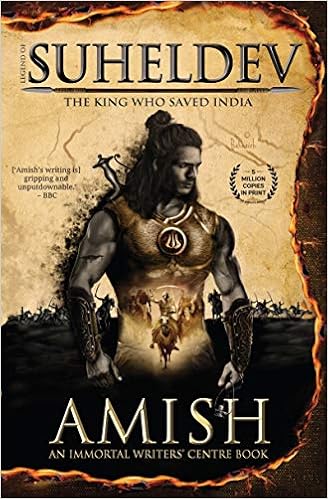
Legend of Suheldev by Amish Tripathi (Book Review: 4.5*/5) !!!


Well, Amish Tripathi is one of the writers who have been associated with Indian mythology till now as he has written books on Lord Shiva and Lord Ram but if you have been going through his interviews, you must be aware about the kind of knowledge he has about Indian history too. Hence, the announcement of the book “Legend of Suheldev” came all of a sudden but it brought smile on my face as I always want Amish to write as much as possible because he writes really well and his stories have an emotional connect with the audiences. This time, Amish has written the book with the help of “An Immortal Writers’ Center” that he has developed who write it first and then it is being proofread and edited by Amish in order to ensure that the readers feel the same magic of Amish’s writing even while reading the books written in this collaboration. This is done so that Amish can share many such stories with audiences in his lifetime.

“Legend of Suheldev”- the book is of around 325+ pages which comes with a tagline of “The King who saved India”. This is a story based in 1025 AD and therefore, the story is a perfect combo to have Amish writing it. King Suheldev has been one of the historical figures who has been used by several political parties in fetching votes but if you would want to know about him, there is not much available to read. Amish has used his fictional imagination to write his story based on whatever true details he got from the history. In that sense, he got a good creative liberty to play with and I believe, it has been utilized very well to write a story which is powerful, patriotic, energetic, enthusiastic, terrific and what not. India has been invaded multiple times by Turks in the history and how King Suheldev takes a pledge of fighting against them to save his country is what basically summarizes the plot of this book.

The Battle of Bahraich that took place between King Suheldev and Salar Maqsud – the Turkish commander of Muhammad Ghazni is what this book basically covers keeping aside all the other stories in which few of the characters mentioned in this book are associated with – I am sure Amish shall write about them someday too. I liked how each and every character is given due importance rather than only talking about King Suheldev. Once again, Amish mentions Lord Shiva in his book very prominently which adds value to the story as it connects both- history and religious beliefs together to make it more valour and contemporary. The situations are written in such a way that you shall be able to correlate them with current situations and understand, where, we, as Indians, are failing.

The weapon of Amish is his philosophies which he uses to make his readers fall in love with his writings which is amply used in this story. Few instances such as the conversation between Chandrakirti and Ashvaghosh in the monastery which is their entry scene - talks about violence and non-violence. Similarly, the debate between Ashvaghosh and Abdul on Religion vs Patriotism is a masterpiece according to me. A detail conversational part between Govardhan and Kashinath talks about Hindu’s beliefs vs Muslim beliefs which is another contemporary subject out of which we can learn and adapt a lot of things. I like how Indian and Hindu culture from the 1st millennium is displayed freely telling what kind of great souls lived then who saved our country from barbaric invaders.

The war and fighting scenes are very well written – I was almost able to imagine all of them happening in front of me and felt like watching a Bhansali or Baahubali kind of a movie in my mind. The book also has few twists and turns which keeps you interested with the pace of the story. Also, I must say that Amish carries romance as well as he covers epics, mythologies, historical fiction – the chemistry between Suheldev and Toshani is very beautifully handled in this book keeping the respect and aura of the characters in consideration. Overall, this book gives us very great lessons about how we, as Indians, keep on fighting among ourselves which gives the outsiders, neighbours and invaders power to defeat us. If we can unite, we can defeat any power in the world. Kudos to Author Amish for portraying the concept wonderfully.

Now, talking about the drawbacks – I must say that I felt Amish to be writing very frankly on how a Hindu leader would be – I am very much impressed as he didn’t try to mince things there – but then showing him having Muslim as his close aid and trusting other Muslim who tried to get into his group from Turkish side seems to be an attempt in trying to show the King Suheldev as a secular king which I don’t know how true it is considering that there is so much angst between both the religions even now in the 2nd millennium. Also, I felt that few scenes are described too much which makes you skip sentences in between as you know they aren’t adding up anything to the story. Another problem that I face while reading is the way terms are used between the characters in the conversation – it is as if the characters of today are talking in a modern style. I believe the book should reflect the ancient history even with each word and sentence of the book – that is what had made The Shiva Trilogy so popular. Lastly, I believe many scenes where the protagonist has to act like a hero has been portrayed like a Bollywood scene rather than a real world. There should be difference in way books are written and movie scripts are drafted- I hope the Immortal Writers’ centre understands that.

Overall, “Legend of Suheldev” is one book that I’ll keep recommending to the people as there are so many anti-nationalistic voices these days that such stories speaking about hyper-nationalism, religious beliefs and Indian history needs to be promoted. This is one of the powerful books I have read which actually made me go back to that world and contribute myself. I give this book 4.5* out of 5.

<iframe style="width:120px;height:240px;" marginwidth="0" marginheight="0" scrolling="no" frameborder="0" src="//ws-in.amazon-adsystem.com/widgets/q?ServiceVersion=20070822&OneJS=1&Operation=GetAdHtml&MarketPlace=IN&source=ss&ref=as_ss_li_til&ad_type=product_link&tracking_id=a07e2-21&language=en_IN&marketplace=amazon&region=IN&placement=9387894037&asins=9387894037&linkId=81093a634ca23a1d8e8ca111cfd274f1&show_border=true&link_opens_in_new_window=true"></iframe>

Thanks.

WRITING BUDDHA 


Saturday, 15 August 2020

Aahwan: Khand 1 by Saurabh Kudesia (Book Review: 4.5*/5) !!!


26th Book of 2020!


I am generally into reading English books but there are times when the title, cover page or the synopsis of a Hindi book fetches my interest that lands me into having the book in my shelf. One such book that I am done reading just yesterday is Saurabh Kudesia’s debut novel named “Aahwan: Mahabharat Aadhaarit Pauranik Rahasya Gaatha Khand 1”. The book is of around 300+ pages which initially made me doubt if I would be able to finish such a lengthy Hindi novel and over that, the initial 3-4 chapters have very tough vocabularies which made me doubt even more. But the moment the characters come into the picture and the thriller story begins is when the book becomes easy for the readers to go through and it took me just two sittings to complete the same – 80 pages in first and 224 pages in the second.

The book is based on several different dimensions of the story which makes it very interesting as there are terms and concepts that we are introduced with which we aren’t aware about. The great thing is that the fiction story based in the decade of late 2000s is connected with the era of 350 years ago and in a case, several thousand years back too. This is what comes as a shock because death has taken place in a completely simple middle-class Indian family and when the case starts getting linked with such phenomena, it gets surprising for the characters in the family and even for the readers. I wasn’t expecting such references of Mahabharata and Vedas but the way they have been synced up with the stories tells us about the capabilities of the debut author.

The narration of the book is little difficult – the section before the story begins -  which might make many readers keep the book for some other day considering the tough vocabulary but later on, as the book begins, even when the concepts discussed in the story are tough and unheard, the way author handles it makes it very easy for you to understand them and even remember it. The characterization is very powerful. Rohan, even when dead, sounds like the protagonist of the book which is the first time I have felt while reading any murder mystery. The chemistry between Jayant-Rathod and Jayant-Dr. Mazumdar is treated very well. Even the plot is very thickening, author keeps on lightening it with the humorous conversations between the later pair. Some sentences literally made me laugh loudly. The support of characters in the Rohan’s family is also nicely woven in the storyline - the characters which I believe shall have magical role in the 2nd part of this book.

Initially, I felt that author would just relate few of the Bhagwad Gita’s quote to connect his story with Mahabharata but I am surprised with the kind of research work that the author has gone through that there are certain scriptures, Vedic texts, archaeological findings, Mahabharata, Bhagwad Gita, signs, symbols, images which play a big role in the story. How today’s technology is proven to be existing even thousand years back in our culture is what made my reading experience more delighting. Few characters are shown having super-human powers which is handled so beautifully that you trust that something like this can happen. Even in the pre-climax, when the mystery of Rohan’s death becomes more complex with the revelations of Dr. Verma’s findings, you end up believing everything – author should be applauded for making readers connect with his fantastical world in such a way. Author has given duly references wherever needed as many parts of his book refers to religious texts or real findings.

Now, talking about the drawbacks- As already mentioned above, the vocabulary should be such that book can be understood by maximum of readers. Secondly, the book doesn’t end up with clarifying any of the mysteries but only making it more complex – author should have scripted it such that something should have given a complete feeling to this book itself. It’s like investing your time in reading 300+ pages and not finding any result to the story. Thirdly, I believe there are few scenes which author has described too much which could have been handled with little less details – it would have helped in summing up this part of the book in just 250-odd pages.

Overall, this is one of the best books written in this Mythological fiction genre with a very unique concept which I haven’t read before. Also, the story has power to make you complete it in one-go with its fast-paced narration and thrill to know what more shall get revealed in this murder mystery. I am definitely waiting for the next part of this story. I give this book 4.5 stars out of 5. Yes! Please do read it.

<iframe style="width:120px;height:240px;" marginwidth="0" marginheight="0" scrolling="no" frameborder="0" src="//ws-in.amazon-adsystem.com/widgets/q?ServiceVersion=20070822&OneJS=1&Operation=GetAdHtml&MarketPlace=IN&source=ss&ref=as_ss_li_til&ad_type=product_link&tracking_id=a07e2-21&language=en_IN&marketplace=amazon&region=IN&placement=9387464857&asins=9387464857&linkId=a8c72ae1185bcbbdad51c685bbe2d09c&show_border=true&link_opens_in_new_window=true"></iframe>

Thanks.

WRITING BUDDHA 


Saturday, 8 August 2020

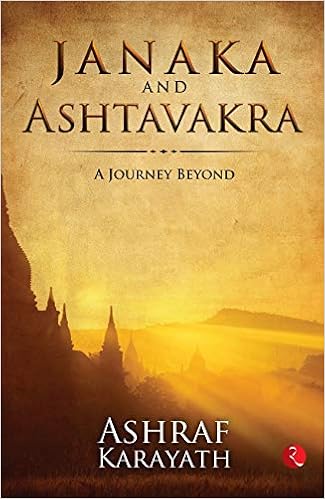
Janaka and Ashtavakra by Ashraf Karayath (Book Review: 3*/5) !!!


25th Book of 2020!


The spiritual people generally read only the texts from religion. The hardcore readers generally read thrillers, romance, biographies etc. but very rarely do they read books on spirituality. Hence, someone like me who is both into reading and spirituality finds it hard to discuss books that speaks about spirituality. I had got to know about the Ashtavakra Gita while having one such communication with the Founder of my previous organization with whom I had lot of spiritual discussions. Just before that I had also gone through Sandeep Maheshwari's audio available on his Youtube channel in 26 different videos where he speaks with us on Ashtavakra Gita. Since then I was always curious as to how I have never heard about this part from anyone even though Ramayan has been discussed with me by many. I heaved a sigh of relief when I got to know about the book named “Janaka and Ashtavakra” written by the author, Ashraf Karayath, in around 225 pages which is published by Rupa publications.

I started reading the book with great expectations as I was sure I shall get to know about spiritual perspective which I haven’t got to know yet. The book begins talking about Ashtavakra and his background and for the first 50 pages there isn’t much in the book that shall make you excited as the story moves very slow. And then it shifts towards Raja Janaka and his contemporary world during that time as now both the characters have to meet where Ashtavakra wishes to meet his father whom he has never met whereas Raja Janaka is looking out for a figure who can give him all the spiritual knowledge which shall help him get the answers he is looking out for.

The meeting scene of both the characters is very well articulated and it is the scene that is actually the biggest point of the book. How the realization starts dwelling within you right from that scene as it talks about judgement people make just by someone’s physical appearance. Ashtavakra is laughed at in response to which he laughs louder than anyone else and does until everyone is not done laughing. The characterization of both the main characters and all others such as Kushadwaja, Sunayana, Mahosadha etc. are done very well as you are able to understand their state of life and mind clearly. I liked how author is able to also take the story ahead along with the spiritual and philosophical knowledge and conversations that is being discussed in the book.

There are few enlightening sentences and paragraphs which surely makes you think about yourself and the amount of stress and unwanted tension you have been taking which actually shouldn’t have been part of your reality. I liked few of those sections. The last question that Janaka asks Ashtavakra and the response of the same is what gives this book a befitting end. I really liked how the complete war scenario has been inter-related with the spiritual knowledge that Raja Janaka was getting in parallel. It gives us the answer of many such unwanted future that we keep on imagining in our mind. An untold story of what happens just before Sita’s swayamwar is told very extensively in this book which shall help you learn about this part of Ramayan too.

Now talking about the drawback- even though the book has been summed up within 225 pages but still I felt it to be very slow in terms of story as it felt to be stuck at one point for many segments in the book. Even the start of the book is very slow for the 1st 50 pages which gives a negative impact to the reader. Talking about the spirituality and philosophical conversations that I was excited for – it is too less and something that is very basic. I was expecting a lot of depth from it. The Ashtavakra Gita has many such theories and concepts to tell that amazes you which this book doesn’t even give an overview of. Hence, somewhere in between balancing both- the story of Mithila and the spiritual part- author couldn’t do justice to either of them. That is all I have to say. I give the book 3 stars out of 5.

<iframe style="width:120px;height:240px;" marginwidth="0" marginheight="0" scrolling="no" frameborder="0" src="//ws-in.amazon-adsystem.com/widgets/q?ServiceVersion=20070822&OneJS=1&Operation=GetAdHtml&MarketPlace=IN&source=ss&ref=as_ss_li_til&ad_type=product_link&tracking_id=a07e2-21&language=en_IN&marketplace=amazon&region=IN&placement=9389967058&asins=9389967058&linkId=5ad9a82a78282655372f859092c14c1e&show_border=true&link_opens_in_new_window=true"></iframe>

Thanks.

WRITING BUDDHA