Monday, 15 December 2025

The Fearless Schoolboy by Delshad Karanjia (Book Review: 4.5*/5) !!!


19th Book of 2025

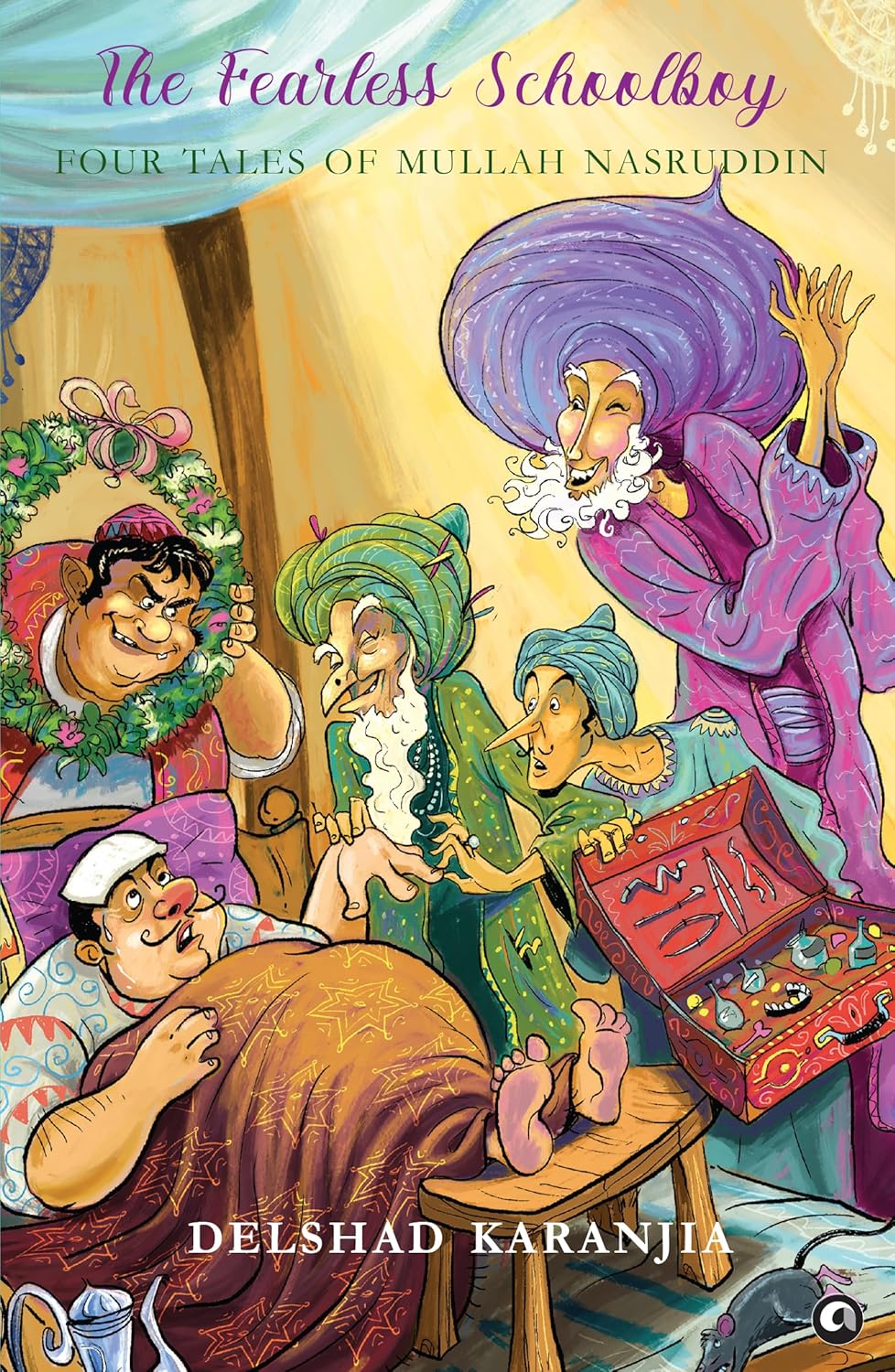
I have just completed reading Aleph Publication’s children’s book titled “The Fearless Schoolboy”, written by Delshad Karanjia. This is a short anthology consisting of four tales featuring Mullah Nasruddin. The book includes four different stories with Mullah Nasruddin as the main protagonist, portrayed through a humorous caricature where he acts smart in some stories and completely plays dumb in others. However, all the stories are designed to provide entertainment along with a meaningful message, helping children understand important life lessons through simple examples and storytelling.


The four stories included in this book are Cha and ChatNo Shortage of AdvicePreacher’s Block, and Planning Ahead. The first story did take me some time to adjust to the author’s writing style, but the remaining three stories completely engaged me as a reader. The second story, No Shortage of Advice, lives up to its title perfectly. It cleverly highlights how people never stop giving advice or pointing fingers, no matter what you do. The humorous tone of the story keeps the reader hooked throughout.


The third story, Preacher’s Block, is another amusing take on how the protagonist behaves lazily while performing his duties, assuming that no one is monitoring his actions. This continues until he is finally reprimanded. The moment an ultimatum is given, the sudden shift in his behaviour, driven by fear, leads to a funny and satisfying conclusion.


The fourth and final story, Planning Ahead, is once again a humorous tale where the protagonist follows his master’s instructions like a robot, without understanding the context. This blind obedience ultimately results in a laugh-out-loud ending.


Overall, this book is a great choice for children to enjoy light-hearted reading while also developing a sense of humour along the way. I give this book 4.5 stars out of 5.

 PURCHASE THE BOOK HERE

Thanks!


WRITING BUDDHA


Sunday, 14 December 2025

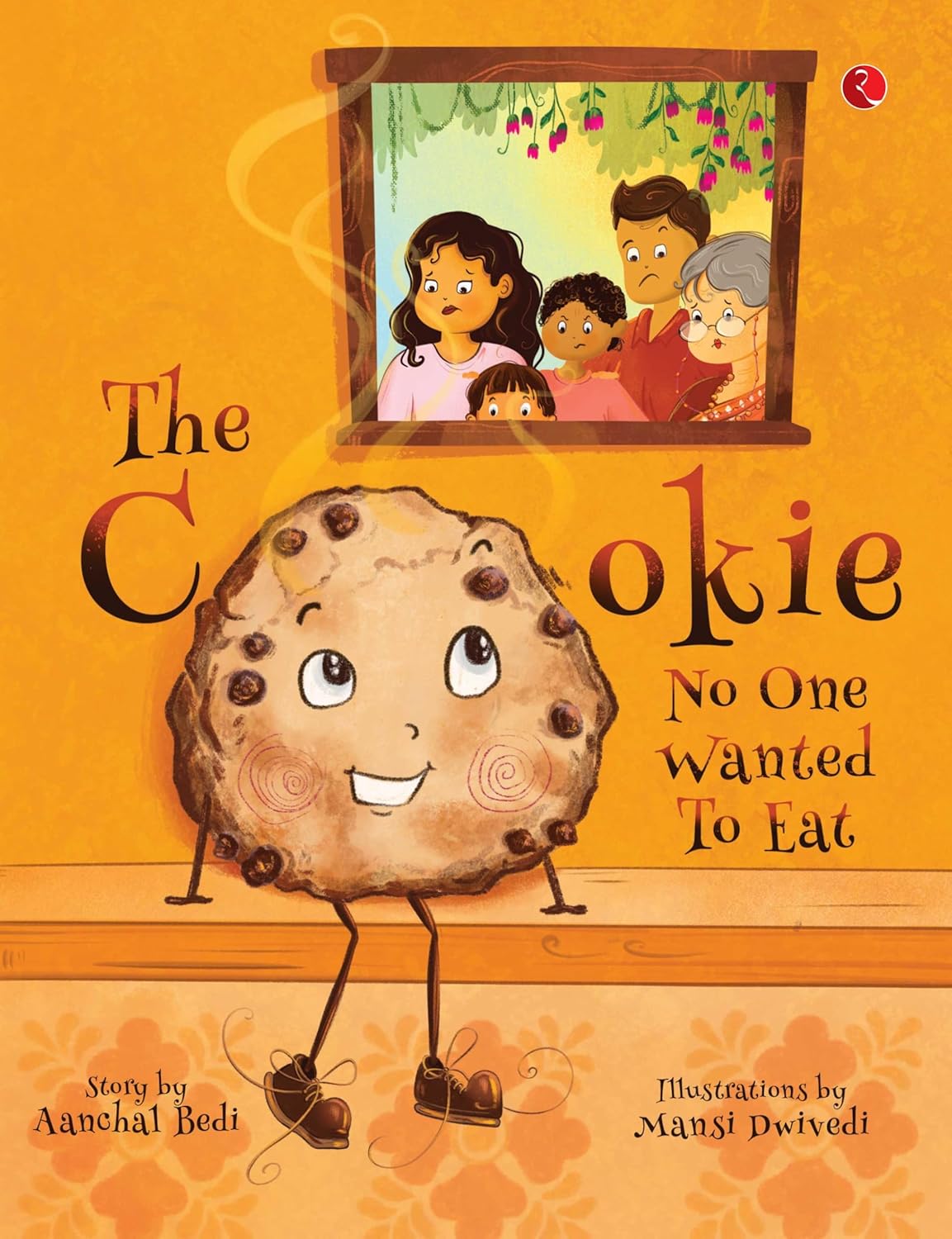
The Cookie No One Wanted To Eat by Aanchal Bedi (Book Review: 4.5*/5) !!!


18th Book of 2025

Children’s books often appear simple on the surface, but the best ones manage to carry messages that stay with readers long after the final page—sometimes even more so for adults than for children. The Cookie No One Wanted to Eat is one such book. It may be written for young readers, but its underlying message about self-worth, acceptance, and empathy feels relevant across age groups. The book is written by the authoress- Aanchal Bedi and beautifully illustrated by Mansi Dwivedi.


The story revolves around a freshly baked cookie that only wants to be loved and enjoyed. However, everyone who encounters it finds a reason not to accept it—too hot, too crunchy, too strong in flavour, or simply not to their liking. Through this repeated rejection, the cookie slowly begins to question its own worth. What works well here is how naturally the author mirrors a very human experience through a non-human character. The cookie’s confusion and disappointment feel familiar, even though the setting is playful and light-hearted.


The book uses rhyme effectively, making the narrative engaging and easy to read aloud. This rhythmic flow helps maintain a gentle pace, allowing children to stay attentive while absorbing the emotions embedded in the story. Without becoming heavy or preachy, the book subtly introduces the idea that not being accepted by everyone does not mean one lacks value. This is an important lesson, especially for children growing up in an environment where comparison and validation often begin early.


What I particularly liked is how the story does not rush towards its conclusion. The cookie’s emotional journey is given enough space to unfold, making the eventual realization feel earned rather than forced. When acceptance finally comes, it arrives not from those who initially rejected the cookie, but from those who truly needed it. This shift quietly reinforces the idea that belonging is not universal—it is personal.


The illustrations complement the narrative well, adding emotional depth without overpowering the text. The expressions, colours, and details help young readers connect with the cookie’s feelings, making the experience more immersive. Additionally, the activities, prompts and exercises at the end of the book are a thoughtful inclusion. They extend the story beyond reading, encouraging reflection, discussion, and emotional awareness—something parents and educators will appreciate.


Overall, The Cookie No One Wanted to Eat succeeds because it respects its young audience. It does not simplify emotions or offer unrealistic optimism. Instead, it acknowledges hurt, confusion, and rejection, while gently guiding readers towards self-acceptance and kindness. It is a book that can open meaningful conversations—about confidence, empathy, and the importance of being gentle with oneself.


This is a warm, thoughtful read that works equally well as a bedtime story or a classroom discussion starter. Sometimes, the simplest stories leave the deepest impressions, and this book is a good reminder of that. Overall, I give the book 4.5* out of 5. Get it for your younger ones!

PURCHASE THE BOOK HERE

Thanks

WRITING BUDDHA


The Legendary Diamantaire: The Life of Kirtilal K. Doshi by Bakhtiar K. Dadabhoy (Book Review: 4.25*/5) !!!


17th Book of 2025

Reading autobiographies and biographies has always been my biggest passion when it comes to reading, across all genres. Reading about individuals who have transformed entire scenarios with their vision, hard work, and attitude brings me a lot of confidence during tough situations in my own life as well. It becomes even more interesting and intriguing to read about personalities who have made an impact comparable to other inspirational figures but aren’t well-known due to limited media or PR coverage. One such biography that I read this week is “The Legendary Diamantaire”, written by Bakhtiar K. Dadabhoy, based on the life of Kirtilal K. Doshi.


The author very intelligently begins the book without directly diving into the birth details of the central figure. Instead, he starts by explaining how the diamond industry has functioned over centuries across the world and particularly in India. I liked how he described India’s prowess in this business and, more specifically, the unique contribution of the Palanpuri Jains. The way their skill set made even Austrians and other Europeans look towards Indians for their mastery in diamonds makes for a compelling opening to the book.


The author then moves into the life of Kirtilal’s father, Kalidas, who actually laid the foundation for the family. The journey of how he and his brother Shantilal started together under their father’s guidance is fascinating, as Kalidas himself emerges as an inspiring personality. Even in the early years, the family values come to the forefront—especially in the respectful and dignified manner in which the business was eventually divided between the two brothers. This explains why many family-run businesses in India have stood the test of time.


Gradually, the author introduces us to the pioneering journey of Kirtilal Doshi, detailing how he went on to build one of India’s most respected jewellery brands—Kirtilals, known for diamonds, gold, and fine craftsmanship—and how he played a crucial role in professionalizing and modernizing the Indian jewellery trade.


It is astonishing to learn how Kirtilal Doshi understood the power of branding and positioning a business during an era when formal marketing expertise was almost nonexistent. This speaks volumes about his mindset and business acumen. His contribution to the diamond industry, not just as a businessman but as a visionary, is remarkable—especially his role in shaping regulations, constitutions, institutions, SOPs, and ethical standards within the industry.


Similarly, the book highlights how his organization became the first to introduce several initiatives in the diamond industry—be it manufacturing advancements, branding strategies, or the use of laser technology for diamond shaping. These examples reflect the competitiveness and foresightedness that defined his leadership. The book clearly demonstrates how a family business can break traditional limitations and evolve into a global brand.


The final chapters shift focus from Kirtilal Doshi the businessman to Kirtilal Doshi the individual. The author provides insight into how influential personalities conduct themselves in their personal lives, with family and friends. His views on ethics in business make for an especially impactful chapter. Equally inspiring is his attitude during his later years, when his business faced difficult phases—rather than succumbing to despair, he supported his son by writing several motivational letters. His perspectives on marriage and the letter he wrote to his grandchildren about leading a balanced life after marriage further reflect his belief in maintaining a simple, peaceful, and healthy family life.


I could go on, but overall, this book is essential reading for students in business schools, professionals in corporate life, and even those who are retired. It teaches how an individual can pursue multiple roles in life, stay ahead of changing times, and yet not remain confined by traditional thinking. I would rate this 151-page book 4.25 stars out of 5.

 PURCHASE THE BOOK HERE

Thanks!


WRITING BUDDHA


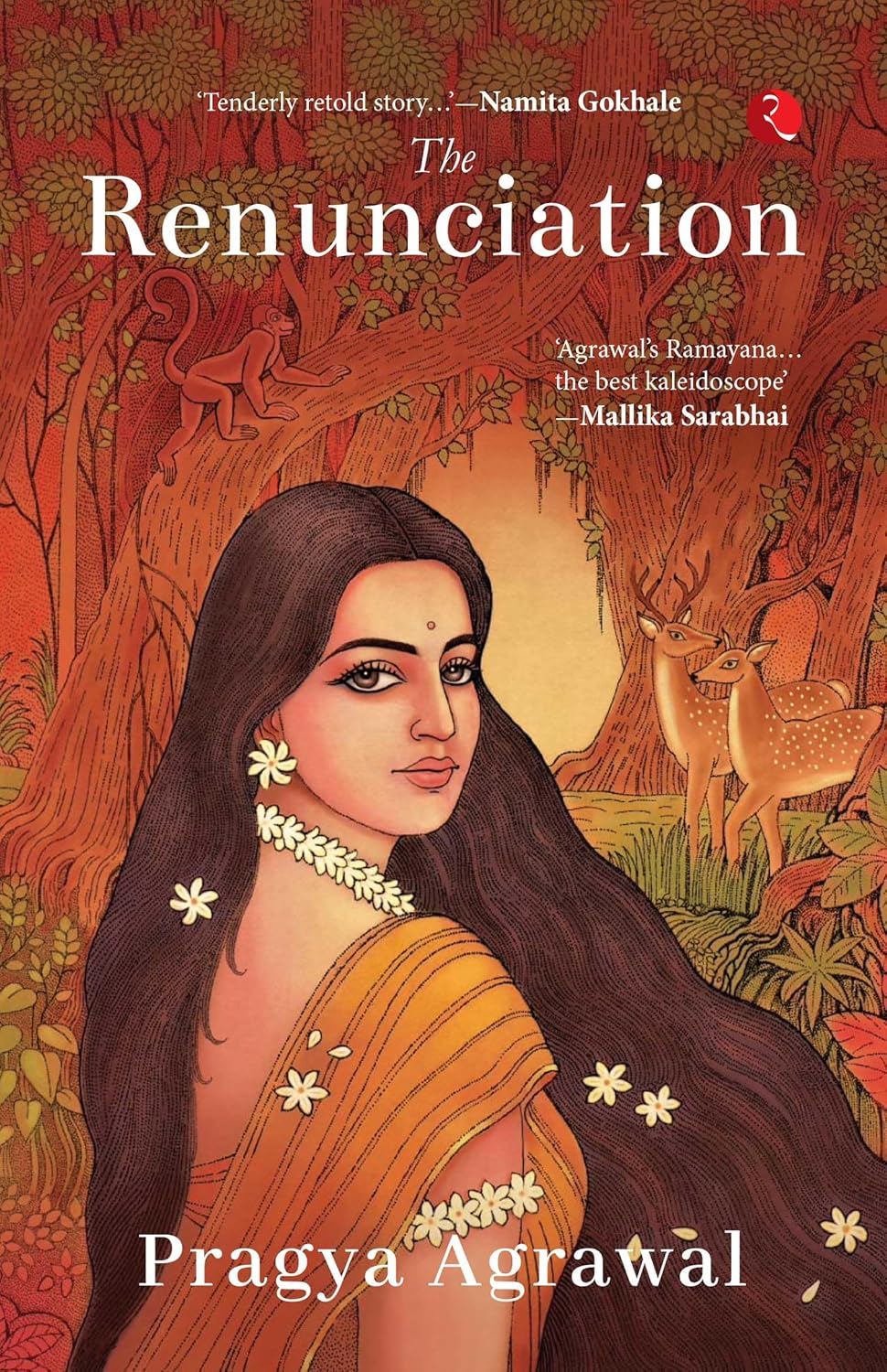
The Renunciation by Pragya Agrawal (Book Review: 3.75*/5) !!!


16th Book of 2025

Mythological retellings have become increasingly popular in recent years, but very few manage to strike a balance between reverence for the original text and a fresh, emotionally engaging perspective. The Renunciation by Pragya Agrawal succeeds in doing exactly that. Instead of retelling the Ramayana in its entirety, the book chooses to focus on one of its most painful yet profound chapters—Sita’s life after her exile, her motherhood, and her ultimate choice of dignity over belonging.


The story unfolds in the serene surroundings of Sage Valmiki’s hermitage, where Sita lives with her twin sons, Luv and Kush. Far removed from the grandeur of Ayodhya and the noise of royal expectations, this setting allows the reader to see Sita not as a divine symbol, but as a deeply human woman—one who loves fiercely, remembers painfully, and carries silence as both shield and strength. The author beautifully captures the emotional stillness of this phase of Sita’s life, making the forest almost a character in itself.


What stands out most in this retelling is the way Sita’s inner world is portrayed. Her suffering is not dramatized unnecessarily, nor is it reduced to victimhood. Instead, it is presented as lived experience—layered with love, disappointment, courage, and unwavering self-respect. The scenes between Sita and her sons are particularly touching. Her maternal instincts, her protectiveness, and her quiet fear of the truth one day surfacing are written with great sensitivity. These moments give the book its emotional core.


The narrative gains further depth when Valmiki teaches Luv and Kush to sing the Ramayana, unknowingly narrating the life story of their own parents. This irony is handled with subtlety, allowing readers to feel Sita’s internal conflict without overt exposition. The past, which she has carefully sealed away, slowly begins to resurface—forcing her to confront memories she never truly escaped.


What I appreciated most about The Renunciation is that it does not attempt to judge the epic or its characters. Lord Ram is not diminished, nor is Sita elevated through comparison. Instead, the book gently highlights the emotional gaps within the larger narrative—spaces where Sita’s voice was often unheard. Her final act of renunciation is portrayed not as defeat, but as a conscious, powerful choice—one rooted in self-worth and inner clarity. The few pages are very emotional and once the book ended, it wasn’t easy for me to keep it aside and forget. It took me lot of days to come in terms with it.


Talking about few drawbacks, I feel that the sections of the story have been over-described which makes it boring to read the complete sentences at times and you feel like skipping few lines because they don’t take the story further. Similarly, I feel that there is lot to Sita’s character which could have been explored but kept away from the scope of the book which makes the readers feel incompleteness to her complete journey.


Overall, The Renunciation is a thoughtful, emotionally resonant retelling that invites readers to pause and reflect. It is less about spectacle and more about silence, endurance, and the courage it takes to let go. For readers who enjoy mythology told through introspection rather than grandeur, this book is a rewarding and memorable read. I’ll give this book 3.75* out of 5.

 PURCHASE THE BOOK HERE

Thanks

WRITING BUDDHA


The Four Avengers Versus the Elephant: Two Tales from the Panchatantra by Meena Arora Nayak (Book Review: 4*/5) !!!


15th Book of 2025

Reading children’s books can be quite interesting when you want to read something light while having tea or coffee at someone’s home—especially when they have kids for whom such books have been purchased. I took advantage of a similar opportunity and read a book titled “The Four Avengers Versus the Elephant” published by Aleph. The book consists of two tales from the Panchatantra, retold by Meena Arora Nayak.


The book is meant for children above the age of nine, as the author has ensured that even though her stories are targeted at kids, they are written in a way that imparts knowledge beyond the basics. I, as someone in my mid-30s, could also find wisdom in the way these stories are narrated. Nayak uses conversations between animals as a medium to deliver life lessons and Chanakya-like insights. Many dialogues are written in a manner that resembles explanations of ancient Sanskrit shlokas.


The first story focuses on the qualities and responsibilities of a king. Within the same tale, the author highlights how a vulnerable animal like a hare can outsmart a mighty lion who is ready to kill and eat him. The way the hare leads the lion to his own death is told very intelligently and gives hope to anyone who considers themselves weaker than others.


Similarly, the second story narrates how four small animals and insects unite to defeat an elephant who had been troubling one of their friends. This story beautifully signifies how the power of unity can bring even the most powerful to their knees.


Overall, I loved reading this book. I rate it 4 stars out of 5. I just feel that children’s books like this shouldn’t be priced as high as they often are — hopefully, publications can find a way to make them more affordable.

 PURCHASE THE BOOK HERE

Thanks!


WRITING BUDDHA

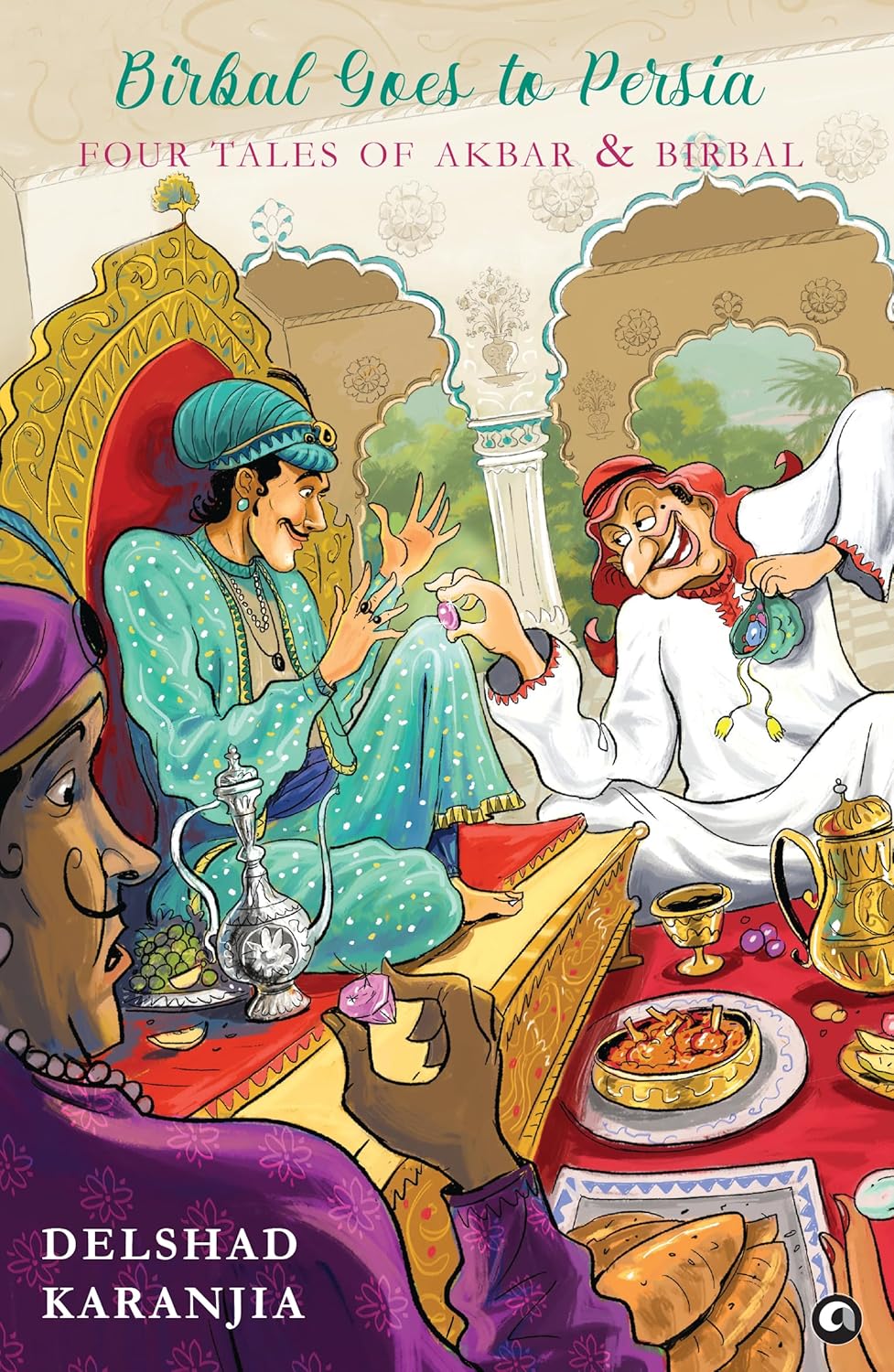
Birbal Goes to Persia: Four Tales of Akbar and Birbal by Delshad Karanjia (Book Review: 4*/5) !!!


14th Book of 2025 

I remember my father instilling the habit of reading books in me right from my primary schooling days. One of the most popular stories during those years was the Akbar-Birbal tales. I used to think that kids these days wouldn’t be reading about Akbar and Birbal, but I was pleasantly surprised when I found a few such books at one of my relatives’ homes. It took me just 20 minutes to complete this book titled “Birbal Goes to Persia,” which consists of four tales of Akbar and Birbal — all distinct from each other. The stories have been retold by Delshad Karanjia, who has been a journalist by profession.


All the stories are witty, funny, and humorous, and each provides a life lesson at the end. The first story in the book, A Lesson for the Emperor, tells a tale where Birbal gives a profound lesson to Akbar, making him realize that everything in life is temporary and that worldly possessions do not belong to anyone permanently, as every person is merely passing through Earth and must die one day.


The second story, Birbal and the Shah, is another example of Birbal’s cleverness, where he manages to impress both his own king as well as the ruler of another country by complimenting each of them in their respective presence — changing the perspective of his statements in both instances.


The third story, Catching Thieves, actually tells two different tales where Birbal faces the challenging task of finding a thief. He uses his intelligence and gives a task to the suspects, through which he cleverly identifies the real thief without conducting any formal investigation.


The fourth story, A Tax on Fools, serves as a fitting conclusion to the book. It narrates how Birbal challenges Akbar’s idea of imposing a tax on fools and, in turn, proposes imposing a tax on wise people instead. This was the first time I read this particular story, and I really liked it.


Overall, the book is engaging, and children are definitely going to enjoy it. I give it 4 stars out of 5.

PURCHASE THE BOOK HERE

Thanks!


WRITING BUDDHA