Monday, 13 July 2026

Her Story, Her Glory: The Making of Women’s Cricket in India by Aditya Bhushan (Book Review: 4.5*/5) !!!


13th Book of 2026


As a cricket-loving nation, we have spent decades celebrating the achievements of our men's team. We can effortlessly recall iconic World Cup victories, memorable centuries, and legendary spells. Yet, if someone asked us how Indian women's cricket reached where it stands today, most of us would probably struggle to answer. Her Story, Her Glory by Aditya Bhushan fills exactly that gap, and it does so in an engaging, well-researched, and immensely readable manner.


I still vividly remember following the Women's ODI World Cup last year. So convinced was I about India's chances that I purchased the final's ticket immediately after India won its quarter-final, even before the semi-final had been played. Looking back, it turned out to be one of my best sporting decisions. Watching the Indian women's team lift its first-ever ODI World Cup was a surreal experience, one that I will cherish for years.


Perhaps that is why, the moment I came across Her Story, Her Glory in the pre-release section, I knew I had to order it. Interestingly, I completed reading the book on the very day the Indian Women's Team scripted yet another historic chapter by becoming the first-ever women's side to win a Test match at Lord's, defeating England in England by a massive margin of 270 runs. Sometimes, the timing of finishing a book feels almost poetic.


The book begins by taking readers back to the origins of women's cricket in India. It is astonishing to learn about the hardships faced by the pioneers of the game. There were times when players had to arrange money from their own pockets just to travel overseas and represent India. In an era where international tours are professionally managed, imagining those sacrifices is difficult. Their determination to play for the country despite minimal support makes their achievements even more remarkable.


Another pleasant surprise for me was discovering how competitive India's women's Test team had been even during those early decades. We often assume that women's cricket started flourishing only in recent years, but this book proves that the foundations had been laid much earlier by players whose contributions rarely receive the recognition they deserve.


Among the many personalities discussed, Madhavrao Scindia deserves immense appreciation for ensuring that women's cricket survived during one of its most uncertain phases. Equally significant has been the contribution of the Indian Railways, which not only offered employment to several cricketers but also became one of the strongest pillars supporting women's cricket in the country. Without such institutional backing, the game's journey could have been very different.


One of the biggest strengths of the book is the number of fascinating incidents it uncovers. Many of these stories were completely new to me. Reading about an Indian captain being slapped by a coach, the national team struggling to travel to a World Cup because of financial difficulties, and a captain being removed in the middle of a series shortly after losing her husband was both shocking and heartbreaking. These incidents reveal how challenging the journey has been for generations of women cricketers.


The book is equally rich in sporting anecdotes. I was fascinated to learn that Neetu David's remarkable Test bowling record from the early 1990s still remains unbroken. The story of how she replaced the legendary Diana Edulji and carved out her own legacy was particularly inspiring. Equally memorable was reading how Jhulan Goswami eventually surpassed the achievements of the very Australian fast bowler who had inspired her to take up pace bowling in the first place. Stories like these beautifully capture how one generation inspires the next.


Aditya Bhushan also discusses the disappointments and controversies that have shaped Indian women's cricket. Mithali Raj's frustration over being excluded from the playing eleven without proper communication reflects the administrative challenges that have existed even in recent times. The book also highlights how infrequently women's Test cricket is played and how India's impressive record of drawing more than three-fourths of its Tests often reflects a strategy of survival rather than aggressive pursuit of victories. These observations provide important context behind the statistics.


What I appreciated most was the author's balanced approach. He neither gets lost in administrative details nor turns into an overenthusiastic fan praising every player or innings. The narrative remains objective, well-paced, and consistently engaging. It is evident that extensive research has gone into the book, but that research never overwhelms the storytelling.


The final section serves as a fitting tribute to the icons of Indian women's cricket. Dedicated chapters on legends like Diana Edulji, Anjum Chopra, Mithali Raj, Jhulan Goswami, Harmanpreet Kaur, Smriti Mandhana, and several others celebrate their individual journeys while also placing them within the larger story of Indian women's cricket. The inclusion of detailed statistics further enriches the reading experience, allowing readers to appreciate both the emotional and numerical dimensions of the team's evolution.


Overall, Her Story, Her Glory is much more than a history of Indian women's cricket. It is a story of perseverance, courage, forgotten heroes, institutional struggles, and dreams that refused to die despite countless obstacles. Whether you are a lifelong cricket enthusiast or someone who has recently started following the women's game, this book offers valuable insights into the incredible journey that brought Indian women's cricket to where it stands today.


It reminds us that before every trophy, every standing ovation, and every headline, there were generations of women who played not for fame or fortune, but simply because they loved the game. I would rate this book 4.5* out of 5 and I believe every Indian must read it.

PURCHASE THE BOOK HERE

Thanks!


WRITING BUDDHA


Thursday, 9 July 2026

Giorgia's Vision: Giorgia Meloni in Conversation with Alessandro Sallusti (Book Review: 4*/5) !!!

  12th Book of 2026


Political books often intimidate readers who aren't deeply invested in geopolitics. They can become heavy with statistics, ideological jargon, or endless policy discussions. Giorgia's Vision, however, pleasantly surprised me. Written as a series of conversations between Italian Prime Minister Giorgia Meloni and journalist Alessandro Sallusti, the book reads less like a political manifesto and more like an extended interview where readers are invited into the Prime Minister's office to understand not just her policies, but also the person behind them.


One of the most engaging aspects of the book is its conversational structure. Alessandro Sallusti does much more than ask questions. He paints the setting before every discussion—where they are seated, what is happening around them, and the political climate at that particular moment. These seemingly small details add context to every conversation, making readers feel like silent spectators inside Palazzo Chigi rather than outsiders reading another political autobiography.


I wouldn't call myself someone who closely follows international politics, yet I never felt lost while reading this book. The language is accessible, the conversations flow naturally, and the topics are explained in a way that even readers with limited knowledge of European politics can appreciate. Instead of overwhelming readers with technicalities, Meloni explains her thoughts with clarity, making the book suitable even for those who simply wish to understand contemporary global affairs.


Throughout the book, Giorgia Meloni remains remarkably candid about her political ideology and her vision for Italy. She openly discusses issues such as national identity, migration, taxation, unemployment, economic sovereignty, pollution, and the challenges facing modern Europe. Whether one agrees with her positions or not, there is little doubt that she expresses them with conviction. She also does not hesitate to name political opponents from the Left while responding to criticisms or explaining why she disagrees with their viewpoints. That directness gives the conversations an authenticity often missing from carefully curated political memoirs.


The chapters dealing with international relations were among the most insightful. Meloni explains Italy's support for Ukraine and shares her reasoning behind standing with a smaller nation against a much stronger military power. Her reflections on meeting Ukrainian President Volodymyr Zelensky and her broader thoughts on Russia provide readers with an understanding of how today's global conflicts influence national leadership. Beyond Ukraine, she also offers glimpses into her relationships with several world leaders and explains the principles guiding Italy's international alliances.


The book is equally interesting when it shifts away from politics and explores the personal cost of leadership. Meloni writes with visible pride about becoming Italy's first female Prime Minister, yet she never portrays it merely as a personal achievement. Instead, she repeatedly emphasizes the responsibility that accompanies such a historic milestone. She reflects on Italy's political instability—having witnessed multiple governments in a relatively short span—and explains why she believes long-term governance requires patience instead of short-term popularity.


Some of the most relatable sections revolve around her family. She candidly shares how public office has taken away many ordinary pleasures of life—travelling freely, spending uninterrupted time with loved ones, or simply living without constant security. Her affection for her daughter is evident throughout the book, and it is heartening to see that even while discussing matters of state, she acknowledges the importance of her daughter's perspective in shaping her own thinking. These moments humanize a leader who is often seen only through political headlines.


Towards the end, the book includes Meloni's first parliamentary speech as Prime Minister. It is undoubtedly lengthy, but it also serves as the perfect culmination of everything discussed earlier. The speech encapsulates the very vision promised in the book's title, bringing together her ideas on identity, governance, meritocracy, family values, and Italy's future.


That said, the book isn't without its shortcomings. Since the conversations are centered entirely around Meloni's perspective, readers receive only one side of many political debates. While she confidently highlights her achievements and explains her decisions, the narrative rarely explores moments where she may have miscalculated or failed. There are no significant instances where she reflects on decisions she regrets or apologizes for.


Similarly, apart from her criticism of Russia's actions, she largely avoids controversies involving other global powers. As a result, readers looking for a balanced, 360-degree political analysis may feel that the book occasionally resembles a well-articulated defense of her own leadership rather than an objective political memoir.


Nevertheless, I believe that isn't necessarily the book's objective. Giorgia's Vision sets out to explain how Giorgia Meloni sees Italy, Europe, leadership, and the future of the West—and on that front, it succeeds remarkably well. Whether you agree with her politics or strongly disagree with them, the book offers an opportunity to understand the thought process behind one of Europe's most discussed political figures.


Overall, Giorgia's Vision is an engaging and accessible political memoir that combines autobiography, ideology, and contemporary global affairs in a format that is easy to follow. For readers interested in world politics, leadership, or simply understanding how modern heads of government think, it is certainly worth picking up.


My Rating: 4/5

PURCHASE THE BOOK HERE

Thanks!


WRITING BUDDHA


Sunday, 28 June 2026

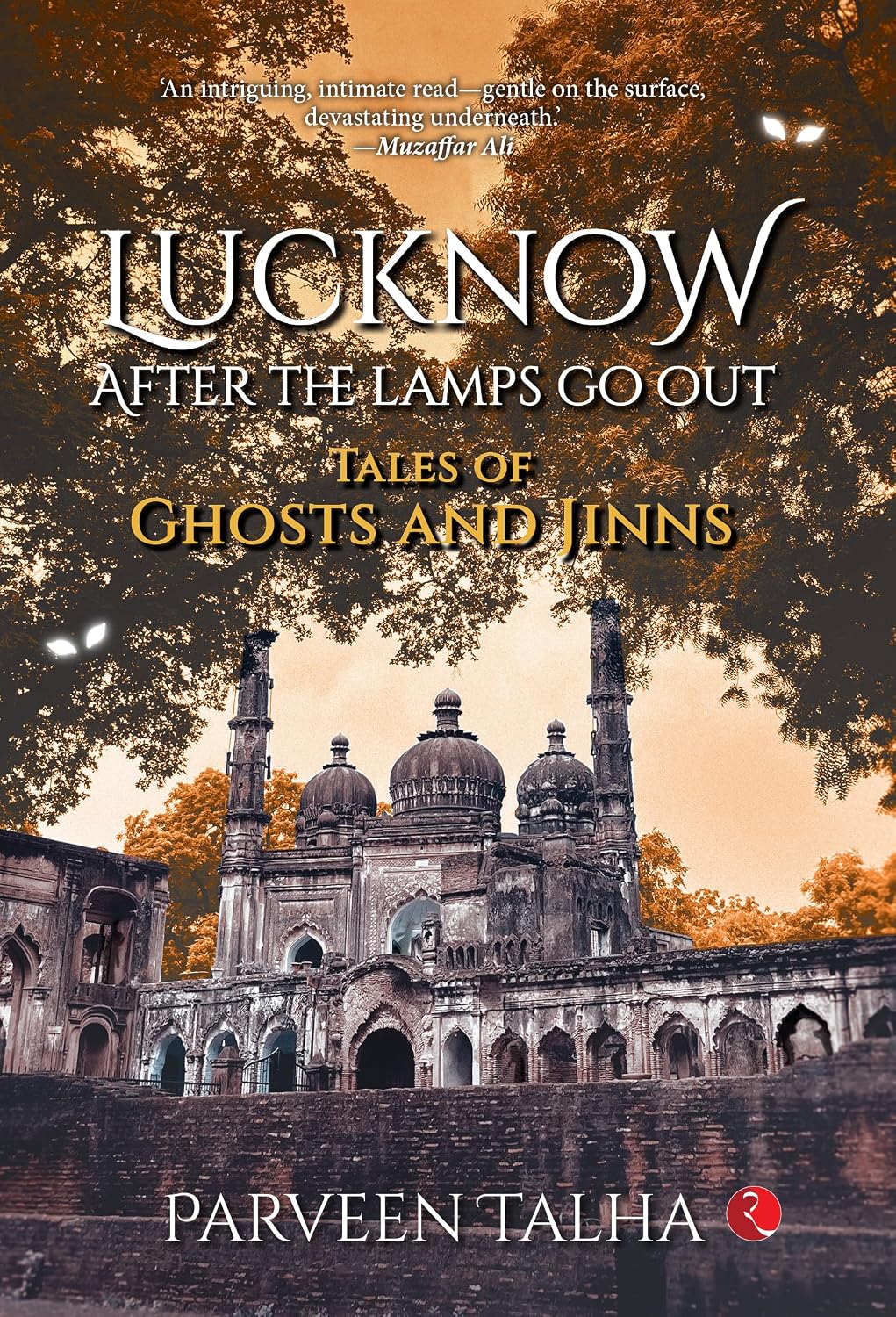
Lucknow, After the Lamps Go Out by Parveen Talha (Book Review: 4*/5) !!!


11th Book of 2026


Whenever we hear the words ghost stories, we usually expect haunted mansions, eerie forests, or terrifying supernatural encounters. However, Lucknow, After the Lamps Go Out: Tales of Ghosts and Jinns by Parveen Talha offers something far more fascinating. It is less about frightening the reader and more about introducing them to the rich folklore, forgotten legends, and cultural beliefs that have quietly survived through generations in the City of Nawabs. The book is published by Rupa Publications in around 135 pages only which makes a perfect companion for you on a weekend or travel.


This is not a conventional horror novel. Instead, it is a beautifully woven collection of tales where history, mythology, superstition, faith, and human emotions coexist. As someone who enjoys stories rooted in local culture, I found this approach refreshing. The author doesn't merely narrate ghost stories; she preserves an entire oral tradition that might otherwise disappear with time.


What makes the book particularly engaging is its atmosphere. Lucknow itself becomes a character. Its old lanes, magnificent havelis, forgotten graveyards, ancient mosques, and silent corners provide the perfect backdrop for stories involving mysterious apparitions and elusive jinns. Even if you have never visited the city, the vivid descriptions transport you there, making you feel as though you are listening to these tales from an elderly storyteller on a quiet evening.


One aspect I appreciated throughout the book was the author's balanced narrative. She neither forces the reader to believe in the supernatural nor dismisses these stories as mere fiction. Instead, she presents them with respect, allowing readers to decide for themselves where folklore ends and reality begins. That neutrality adds authenticity to the storytelling.


The stories themselves vary in tone. Some are genuinely eerie, while others are melancholic, mysterious, or even philosophical. There are moments when you expect a shocking revelation, only to find yourself contemplating human fears, loneliness, faith, or destiny instead. This emotional depth prevents the collection from becoming repetitive and keeps the reader invested until the very end.


Parveen Talha's writing deserves special appreciation for its simplicity. Despite dealing with subjects that could easily become overly dramatic, her language remains elegant, measured, and accessible. She doesn't rely on exaggerated horror elements or unnecessary jump scares. Instead, she allows the setting, the characters, and the quiet mystery surrounding each incident to create a lingering sense of unease. That subtlety makes the stories far more effective than loud horror ever could.


The book also offers glimpses into Lucknow's cultural heritage, traditions, and social fabric. Readers unfamiliar with the city's history will appreciate how naturally these details are woven into the narratives without interrupting their flow. In many ways, this book serves as both a collection of supernatural tales and a tribute to the city's timeless charm.


What I particularly enjoyed was that the stories stay with you even after you finish reading. They don't necessarily make you afraid to switch off the lights, but they do make you wonder how many unexplained stories every old city quietly hides within its walls. The author successfully captures that thin line where imagination meets inherited belief.


Having said that, readers expecting fast-paced horror or edge-of-the-seat thrills may find the pace relatively gentle. This is a book best enjoyed slowly, almost like listening to bedtime stories narrated by someone who genuinely believes every word they are saying. The charm lies in its storytelling rather than its scares.


Overall, Lucknow, After the Lamps Go Out is an absorbing blend of folklore, history, mystery, and culture. It reminds us that every city has stories that never make it into history books but continue to live in whispers, legends, and memories passed from one generation to another. Parveen Talha has done a commendable job of preserving those whispers in written form.


If you appreciate regional folklore, atmospheric storytelling, and books that celebrate India's cultural heritage through unusual narratives, this collection deserves your attention. It is a gentle reminder that sometimes the most memorable ghost stories are not the ones that terrify us, but the ones that make us look at familiar places with completely new eyes. I really liked how few stories tells about these super natural elements providing justice to the human beings who didn’t get it otherwise. Overall, this was definitely a unique read. I would give this book 4 stars out of 5.

PURCHASE THE BOOK HERE

Thanks!


WRITING BUDDHA


The Great Indian Medico Masala by Dr Kumar Nirbhay (Book Review: 4.5*/5) !!!

  10th Book of 2026!


There are books that make you laugh. There are books that make you emotional. And then there are books that manage to do both within the span of just a few pages. The Great Indian Medico Masala by Dr. Kumar Nirbhay belongs to the third category. It is a delightful collection of stories inspired by the everyday life of a doctor, but calling it merely a "medical humour" book would be unfair. Beneath its wit lies an honest commentary on human nature, relationships, society, and the realities of life inside and outside hospitals. The book is published by Rupa Publications in around 210 pages.


One of the biggest strengths of the book is that it finds humour in situations that almost every Indian can relate to. The chapter on the "Chakkarometre" is a perfect example. It hilariously captures our national obsession with saying, "Doctor saab, chakkar aa raha hai," as if dizziness itself is a universal diagnosis. The exaggerated yet believable situations make you laugh because you've either witnessed them yourself or know someone who fits the description perfectly.


Another chapter that left me chuckling was the one where a patient justifies how a simple cat scratch could be more dangerous than a tiger attack. The confidence with which people create their own medical theories is something every doctor must have encountered countless times, and the author transforms such everyday absurdities into wonderfully entertaining stories.


Being someone who has travelled to my hometown by train throughout my life, the description of Bhusaval railway station brought an instant smile to my face. It is fascinating how a place we often pass without giving it much thought can become so memorable when described with warmth, wit, and nostalgia. Such moments make the book feel personal even when the stories themselves aren't yours.


However, the book isn't content with making readers laugh alone. Every now and then, Dr. Kumar Nirbhay shifts gears and reminds us that life inside hospitals often exposes the best and worst sides of humanity. One particularly impactful chapter narrates the story of a father who suffers a stroke. Initially, his son and daughter-in-law are devastated. But once the father's illness eventually secures a government job for the son, their grief quietly fades because their objective has been achieved. It is an uncomfortable story, not because it is unrealistic, but because it feels painfully plausible. Without becoming preachy, the author subtly questions changing family values and the transactional nature of some relationships.


Among the memorable characters in the book, Janu Bai deserves a special mention. She is entertaining, spirited, and deeply inspiring. Through her journey, the author beautifully highlights the resilience of women in rural India who overcome immense hardships to build independent lives. Her determination makes one realize that courage often has little to do with physical strength and everything to do with mental resolve. It is difficult not to admire her by the time her story concludes.


The emotional depth of the book reaches another level in chapters where the author reflects on loneliness, ageing, and children drifting away from their parents. These are moments where the laughter quietly gives way to silence. You may even find yourself with a lump in your throat as the emotional weight of these stories settles in. It is this seamless transition between comedy and compassion that makes the book far more than a collection of funny medical anecdotes.


Dr. Kumar Nirbhay's writing is simple, conversational, and refreshingly free from unnecessary complexity. His medical background undoubtedly lends authenticity to every story, but he never allows medical jargon to dominate the narrative. Instead, he writes for everyone. Whether you are a doctor, a medical student, or someone who has only visited hospitals as a patient, there is enough familiarity in these stories to keep you engaged. Many incidents are inspired by real-life experiences, making them feel genuine rather than manufactured for effect.


Overall, The Great Indian Medico Masala is an enjoyable blend of humour, satire, nostalgia, and emotion. It reminds us that hospitals are not merely places of illness; they are theatres where countless human stories unfold every single day. Some make us laugh, some leave us uncomfortable, and some stay with us long after the final page.


If you enjoy books that combine observational humour with meaningful life lessons, this one deserves a place on your bookshelf. It entertains generously but also leaves you reflecting on people, relationships, and the wonderfully chaotic nature of Indian society. That balance is what makes The Great Indian Medico Masala a satisfying and memorable read. My Rating for the book is 4.5* out of 5. Highly recommended!

 PURCHASE THE BOOK HERE

Thanks!


WRITING BUDDHA


Sunday, 10 May 2026

7 Breaths to Slimming by Namita Jain (Book Review: 3*/5) !!!


9th Book of 2026


There are phases in life when we make a certain thing our top priority. For the last 2–3 months, I have been trying my best to reduce my weight and eat as little junk food as possible. This effort resulted in a significant weight loss of 7 kgs within two months, which is actually very difficult to achieve considering the amount of easily accessible food we keep consuming without moderation. This phase of my life made me pick up Dr. Namita Jain’s latest book, published by Rupa Publications, titled “7 Breaths to Slimming.”


This 232-page book is written in a manner where you do not need to sit with notes in your hand, constantly noting what to eat or avoid, which exercises to perform, or how many times they should be done in a day or week. Instead, it presents a simple methodology based on the concept of breathing before eating. The idea is to disconnect from your current emotions and state of mind, enter a more mindful space, and understand how much you truly need to consume versus how much your anxiety and the fast-paced world are pushing you to eat.


The book is divided into five sections: Laying the Foundation, How the 7 Breaths to Slimming Works, The Result-Oriented Path for the Journey to Slimming Success, Sustaining the Transformation, and The Path Forward in the Journey of Slimming. These sections are further broken down into smaller chapters where the author repeatedly discusses the power of the seven-breath technique, which helps connect the mind with food and encourages mindful eating. She also regularly shares testimonials from some of her clients and acquaintances regarding the results and mindset shifts they experienced after following this method.


Namita’s intention is very clear from the structure and narration of the book. She does not want to overwhelm readers with countless parameters and complicated methods for weight loss. Instead, she chooses to focus entirely on the transformative impact that a breathing cycle can have in regulating food consumption. Readers are introduced to the ritual of “Pause, Breathe, and Align” every time they sit down for a meal. To ensure people do not feel awkward practising this in public, she also suggests alternative three-breath cycles and explains how they can be done discreetly without drawing attention.


The book remains strongly focused on this one methodology. However, having read several books on dieting, health, and body management, I personally felt that the content delivered was relatively limited considering the number of pages used to explain a single concept. The same volume of writing could have included multiple additional techniques and approaches that might have benefited readers even more. At times, I felt that the core idea of the book could have been comfortably covered within a detailed Medium article or a couple of blog posts instead of a full-length book.


There are also several scientific aspects related to breathing exercises and the physiological changes they bring about in the body that could have been explained in greater detail. Including these would have made the concept feel more holistic and convincing from both a practical and scientific perspective. Unfortunately, that aspect has largely been left unexplored in the book.


Overall, I believe the book addresses a very important topic and introduces a mindful approach towards eating, but it offers comparatively less content for a book priced at an MRP of INR 395. I give this book 3 stars out of 5.

PURCHASE THE BOOK HERE

Thanks!

WRITING BUDDHA

Thursday, 7 May 2026

Madira by Parag A. Shastry (Book Review: 4.75*/5) !!!


8th Book of 2026


Parag A. Shastry’s MADIRA is not merely a book about cocktails, spirits, or mixology. It is an experience steeped in memory, geography, culture, and forgotten traditions. Published by Rupa Publications, this fascinating 344-page work stands at the crossroads of culinary history and modern experimentation, attempting to reclaim India’s indigenous drinking culture from the shadows of colonial hangovers and imported glamour.


At first glance, the book appears to be a sophisticated cocktail companion filled with recipes and artistic inspirations. But as one progresses through its pages, it becomes evident that Madira is trying to achieve something far more ambitious. It seeks to restore dignity and storytelling to Indian spirits that have long remained underappreciated. The author doesn’t merely teach readers how to mix drinks; he invites them to understand the soul behind every ingredient, aroma, ritual, and regional influence.


One of the strongest aspects of the book lies in its narrative approach. Before the recipes begin, Parag A. Shastry carefully lays a philosophical and cultural foundation for the reader. The opening chapters explore how India once possessed a rich and deeply localized drinking tradition—one that existed long before whisky and imported liquors dominated urban aspirations. The author revisits forgotten beverages, indigenous brewing practices, and region-specific drinking customs with remarkable affection and detail.


The chapters titled The Indian Cocktail Renaissance and The Art of Sustainable Mixology are particularly insightful. Instead of blindly glorifying Western bar culture, the author passionately argues for a distinctly Indian identity in modern mixology. He explains how ingredients like kokum, tamarind, jaggery, Gondhoraj lime, mahua, curry leaves, saffron, sandalwood, raw mango, and even spice blends can shape cocktails that are deeply rooted in Indian memory and tradition.


What makes this approach refreshing is the emotional intelligence behind it. In Madira, cocktails are not presented as symbols of elite indulgence. Rather, they are portrayed as extensions of festivals, seasons, nostalgia, family gatherings, regional landscapes, and collective celebrations. The author repeatedly emphasizes that Indian drinking traditions historically revolved around community and storytelling rather than solitary sophistication. That cultural sensitivity gives the book a warmth that many glossy cocktail books often lack.


Once the book transitions into its celebrated collection of 101 recipes, readers are introduced to a dazzling universe of creativity. The names themselves evoke curiosity and atmosphere—Mahua MartiniKashmiri Kahwa WhiskeyMumbai Masala HighballPineapple and Curry Leaf SmashHoli Rang MartiniJalebi Whiskey FlipThe Maharaja’s CipherThe Banaras Mule, and finally The Madira Masterpiece. Each cocktail carries a thematic identity, categorized through moods such as “Rooted and Ritualistic,” “Bright and Festive,” “Bold and Rebellious,” or “Warm and Soulful.”


This categorization is perhaps one of the book’s most original ideas. It transforms the act of drinking into an emotional and cultural experience rather than a mechanical recipe-following exercise. One does not merely choose a cocktail based on alcohol preference; one chooses based on feeling, season, memory, and atmosphere. That subtle literary touch elevates Madira far beyond conventional bartending manuals.


Parag A. Shastry’s writing style deserves appreciation as well. His prose is immersive, poetic, and cinematic without becoming overly decorative. Whether he is describing tribal mahua brews from forest clearings, toddy tapped at sunrise on coastal shores, or spice-infused drinks inspired by royal kitchens, the narration consistently maintains sensory richness. Readers can almost smell the roasted fennel, citrus peels, herbs, and jaggery vapours rising from the pages.


Another commendable element is the author’s emphasis on sustainability and mindful consumption. The book repeatedly encourages the use of local ingredients, seasonal produce, leftover peels, homemade syrups, and environmentally conscious practices. In an era where sustainability often becomes a fashionable buzzword, Madira integrates it naturally into India’s traditional kitchen wisdom.


Visually too, the book appears elegant and thoughtfully structured. The index itself reflects tremendous effort, with appendices dedicated to bartending techniques, India’s spirit landscape, indigenous ingredients, and a cultural glossary of Madira. These additions make the book accessible not just to experienced mixologists but also to curious readers who may know little about cocktail culture.


However, readers expecting a straightforward instructional cocktail guide may initially find the philosophical and historical portions slightly elaborate. The book prioritizes atmosphere and storytelling as much as recipes, and that literary immersion may not appeal equally to everyone. Yet, for those willing to engage with its deeper cultural intent, this richness becomes its greatest strength.


In many ways, Madira feels like a cultural reclamation project disguised as a cocktail book. It reminds readers that India’s relationship with spirits did not begin with imported whisky labels or modern urban lounges. There existed an older, more intimate tradition—rooted in land, ritual, herbs, seasons, and shared experiences. Through this book, Parag A. Shastry attempts to resurrect that forgotten voice with both reverence and innovation.


Overall, MADIRA is a beautifully crafted work that combines anthropology, gastronomy, history, sustainability, and mixology into one engaging narrative. It is a rare book that can comfortably sit on the shelves of cocktail enthusiasts, cultural historians, food writers, and lovers of Indian traditions alike. More than teaching readers how to prepare drinks, Madira teaches them how to rediscover flavour, memory, and identity—one glass at a time. I will definitely give this book 4.75* out of 5 as author’s research work is evident in each and every word written in around 350 pages. Recommended for drinks/cocktail/mocktail lovers.

PURCHASE THE BOOK HERE

Thanks!


WRITING BUDDHA


Wednesday, 6 May 2026

SHAH RUKH KHAN : Legend, Icon, Star by Mohar Basu (Book Review: 4.5*/5) !!!


7th Book of 2026


I remember getting intimidated by the writings of authors such as Ashwin Sanghi or Amish Tripathi because it became difficult to continuously speak highly about their books in every review without fearing that people might think I am biased. Something similar is now happening with me when it comes to Mohar Basu’s books as well. I had read Salman Khan’s biography written by her in January, just after its launch, and absolutely loved the way she handled the life of such a personality almost like a detailed case study. I immediately picked up her first book, “Shah Rukh Khan: Legend, Icon, Star,” which I read last week and once again found myself in awe of her narration style.


The book, published by HarperCollins, spans around 290 pages and is divided into several chapters. Mohar has crafted the chapters in such a manner that you never feel like rushing into the next one immediately after finishing the previous chapter. Instead, you feel like absorbing everything you have read, savouring it for a day, and only then moving ahead. I am generally a reader who likes finishing books in one go, but this book made me helpless in a good way—I could not read more than one chapter a day and would then narrate the entire thing to my spouse just to make her understand this fascinating personality called Shah Rukh Khan.


The author beautifully explains the impact of Shah Rukh’s childhood and the deaths of his parents on his personality, helping us understand why he is the way he is today. I never knew about Shah Rukh’s reaction to his mother’s death before reading Mohar’s description in this book. That chapter genuinely makes you feel for a young boy who had only just started building his life and standing on his own feet.


Mohar also explores his romantic love story with Gauri Khan, his wife of over three decades, and how their relationship was no less than a Bollywood film in itself. You begin to understand Shah Rukh Khan’s determination and never-give-up attitude through the way he pursued Gauri until her family eventually agreed to their marriage. The author also takes us down memory lane through his interactions with various actresses and explains why they often feel comfortable and secure around him. Shah Rukh Khan is always considered an example of how men should treat women—with dignity and warmth—and Basu ensures this aspect of his personality is highlighted beautifully.


Mohar helps us understand how audiences were longing for a new superstar after Mr. Bachchan’s break during the early 1990s. Amitabh Bachchan had given the nation the image of the “Angry Young Man,” whereas Shah Rukh Khan transformed the contemporary idea of superstardom through romance and charm. The author explains very well how Shah Rukh initially gained recognition through television serials like Circus and Fauji. Even after entering Bollywood, romance was not his initial identity, as many of his early characters in films like BaazigarDarr, and Deewana had darker or grey shades. It was only after DDLJ that SRK became permanently embedded in the hearts and minds of Indians as the ultimate romantic hero—with expressive eyes, a charming smile, and his iconic open-arm pose.


The author takes us deep into the making of some of the most important films of SRK’s career such as DDLJChak De! IndiaZero, and Ra.One, making readers nostalgic while also revealing lesser-known details. One such revelation for me was learning how his first production house had failed—something I had no idea about. The courage Shah Rukh displayed by launching Red Chillies Entertainment just a year later is what makes such stories genuinely inspiring.


Mohar also extensively discusses Mannat and the emotional significance it holds for ordinary people who see it as a symbol of success. For many, Mannat represents the dream of an outsider arriving in Mumbai without backing and building an identity so massive that it can never be erased. The author also openly addresses how SRK has repeatedly faced criticism regarding his Muslim identity and political opinions, while continuing to stand tall through every phase.


The book is definitely written keeping Shah Rukh Khan’s die-hard fans in mind, but even someone who has never been a fan would enjoy reading it because it is not just about SRK’s life—it is also about the impact he had on a changing India that was embracing technology, branding, globalization, and new aspirations in the early 1990s. The way multiple generations within a family have continued loving him and his films speaks volumes about his longevity. Mohar also explains how SRK is perceived differently by boys and girls, which turned out to be another interesting observation. The book also contains some memorable dialogues and photographs of Shah Rukh that many readers may never have seen before.


Overall, this is a wonderful book to spend your time with. Personally, I still found the Salman Khan biography slightly better written than this one—perhaps because this was Mohar’s earlier work and she naturally evolved further as a writer afterward. I had rated that book 4.75 stars, and for this one, I would give 4.5 stars out of 5. Definitely recommended for all Bollywood lovers.

PURCHASE THE BOOK HERE

Thanks!

WRITING BUDDHA

Tuesday, 5 May 2026

BHAGAVAD GITA’S GUIDE TO CORPORATE DHARMA by Ashok Kumar Bhatia (Book Review: 3.25*/5) !!!


6th Book of 2026


In an era where corporate life often feels like a relentless race driven by targets, competition, and constant uncertainty, Bhagavad Gita’s Guide to Corporate Dharma attempts something both ambitious and refreshing—it bridges the timeless wisdom of the Bhagavad Gita with the complexities of modern corporate ecosystems. Ashok Kumar Bhatia doesn’t merely interpret scripture; he translates it into a language that managers, leaders, and professionals can actually apply in boardrooms, meetings, and everyday workplace dilemmas. The book is published by Rupa publications in around 280 pages and will take some time for you to finish it - definitely not something that you can finish in a single sitting.


At its core, the book is not about religion—it is about decision-making, mindset, and inner clarity. Much like the battlefield of Kurukshetra, the corporate world is portrayed as a space filled with ethical conflicts, pressure, ego clashes, and constant choices between right and easy. Bhatia cleverly positions corporate professionals as modern-day Arjunas—capable yet conflicted—seeking direction amidst chaos.


The structure of the book is one of its strongest aspects. With over 50 concise yet thought-provoking chapters, it doesn’t overwhelm the reader but instead offers bite-sized reflections that can be consumed and contemplated individually. From topics like “The Risk of Sweating over the Small Stuff” and “Values: The Real Soul of Organizations” to “Ego: A Serpent or a Saviour?” and “Don’t Worry, Be Happy”, the book maintains a fine balance between philosophy and practicality. Each chapter feels like a standalone lesson, yet collectively, they build a cohesive framework for what the author calls “corporate dharma.”


One of the most compelling takeaways is the emphasis on detachment. In corporate settings, detachment is often misunderstood as disinterest or lack of ownership. However, Bhatia redefines it through the lens of the Gita—encouraging professionals to focus on effort rather than outcomes. This subtle shift can be transformative. When one stops obsessing over results and instead commits to excellence in action, both performance and mental peace improve.


Another notable theme is the exploration of ego. In leadership and management, ego can both drive ambition and derail relationships. The book doesn’t demonize ego but rather encourages awareness—highlighting when it serves as a motivator and when it becomes destructive. This nuanced perspective makes the content relatable, especially for those navigating hierarchical and politically charged work environments.


The chapters dealing with stress, resilience, and inner connection are particularly relevant today. Corporate burnout is no longer an exception but almost a norm. Bhatia’s insights, rooted in spiritual philosophy, offer a calming counterbalance. Instead of prescribing quick fixes, he encourages a deeper introspection—urging readers to align their inner values with their external actions.


What sets this book apart from typical management literature is its humanistic approach. It doesn’t glorify hustle culture or aggressive competition. Instead, it promotes compassion, ethical conduct, and long-term thinking. Concepts like forgiveness, humility, and self-awareness are not presented as abstract virtues but as practical tools for better leadership and teamwork.


The inclusion of chapters on modern themes like Industrial Revolution 4.0 and corporate communication further strengthens the book’s relevance. It shows that ancient wisdom is not outdated; rather, it is timeless and adaptable. The author successfully demonstrates that the teachings of the Gita can coexist with—and even enhance—modern business strategies.


That said, the book may not appeal equally to everyone. Readers looking for hardcore business frameworks, data-driven strategies, or case studies might find it more reflective than analytical. The writing leans towards philosophical interpretation rather than structured corporate models. However, for those open to introspection and personal growth, this becomes its biggest strength.


The language is simple, accessible, and conversational, making it suitable for a wide audience—from young professionals to seasoned leaders. You don’t need prior knowledge of the Bhagavad Gita to understand or appreciate the insights. The author ensures that the essence of each concept is clearly conveyed without becoming overly technical or preachy.


In conclusion, Bhagavad Gita’s Guide to Corporate Dharma is not just a book—it is a guide to navigating the inner and outer challenges of professional life. It reminds us that success is not merely about climbing the corporate ladder but about doing so with integrity, balance, and awareness. In a world obsessed with outcomes, this book gently nudges us back towards purpose.


If you are someone seeking clarity amidst corporate chaos, or simply looking to bring more meaning into your professional journey, this book is definitely worth your time. I will give this book 3.25* out of 5. A perfect gift in corporate on Secret Santa parties.

PURCHASE THE BOOK HERE

Thanks


WRITING BUDDHA

Sunday, 29 March 2026

BINDESHWAR PATHAK A Renaissance Man by Awadhesh Kumar Sharma (Book Review: 3.5*/5) !!!


5th Book of 2026

Sometimes I really get surprised by how little we know about personalities who have done so much for our nation and its people. While picking up biographies, I ensure that I also select books on individuals about whom I have not heard before. This made me pick up a book on Bindeshwar Pathak, who is considered one of the first people to take up the task of improving India’s sanitation system and ensuring that toilets are built everywhere so that no one has to defecate in the open and manual scavenging activities are reduced to zero. The world noticed India’s toilet program in 2014, but someone like Bindeshwar Pathak had been working on this mission since the 1970s being inspired by Mahatma Gandhi.


The book, written in around 200 pages by Awadhesh Kumar Sharma and published by Rupa Publications, benefits from the author’s opportunity to interact directly with the subject of the biography. This made it easier for him to understand the background stories and what led Bindeshwar Pathak to make this the mission of his life. The book discusses how Pathak always felt sympathy and sadness for people who were not treated equally right from his childhood. The author then takes us through his early years, where his ethics and moral practices are highlighted, helping us understand how he processed things internally.


He closely observed society’s attitude toward untouchables and people involved in manual scavenging. When he himself stayed with the scavenger community and witnessed their struggles and living conditions, it deeply moved him. This led to the founding of Sulabh International, which later became one of the world’s largest sanitation NGOs, working toward installing double-pit technology toilets across India. This innovation helped generate fertilizer for plants while simultaneously removing the dependence on human beings for cleaning waste on a daily basis.


Pathak’s visionary spirit was evident from the fact that he not only worked to stop such degrading practices but also ensured the rehabilitation, empowerment, and social inclusion of those affected by them. His philanthropic outlook extended beyond sanitation, as he also worked for widows, children, environmental causes, and renewable energy initiatives.


His Sulabh Sauchalaya mission did not just resolve the primary sanitation problem but also led to the creation of several related initiatives, such as the Sulabh Biogas Plant, water hyacinth utilization techniques, thermophilic aerobic composters, effluent treatment technology, duckweed technology, purified drinking water initiatives, the International Museum of Toilets, biofertilizers, health centers, research and development laboratories, the WASH campaign, SISASSS International School, and the Sulabh Sahitya Academy. Sharma briefly discusses all of these, providing valuable insights into their scope and impact.


In the final section of the book, the author explores Pathak’s views on religion, spirituality, creativity, and philanthropy, which reflect the multidimensional personality he was. His poems and the intention behind writing them are explained beautifully by Awadhesh, providing a meaningful conclusion to the book.


Talking about the drawbacks, I must say that the first two-thirds of the book primarily focus on a single theme, and the author tends to over-explain certain segments, which begin to feel repetitive after some time. I believe the author could have included more unique incidents from Pathak’s life that would have provided deeper insight into how such a personality thinks and makes decisions. This aspect is largely missing from the book, except in one or two instances. Similarly, how he managed his work and family life being so busy is also completely excluded from the narrative.


Overall, I must say that the book inspires hope and belief in how one individual can bring enormous change to society and the world by taking issues close to heart. I would give this book 3.5 stars out of 5.

 PURCHASE THE BOOK HERE

Thanks!


WRITING BUDDHA


Tuesday, 3 March 2026

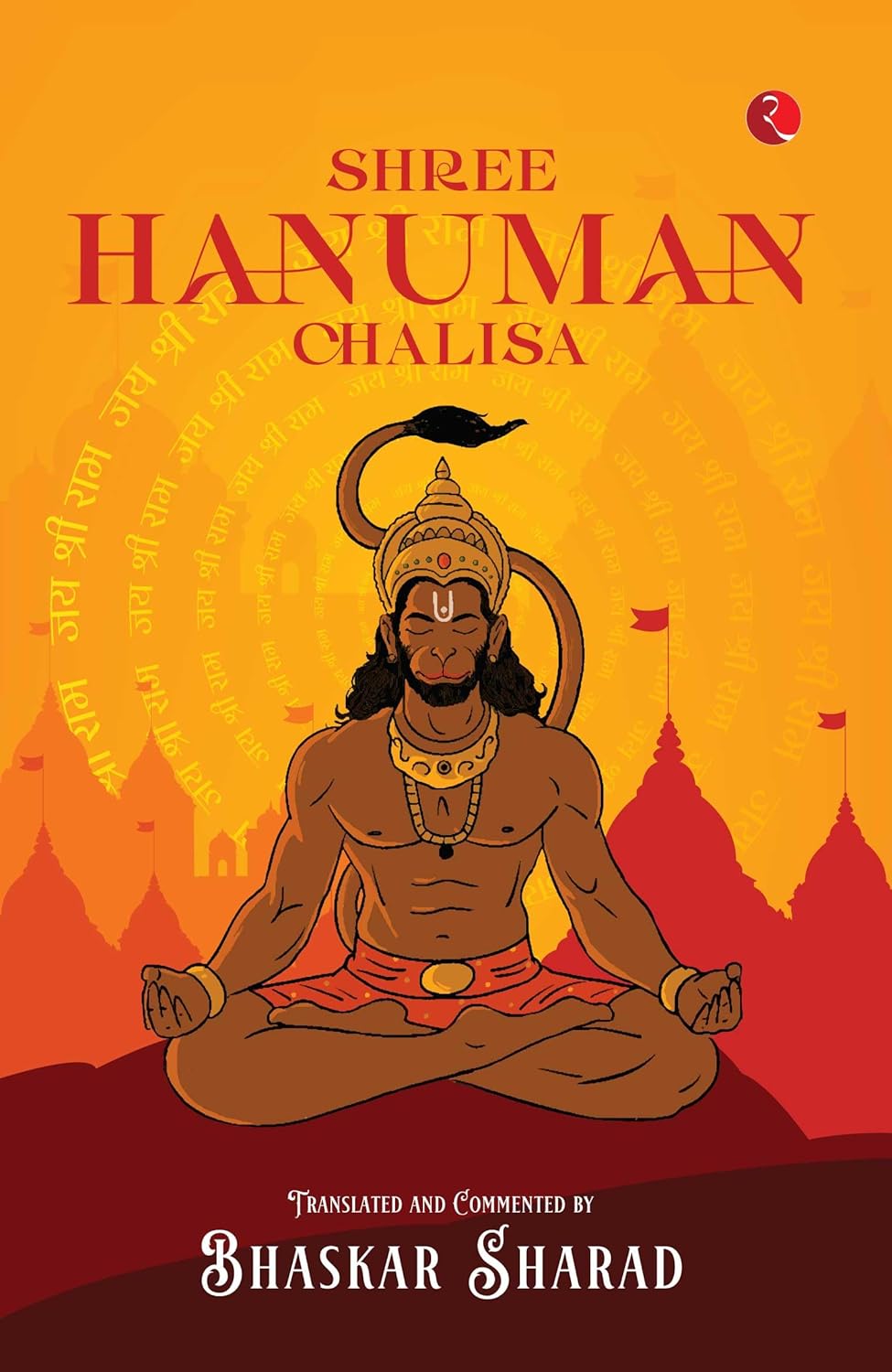
Shree Hanuman Chalisa by Bhaskar Sharad (Book Review: 4.25*/5) !!!


4th Book of 2026


There are certain texts in Sanatan Dharma that we grow up hearing long before we fully understand them. Hanuman Chalisa is one such sacred composition. We memorize it as children, chant it in moments of fear, recite it before exams, interviews, journeys, and sometimes even before sleep. Yet, very few of us truly pause to understand the depth hidden within those forty verses.


Shree Hanuman Chalisa, translated and commented upon by Bhaskar Sharad and published by Rupa Publications, is a 92-page devotional companion that attempts to bridge this very gap. It brings together the original verses, the concluding dohas, and a clear, contemporary English translation, followed by a lucid explanation of each chaupai. What makes this book stand apart is not merely the translation, but the intention behind it — to make the sacred accessible without making it superficial.


Whenever life feels slightly unstable or emotionally heavy, I find myself turning toward spiritual literature. There is something deeply grounding about revisiting timeless verses that have carried generations through uncertainty. Reading this book felt less like “completing” a book and more like sitting down with a guide who gently explains what we have been chanting for years.


The author does not attempt to over-intellectualize the Chalisa. Instead, he unpacks its spiritual depth in simple language, allowing the reader to see Hanumanji not only as the embodiment of physical strength but as the ultimate symbol of devotion, humility, and fearless service. Often, in popular culture, Hanuman is celebrated for his power — lifting mountains, crossing oceans, defeating demons. But this commentary repeatedly reminds us that his real strength lies in surrender, discipline, loyalty, and unwavering faith.


One of the aspects I appreciated most is how the commentary connects ancient wisdom to everyday life. The explanations do not remain confined to mythology; they move into reflection. For example, verses that speak of fearlessness are gently linked to how we handle adversity in our personal and professional lives. Lines that praise Hanuman’s humility are interpreted in the context of ego and self-image in modern society. Without sounding preachy, the book quietly invites the reader to introspect.


The English translation is contemporary and clear, making it accessible even for those who may not be deeply familiar with Sanskritized Hindi. At the same time, the sacredness of the verses is preserved. This balance is not easy to achieve. Many translations either become too literal and rigid, or too simplified and diluted. Here, the devotional energy remains intact.


Another beautiful aspect of this book is that it encourages the reader to slow down. The Hanuman Chalisa is often recited quickly — sometimes mechanically. But when you read each chaupai followed by its explanation, you naturally pause. You reflect. You begin to see patterns — themes of surrender, courage, wisdom, discipline, service. It almost becomes a meditative exercise.


The commentary also subtly shifts the way we perceive devotion. Hanumanji is shown not as a distant deity to be feared or merely worshipped for favors, but as an ideal to be imbibed. His strength is not aggression; it is restraint. His courage is not arrogance; it is faith. His service is not compulsion; it is love. This shift in understanding can transform the way one approaches prayer itself.


In today’s fast-paced world, spirituality is often reduced to quick rituals or motivational quotes. This book resists that tendency. It does not try to market the Chalisa as a “success formula” or a miracle shortcut. Instead, it presents it as a lifelong companion — something to revisit during chaos, confusion, or even moments of gratitude.


If I have to mention a small limitation, it would be that readers looking for deeper historical or scriptural cross-references may not find extensive academic detailing here. The focus is devotional and reflective rather than scholarly. But perhaps that is also its strength. It does not overwhelm; it guides.


What I personally felt while reading this book was a renewed connection with verses I had taken for granted. It reminded me that repetition without understanding becomes habit, but repetition with awareness becomes transformation.


This book is not meant to be rushed. It is meant to be kept near your bedside, revisited on Tuesdays or Saturdays, carried during travel, or opened randomly on a difficult day. It works beautifully for young readers trying to understand the Chalisa in English, as well as for elders who wish to deepen their reflection.


Overall, Shree Hanuman Chalisa by Bhaskar Sharad serves exactly what it promises — a lucid, devotional commentary that bridges tradition and understanding. It preserves sacredness while enhancing clarity. It turns recitation into reflection.


For anyone who chants the Hanuman Chalisa regularly but has never truly explored its meaning, this book can become more than just a translation. It can become a spiritual mirror.


I would rate this book 4.25 stars out of 5 — not merely as a reading experience, but as a companion for inner steadiness and faith.

PURCHASE THE BOOK HERE

Thanks!


WRITING BUDDHA


Wednesday, 25 February 2026

Wabi Sabi by Nobuo Suzuki (Book Review: 4.5*/5) !!!


3rd Book of 2026


Whenever life is not very pleasant, I try picking up a self-help book because there is always one or a couple of insights that make it easier to move forward through tough phases. Sometimes, even if the ideas are not new, a book presents them differently, bringing the same old advice into a more productive and implementable perspective. Reading “Wabi Sabi” by the Japanese author Nobuo Suzuki did exactly that for me. This 160-pages hardover book takes us deep into one of the Japanese Zen philosophies, which also forms the title of the book, meaning “The Wisdom in Imperfection.” The book carries a foreword by none other than Hector Garcia, the co-author of another famous Japanese bestseller, Ikigai.


The author explains the individual meanings of the words Wabi and Sabi, and what they represent when considered together. Taking us through different interpretations, Nobuo emphasizes that it is about finding wisdom and beauty in incompleteness, imperfection, the unfinished, and the impermanent. The book is divided into three sections—The Philosophy of Wabi SabiWabi Sabi in Art, and Wabi Sabi as a Way of Life.


In the first section, the author introduces Zen philosophy and Wabi Sabi briefly before delving deeper. One chapter explains why we should not be too hard on ourselves while chasing perfection, as the world conditions us to believe that perfection is the ultimate goal. It highlights how, when we begin to accept our own imperfections, we also learn to accept the imperfections of others. In doing so, the world becomes slightly more bearable and empathetic.


The author further discusses relationships, explaining how expectations can often lead to disappointment. Everyone is living life according to their own timeline and vision; comparison and expectation only complicate relationships unnecessarily.


In the chapter on drawing inspiration from nature, the author explains how nature is endless and rarely perfectly finished. Even ancient palaces often have a corner left incomplete. The foam of the sea forms and dissolves endlessly. The idea of a “proper ending” is largely a human construct, and it is often the source of our inner turmoil.


The second section is dedicated to Japanese art and aesthetics, where creations are not always made with the intention of being perfectly finished. Instead, broken parts, recycled elements, and purposeful incompleteness are embraced to create something unique. Within this section, the chapter on melancholy stood out for me. The author beautifully explains why melancholy is an indispensable emotion and how it can exist without necessarily leading to depression or loneliness. Nobuo also highlights how people today often suppress melancholic feelings through medication. He gently guides us toward understanding how creativity, calmness, and even happiness can emerge by embracing Wabi Sabi principles.


In the third section, the author shifts towards practical implementation. He provides examples and tabular formats that contrast how things are commonly perceived versus how they could be approached through Wabi Sabi. The example of a broken bucket and the story of a painter who never saw his work as genius—even at the age of 110—illustrate how imperfection can lead to excellence. It reinforces the idea of focusing on personal growth rather than comparison.


The chapters on creating space through minimalism may sound like common advice, but the step-by-step guidance on decluttering both externally and internally makes it actionable. The author also references modern habits—constantly checking emails, scrolling social media, rushing towards our phones—instead of spending time in silence or with nature.


The book contains beautiful black-and-white and coloured glossy images, reinforcing how imperfection can be just as beautiful as something seemingly perfect. Each chapter ends with a poetic “Meditation” section. There are numerous lines that feel deeply reflective, even if they are not presented as typical motivational quotes.


Talking about drawbacks, I felt the author could have provided clearer guidance on how to maintain a Wabi Sabi mindset when professional and personal expectations constantly demand urgency and deadlines. Living this philosophy in a fast-paced environment is challenging. Additionally, including more real-life examples of public figures who embraced imperfection and turned it into success could have strengthened the practical aspect. For most of the book, the narrative leans more towards philosophy than implementation, placing it in the same segment it subtly critiques in other self-help books.


Overall, Wabi Sabi feels like a meditation in itself—best read when life feels chaotic and cluttered. It resonates deeply in such moments; otherwise, it may come across as just another philosophical self-help book rooted in spirituality. I give this book 4.5 stars out of 5. Thanks to my sister-in-law for gifting it to me.

PURCHASE THE BOOK HERE

Thanks!


WRITING BUDDHA