Showing posts with label Spiritual. Show all posts

Sunday, 29 December 2024

The Heart of Understanding by Thich Nhat Hanh (Book Review: 4.5*/5) !!!


35th Book of 2024


Well, there’s a tendency I have observed in my reading marathon where I always start and end my year with either spiritual or self-help books. And this is definitely not planned but a pattern that I have observed. After reading Kahlil Gibran’s The Prophet, I picked up “The Heart of Understanding” written by Thich Nhat Hanh today and completed it within two hours with slow and mindful reading. This book by Aleph publication also comes up with a tagline that says “Transforming Suffering into Peace, Joy and Liberation”.


The book starts with a foreword by Shantum Seth who tells how he got intrigued by Buddha’s teachings and went through trainings like Vipassana etc. after which the teachings of Thich started inspiring him. The foreword gives the book a good start as you are first taken into confidence before starting with the real content. Then there’s a second foreword as well written by Peter Levitt. Here he introduces us with Prajnaparamita Heart Sutra which is one of the Buddhist teachings through which you can discover a way for peace to be realized. This Sutra is basically what this book is all about.


As I have myself been to Vipassana meditation recourse for 11 days, I was able to relate with the concepts being discussed in the book. The chapter starts with making us understand how all of us are tied together as Interbeing. None of us can survive without each other. Author helps us understand it with a great example of paper as to how a paper can’t exist without wood, cloud, water, sunshine, soil, time, space, the earth, the river, the heat etc. It gives immense clarity behind the logic that we have the whole Universe within us as well as being a part of the whole Universe as well.


Further, author explores the concept of emptiness and breaks down the concept of duality for us. It makes us comprehend how every positive thing exist because of non-positive elements and vice-versa. It realizes us of the fact that when we get the food, it is because someone else is not able to. That makes us understand the term called “Inter-are” where all of us are present because of someone’s absence.


The concepts are definitely new and gives the Buddhist vibes throughout. It helps us understand the law of nature and appreciate everything- good or bad – because the beauty of life is such. It also explores the fact that just life and death are not our starting and ending point but we continue even before and after that. It helps us understand that just as wave is water and water is wave, similarly we are just a wave which shall keep on occurring and dissolving.


Overall, the book is full of spiritual wisdom which is enjoyed by someone like me who has always believed in it. It ends with the topic on meditation and chanting as well. I never read anything by Thich Nhat Hanh before but after this, I am sure I am going to explore more of his writings and learnings. I give this book 4.5 stars out of 5.


Thanks!

 PURCHASE THE BOOK HERE

WRITING BUDDHA


Tuesday, 2 July 2024

Happytual: The Non-Pursuit of Happiness by Pawan Kumar Mishra (Book Review: 3*/5) !!!


6th Book of 2024


There are times when you need a spiritual book to make you understand the basics of life to balance and manage your emotions. As I was facing some issue due to certain unwanted aspects happening in my professional life and I sensed that I am not able to manage my mind, I thought of picking up a short book which is semi-spiritual without going much into minute details. This made me chose the book named “Happytual” written by Pawan Kumar Mishra. The book also comes with a tagline that says “The non-pursuit of happiness”. It is published in around 120 pages by Rupa Publications.


As the title of the book suggests, the prime focus of the author while writing the book is to narrate it to his readers about how to be happy in a spiritual context without doing much about it but just analyzing yourself. Author’s intent is very evident right from the first instance when he dives into the topic that he wants us to understand the benefit of going within and finding peace somewhere there rather than trying too many things to achieve it from external sources.


Author has chosen the very same narration methodology of conversational tone where a younger character is asking questions about life to an elder mentor and he is answering and guiding the character with the insights that can change the course of their life by just tweaking the way they look at things. Author has used very easy language while writing the same which ensures that readers of any age group shall be able to go through it easily. Author has blended the ancient wisdom with the modern context by giving some new examples to explain the theories and explaining the old concepts in a new tone.


The concept of Fourth which is almost a reference to soul is nicely explained which makes it easy to understand where do we need to hit within to fix things in our life. The main USP of the book is the chapter named “The Lotus Flower” where author discusses about 24 petals of the flower by naming each one of them on an area that needs to be managed to lead a happy life. Later on, the way author comes to the conclusion of how happiness shouldn’t be a pursuit helps us understand how we can achieve it without actually chasing it.


Author also touches upon yoga and meditation and teaches few deep breathing techniques which shall turn out to be essential for beginners in this area who haven’t tried anything before. Along with such insights, the way author has also tried taking through the arc of each of the characters involved in this keeps you interested in the book.


Talking about the drawbacks or shortcomings, after reading almost 900 books, I must say that I couldn’t find anything unique in the book. Definitely, author has tried to speak the same thing in a new way but it doesn’t teach you anything new. This shall be a fine book for beginners but if you have already gone through a spiritual kind of a self-help book, this one might not sound new or unique to you. Hence, I rate this book an average 3 stars out of 5.


PURCHASE THE BOOK HERE


Thanks!


WRITING BUDDHA


Thursday, 28 December 2023

Questions You Always Wanted to Ask by Swami Mukundananda (Book Review: 4.25*/5) !!!


36th Book of 2023!


I always get excited whenever I get to know that a spiritual leader/personality has written a book because their perspective of seeing things is always very optimistic and calm than how we look at things. I wanted to finish my reading target of 36 books for the Year 2023 with one such book. Hence, I picked up recently released book written by Swami Mukundananda named “Questions you always wanted to ask”. The book is published by Rupa Publications in around 190 pages. One can easily finish the book within a single sitting itself but the kind of spiritual and insightful gems author keeps on sharing with us doesn’t allow us to read it in speed but give each chapter its own time and reflect upon the same.


As the title of the book says, it is about the questions we generally have in our mind about life which we wish to ask to a spiritual guru and learn from them on how to handle our issues. Author has cumulated all such basic questions and tried giving answers from his perspective unapologetically. Author doesn’t shy away from writing solutions which might sound quite biased in terms of spiritual process but he assures that he only responds back to a question with an answer as experienced by him rather than giving some random templated answer. The book starts with talking about faith on how can one classify between blind and true faith. This chapter itself gives a solid foundation to the book as it clarifies how people generally falls into the cycle of blind faith without understanding what devotion actually is.


Swamiji is very crisp in his responses to every question and doesn’t end up writing long generic pieces which we have already read in some newspaper articles or Facebook/WhatsApp post. He gives short answers but with a very effective tone. Even while reading the answers, you start feeling some positive changes in your mindset and attitude. It is understandable the kind of impact it would make to us if we start following those advises and suggestions. In one of the chapters, author clarifies how all of us have misunderstood the concept of visualization and we believe that just by visualizing some ideal situations, we would manifest it into truth. He throws upon the light on how equal amount of effort is also required from our end in order to make our visualizations turn into true events.


Author doesn’t confine the book in either – spiritual or practical world but tries providing modern solutions even to the old-school questions. His intention is evident in every word that he wants to help readers in receiving the answer they’re looking forward by investing their time in this book. He has written every page with responsibility and ensures that the reader gets the maximum benefit out of the book and mostly, he has been successful in his endeavour.


There are topics where author has provided insights on the subjects such as reincarnation, past lives, destiny, life’s purpose, spirituality, religion, meditation etc. On the other hand, author has widely discussed about modern topics such as work-life balance, finding time for devotion, searching for a spiritual guru, self-confidence, enthusiasm, family life etc. Similarly, author also speaks about practical implementations for several topics such as reading scriptures and from where to start it – why Ekadashi fasting is necessary and how should one initiate it – how can one perform daily sadhana and meditation and for how long – the benefits of providing Seva – adopting vegetarian lifestyle etc.


Reading this book is like sitting in a breeze and enjoying pleasant flow of wind. The tough conditions and situations of our lives are also being talked of so easily that we don’t feel uncomfortable while reading them. For anyone who has never read spiritual books or didn’t perform spiritual practices, this book will be a good start to enter into the world of spirituality. The topics are nicely divided into different chapters. Every topic is then beautifully segregated in terms of several questions which helps us understand the direction in which the answer is being drafted.


Talking about the drawbacks, I must say that the author has provided very basic answers in certain sections which people keep on hearing anyway in their life. People expect something extra when they pick up a book from a spiritual personality like Swami Mukundananda. Secondly, author has promoted his belief right in our face without realizing that this book could be picked by anyone – either an atheist or people belonging to other religions as well. It felt very immature from the author’s end. Thirdly, author regularly gives reference of his own initiative and markets it while giving few answers. I think it should have been avoided.


Overall, this is a good read and can be gifted to anyone falling above the age of 12. I give this book 4.25* out of 5.


PURCHASE THE BOOK HERE


Thanks!


WRITING BUDDHA


Tuesday, 20 June 2023

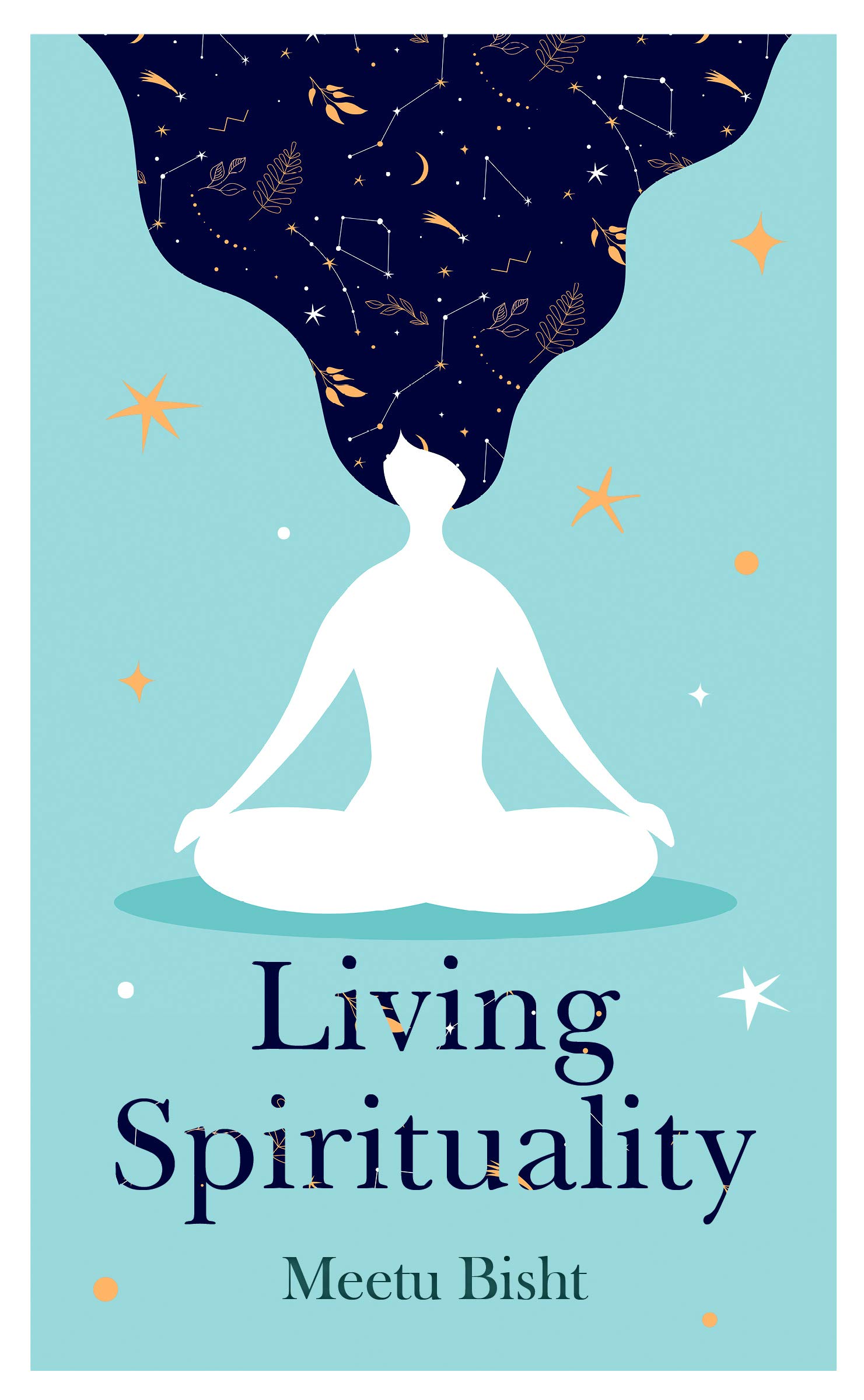
Living Spirituality by Meetu Bisht (Book Review: 4.5*/5) !!!


21st Book of 2023

I don’t know why is this a phenomenon that few good books keep sitting in your shelf for months until you pick it up. This has been happening with me since last few years. One such instance is with the book named “Living Spirituality” written by Meetu Bisht. I had got it right when it released but due to some or the other reason, I always kept it aside to be read slowly at the right time in my life. I don’t know if this is it or not, but I have finally completed reading it within 4 short reading cycles of 1.5 hours each. This is a short book written in 200-pages and published by Hay House publication.


The book tries to defy some myth regarding spirituality which has become quite a confusing topic these days because in the age of Internet, we have ended up following multiple spiritual and yoga gurus online. Meetu tries to make us understand how simple being spiritual is. She tries to explain that there’s nothing that we need to do beyond our limits to call ourselves spiritual. She has divided the book in 28 different chapters where each of them tries to speak on one perspective of Spiritualism. There are instances where we get to know about the new perspective whereas there are moments when you completely disagree with the author’s point of view. The goodness in her writing style is that you still don’t hate the book and continue reading it with the same charm and curiosity.


Meetu’s intent is very clear that she wants human to understand that they just have to be their natural inner-self rather than trying to do something extreme in order to be called spiritual. She has been focused on the title of the book and I am amazed how she could talk about it without failing or dwindling even once in 200 pages. Her writing style is very simple which will help even beginners to understand what she is talking about – something which is very difficult for beginners to grasp when they read books on spirituality or philosophies.


Because this book tries to give a new concept of spirituality, it becomes quite difficult to accept few of Meetu’s point of view but I am sure author knew about it while writing. Like, for example, I still don’t agree with her point that meditation doesn’t lead us towards spirituality. I believe it helps us lot in understanding silence and calmness which eventually changes a lot of things within us. Meetu tries to explain us how spirituality is all about our inner-self which already exists. We just need to maintain a lifestyle which helps us understand our core. She emphasizes that no external activity or achievements are needed to unlock spirituality in our life.


Author gives a nice insight upon why we have certain relationships in our life because we have certain Karma to be dealt with. Hence, escaping to some spiritual recourse in a different place does not serve the spiritual purpose as the Karma does not get settled because we don't engage in these karmic transactions. Similarly, she gives a very meaningful aspect of why we need to keep working like a regular person and earn for our bread-and-butter rather than thinking of being at a safe place like mountains etc. She explains how we can be spiritual even while pursuing our regular life.


Author also talks about the fact that until we don't learn from our mistakes, there are certain patterns that will keep repeating in our life and we’ll keep on suffering difficult situations until we don’t learn from it and complete the karmic cycle. By the end of the first half of the book, I was little frustrated regarding author continuously trying to tell us what living spiritually is but not telling us how but the way author has documented her second half of the book – took away all my complaints in a moment. She gives us insight into the detailing of how we can become spiritual by sharing elements like essentials when seeking spiritual growth, hurdles to self-awareness, A-Z of self-transformation, 99 traits of a spiritual person etc. I wished highlighting all the sentences written in these chapters. The 2nd half of the book definitely has repeat-value and everyone should go through it periodically to check if we have improved lately or not.


Overall, this is a light book but with intense capabilities of bringing change within us. I give this book 4.5 stars out of 5. I recommend it to everyone. Meetu Bisht has done a phenomenal job.


PURCHASE THE BOOK HERE


Thanks!


WRITING BUDDHA


Thursday, 1 June 2023

HAPPINESS IS SUCCESS by AiR/Atman in Ravi (Book Review: 3*/5) !!!


18th Book of 2023


Reading spiritual books help me understand a new perspective every time, hence, in the quest to get back into having some new spiritual knowledge, I picked up the book named “Happiness is Success”. This book is written by AiR/Ravi in around 176-pages and published by Rupa Publications. I read the Kindle version of it. Sincerely speaking, the book can be read within one or two sittings but as author has nicely divided it into small chapters, if you are a new reader, it would be great if you go through 4-5 chapters in one sitting which will help you understand the topics and perspectives well. Right from the first go, author’s intention is clear about making the readers understand about the difference between Success and Happiness.


Ravi, the author, gets an early success in life and like everyone, even he believed that he’ll feel complete happiness after it. With time, he understood that achieving success doesn’t mean that it can provide you ultimate happiness. Gradually, he became spiritual and understood that happiness is something we should be chasing every moment rather than running behind money and materialistic aspects of life and imagining to be successful after getting the same. There are few chapters which helps you understand the concept well. The quotes in the beginning of every chapter are inspiring and makes you grasp deep logics within few words itself. Similarly, there are some beautiful poems which will directly touch your heart. I wished to note down each of them separately to refer to them whenever I feel down.


Ravi discusses about different types of fear that a human being has about losing success. He tells how most of us are scared about this which doesn’t let us live peacefully. Similarly, author discusses about the importance of knowing about our happiness triggers. He also goes into details helping us know how we can know about the activities or experiences which helps us understand what our happiness triggers are.


In the latter part of the book, Ravi talks about meditation and how it can change the whole way of realizing about the reality of our being. The emphasis is given on how we are human being and not human doing. Just being ourselves can bring tremendous difference to our mental health. Author gets deep down and explains how we are not the body, mind or ego that we believe we are. He talks about how we aren’t any of these but something beyond this- a spirit/energy/soul. Just knowing this fact can change our perspective.


He gets into the details of Karma and how one can settle this account to not get rebirth and get rid of this materialistic human life. There’s another chapter which captured my interest. It speaks of rainbow love and explains how every colour of rainbow signifies different kind of love and we should be aware of it and realize this in every relationship we have. Ravi, then, talks about the main source of all these colours and what does that original form of love means.


Overall, this is a good book for any beginner who has not gone through other deep dialogues on the concept of spirituality and happiness. Talking about the drawbacks, I feel that the book just keeps on speaking the same thing repeatedly. After a time, you get bored of the same concept written in different ways. There is nothing new after the first 10 pages. You will get frustrated reading the two words “Success” and “Happiness” in almost every second sentence. I think author should have spoken about different concepts talking about this aspect. Also, the way author talks about success, it seems it is a negative thing to have. Author should have been little matured while writing about it as many youths can get a wrong impression that they don’t need to build career at all or have aspiring goals to reach heights in their life. These are the main concerns because of which I felt the book is less inspiring and impactful. Hence, I will go with an average 3 stars out of 5.


PURCHASE THE BOOK HERE


Thanks!


WRITING BUDDHA


Monday, 1 May 2023

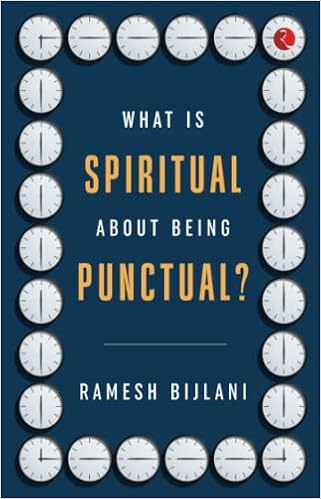
What is Spiritual about being Punctual? by Ramesh Bijlani (Book Review: 4*/5) !!!


13th Book of 2023


Well, after reading couple of fiction books, I thought of getting back to my favorite spiritual genre. I picked up Ramesh Bijlani’s non-fiction book named “What is Spiritual about being Punctual?”. This 184-pages book is published by Rupa Publications. There are 36 different chapters where each of them talks about a topic/activity/lifestyle in which we can add a spiritual aspect and make it a devotional or divine act rather than doing it just for material gains. We generally question and discuss how we can be spiritual in this materialistic and practical world where every minute of ours is related to being responsible at work, family or our own well-being. Ramesh has tried to eradicate all these doubts in our mind and teach us a way how we can be spiritually-connected in every form of life in whatever we do.


I liked the way Ramesh has tried summing up this book in different chapters where each of them is of around 3 to 7 pages only making it easier for the readers to go through any topic at any given point of time. It’s not necessary to read the book in the traditional linear fashion. You can jump to any chapter as per your mood and it will give you immense perspective to understand a new philosophy towards living life rather than being dependable on the previous chapters. Ramesh has used easy language for his readers to understand the content easily without getting confused with too much spiritual jargons. Yes! Many spiritual authors purposely use such words, narration or philosophy that it makes tough for reader to understand its meaning. I am glad Ramesh has tried to reach out to his readers like a good teacher explaining things until completely understood by the readers.


Though the title of the book is a bit confusing, it is also just one chapter in the book than the whole book discussing about this one particular aspect. I don’t know why it was made the title as it’s not easy for readers to get attracted towards it due to its complexity. Anyway, author talks about how we can understand the real purpose of our life which is definitely related to spirituality and then, we find answers to everything that we do in our life regarding how we can do it in a spiritual manner. In the last chapter, author gives a great understanding regarding how even a war like Mahabharata was fought in a spiritual manner and not for purpose of violence or display of power. That chapter in the end makes everything crystal clear to you even if the first 35 chapters may not be able to make things decipherable for you.


There are few examples that I would like to mention here which author has discussed in the book: how marketing agency advertises a product in a manner where consumers are fooled about its features whereas it can be done in a way that both the parties gain something from it rather than feeling cheated – how divorce can be avoided and even if it needs to be processed, how both parties can mutually separate without causing any harm to the other – how we can drive car on the road keeping our ego and anger aside taking care of everyone: pedestrians, other vehicles on the road, two-wheelers etc. – Grihastha chapter discusses on how parents shouldn’t think raising child is a transaction where they should accept the same love in return…


Further, author discusses how few people have the bad habit of grumbling over everything bad as well as even when something good happens with them – how Internet has made it possible for us to be physically apart yet communicate with each other instantly which was clearly not imaginable even 25 years back – the utilization of money can be improved by ensuring that we use it for good means and realize that people who need it get the due rather than acting miser with them – the importance of touch for human beings is explained and how hugs make us feel calm and safe - Surprisingly, author also covers the aspect of photography regarding how rather than enjoying the present moment we end up capturing it and get stuck in past forever looking at them – How shopping can be done in a way where both shopkeeper and customer can interact with each other thinking about a win-win situation rather than approaching each other for personal gains only etc.


Ramesh has given ample number of examples that helps us understand that even in our daily routine, if we just change the way we look at things, we can achieve happiness and joy rather than waiting for it to arrive in our lives only when we do a spiritual activity. Author has given all the perspective being unbiased towards everyone. The book is basically based from the learnings that author gained from the spiritual personalities- Sri Aurobindo and the Mother. Initially, I thought that the book will be all about promoting them but author doesn’t get involved in these tactics and stays true to his purpose behind writing this book.


Talking about the drawbacks – there’s not many but just two points I would like to mention. Author could have added little more topics to the book i.e. around 15-20 more of them as I wanted to know more about such perspectives but felt that the book ended soon after letting us know a very little. Secondly, in the topics such as divorce/marriage/love etc, author sounds biased towards women as all the wrong activities are mentioned to be done by the men only. Author could have kept it balanced by also talking about how women are equally problematic in the modern times and makes it difficult for men to survive by blackmailing them on pretext of lodging false complaints of rape and dowry etc. as our Indian laws are gender-biased.


Overall, this book needs to be read by everyone as it speaks about aspects which can change your whole approach towards life and people. I can definitely feel that I learnt few new things from this one even after having read more than 900 books. I give this attempt 4 stars out of 5.


PURCHASE THE BOOK HERE


Thanks!


WRITING BUDDHA


Monday, 19 December 2022

Maxims from Mahabharata by Sridhar Potaraju (Book Review: 3.75*/5) !!!


31st Book of 2022


Since last decade, the way Sanatan Dharma is being spoken and spread to its own people who didn’t even know that the Dharma they follow is called Sanatan and not Hinduism – the word we keep referring in religious context. I must have read more than 100 books which speaks about our ancient history which few people refer as mythology in either fiction or non-fiction formats which is great as people are getting to learn about our own religion in easier language. I recently completed one similar book sent to me by Indica Books called “Maxims from Mahabharata” written by Sridhar Potaraju.


This is a short-book not even of 100-pages with 12 different chapters. You must be wondering what is the meaning of the word “Maxim”. So, it basically means “few words that express a rule for good or sensible behavior”. Here, author has read Mahabharata and he feels that it’s an ocean of knowledge which talks not only about religion but a lot about human beings and their philosophy and psychology. He tried to pick few which he had noted down or highlighted while reading the same. The 12 Maxims that is discussed in this book chapter-wise are Dharma, Truth, Principles Governing Punishment, Karma, Hygiene as Good Conduct, Nature, Faith, Anger, Reputation, Eternal Values, Mental Health and Power of Words.


Each of these chapter consists of shlokas picked up from Mahabharata which are written in the Sanskrit text itself along with English text for English readers to help them pronounce it. It further has its one-liner translation and the exact chapter or parva in Mahabharata from where it’s picked up. Author also provides context before providing the shlokas so that the reader is able to understand who spoke it to whom and under what situation. This helps in avoiding misinterpretation of the shlokas and referring to it in wrong context – something that atheist or people not believing in our ancient history regularly do to disrespect it.


The book helps you understand how advanced our ancient texts are where they not only cover the then contemporary issues but also speaks in context that it sounds relevant in our modern time too. In the chapter of truth, there’s a mention that if a person is truthful, it’s a bigger good karma than reading all religious books. I evaluated and found it to be so true. If a human being restricts himself in being truthful always – the kind of image he’ll have in society plus the kind of people who’ll want him to be on their side or have him in their team will give him great fortune. Not only this, it also mentioned 13 forms of truth which are Impartiality, Self-control, forgiveness, modesty, endurance, goodness, renunciation, contemplation, dignity, fortitude, compassion and abstention from injury.


Similarly, I liked the way forgiveness has been explained where it is asked to forgive someone who has made mistake so that he/she can get a chance to improve in future. Punishment always is not the right solution. It also talks about punishing someone definitely if the mistake is repeatedly being committed knowingly. I felt this to be so relevant in our professional and corporate life these days. Some managers don’t have these basic skills of understanding when to punish and forgive due to which the career is affected of many employees.


In the Karma maxim, you will just get into the self-evaluation mode when you will read that it has been said – everyone knows their deed – if what they are doing is right or wrong. Still if one chose to go with it, the karma will definitely return back. I was wowed by this. We, as human beings, definitely know about the quality of our action if it’s good or bad still we do it thinking that we will never suffer by it. There are chapters which tells about the significance of protecting nature, maintaining good hygiene, concentrating on our reputation and managing our anger. All this talks about the variety of topics on which Mahabharata is able to guide us upon.


The chapter on mental health again open our eyes as we think this is a modern concept whereas our texts have given its challenges and remedy thousands of years ago. The book also teaches about humility – speaks on son and daughter equality – the consequences of having ego and how it takes everything away from you. Overall, the book is a good beginning for people trying to understand a little bit about the kind of lessons our epics deliver.


Now talking about the drawbacks- firstly, the same context is repeated multiple times which makes it boring and monotonous. Author could have someone arranged the chapters in a manner where for a single context, listing down all kind of lessons we can learn for different maxims. Secondly, the English text for Sanskrit is not appropriate. If you’ll read it, you’ll pronounce it completely different than what it is. Thirdly, I feel that the book could have consisted more shlokas with detailed explanation like a full-fledged book rather than a short read.


Overall, this is a fine attempt which must have taken lot of efforts to compile and put together. I would give the book 3.75* out of 5.


PURCHASE THE BOOK HERE


Thanks.


WRITING BUDDHA


Thursday, 6 October 2022

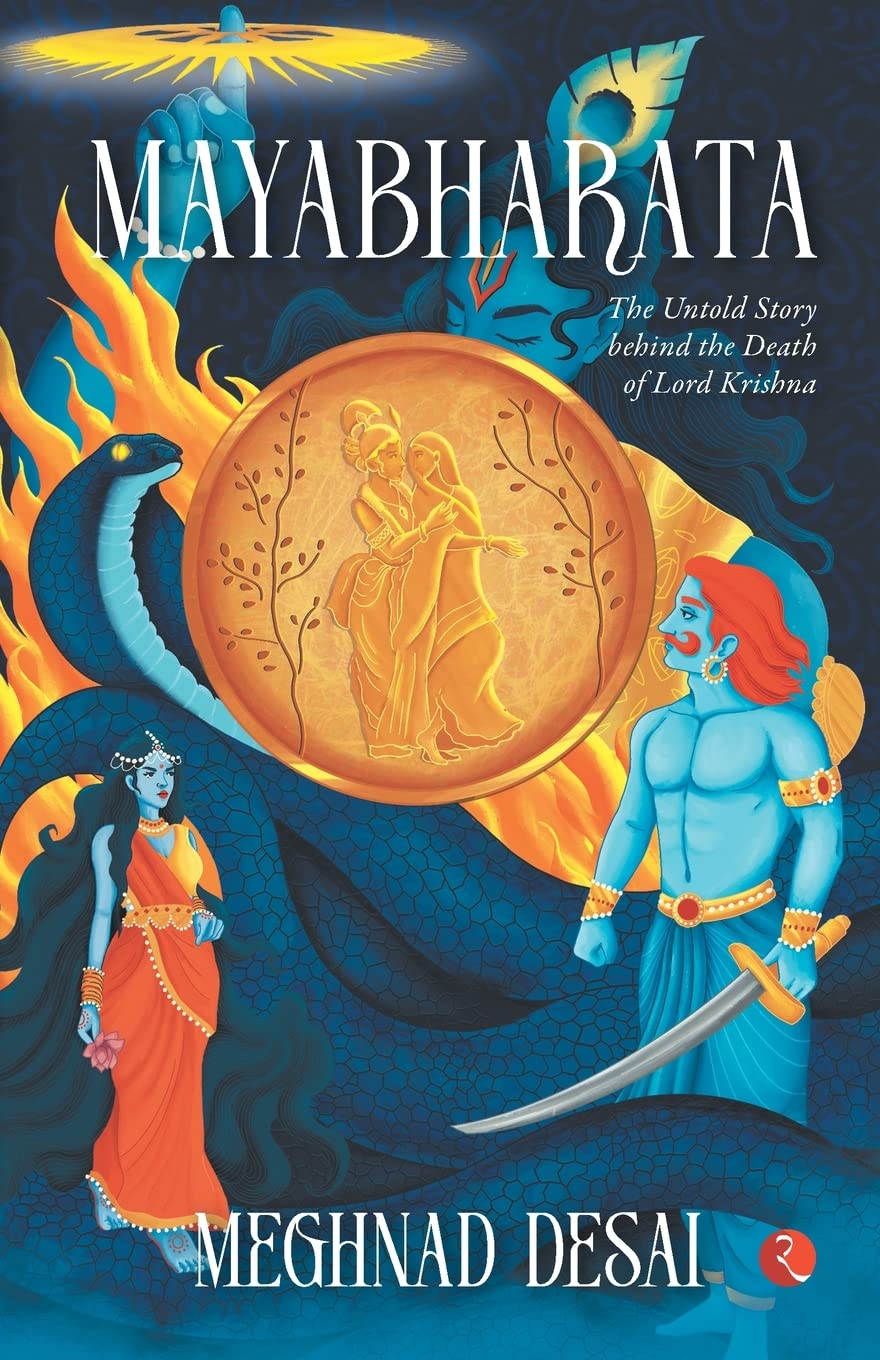
Mayabharata by Meghnad Desai (Book Review: 2*/5) !!!


24th Book of 2022


Well, any name of Lord Vishnu or his avatars make me curious and that’s the reason why I have most of the books related to this subject with me. In case I don’t have any, I am on Youtube searching for the videos related to the almighty. This love for the Lord made me pick up Meghnad Desai’s latest book called “Mayabharata” the tagline of which says “The Untold Story behind the Death of Lord Krishna”. The book is published by Rupa Publications in around 145 pages hence it’s a good short mythological read. Every one of us is aware about the story behind Lord Krishna’s final moment when he was resting under a tree and a hunter named Jara unintentionally strikes a bow in his toe which leads to his death. I have read many interpretations of this where few also say that Bali was reborn as Jara to complete the cycle as Lord Rama killed him so the karma had to be balanced.


Talking about the concept shared in this book by Meghnad, the whole interpretation is completely distinct from whatever I have read till now. This made me turn the book after completing it and read the back cover which said “the book is the deployment of the author’s imaginative and creative powers” which relieved me as I must say that the whole thing doesn’t sound convincing at all. There’s always a question as to how can such sub-standard conversations and incidents happen after the epic Mahabharata – the tale which has so many nuances that every time you think it’s done, there’s a new layer which raises many new questions and provides you many more insights about life and relationships.


Author’s writing style is definitely very easy and beginner-friendly hence you won’t find difficulty in reading this mythological book written with creative liberty. The chapters are also divided interestingly based on characters initially and later deep dives into the respective sub-plots which takes us to the final climax. The book starts with several characters but the one chapter which gave the story a push was the one about Ashwatthama. How he thinks of every pandav as a liar and cheater makes you look at all the five brothers along with Lord Krishna through a very different lens.


One of the highlight and main element of the book is conversation between an outsider called Maya and Lord Krishna. The character of Maya is the reason behind the title of the book hence you can comprehend the importance of him in the story. The way Maya questions Lord Krishna and makes him accept that he may have been wrong in the way he dealt with the whole war scenario and the kind of strategies he implemented to make Pandav survive surprises you as a reader as we have never heard Lord Krishna not being able to win a conversation. Though this is an interesting read and a unique version but the whole thing sounds very fictitious because we know how Lord Krishna tackles any conversation or situation and wins it with his tactics.


The sexual tension between Draupadi and her husbands is spoken enough. Similarly, Yudhisthira sleeping with all the widow women in order to ensure that the clan doesn’t vanish completely is given a good emphasis upon. On the same note, Lord Krishna’s love-making and intimate moments with his wives and gopis are mentioned in many chapters repeatedly. Frankly speaking, I have never heard or read about Lord Krishna in such a manner and the way author has narrated these segments, it sounds disrespectful and demeaning. I just felt that author doesn’t have any belief in Mahabharat and the whole thing is written just to gain some fame by writing on this topic as nation is interested in Hinduism and its tales these days. This is the 1st book I have read where Lord Krishna looks like the weakest characters of all.


Overall, I would say that after a long time, a book has been quite disappointing to me; and particularly, from the mythology genre. I give this one 2 stars out of 5.


PURCHASE THE BOOK HERE


Thanks!


WRITING BUDDHA 


Tuesday, 20 September 2022

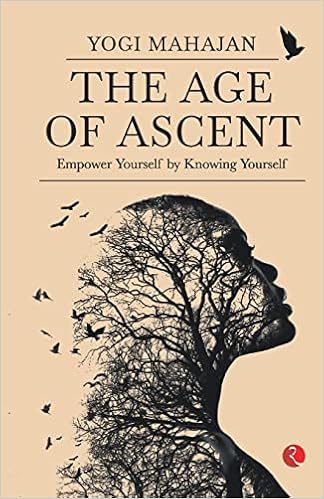
THE AGE OF ASCENT by Yogi Mahajan (Book Review: 4.25*/5) !!!


21st Book of 2022


I have a separate soft-corner for spiritual books and you must have understood with the choice of books I am reviewing in recent few months. This time I picked up the book by Yogi Mahajan named “The Age Of Ascent”. It’s summed up in around 170 pages and published by Rupa Publications. It also has the tagline which says “Empower yourself by knowing yourself” and it completely justifies it. There are few books which you can’t finish in a single reading or so. It took me almost 1.5 months to complete this book of just 170 pages because of the kind of subject author has chosen to deep dive into.


I have read many books on spirituality even by personalities like Sadhguru, Om Swami, Eknath Easwaran etc. but I can say that Yogi Mahajan has not performed a bit less than any of the eminent personalities while writing about the subject. He has chosen the extremely popular and interesting topic of 7 Chakras and Kundalini and the way he has explained each chakra in detail along with its illustrations will just make you understand a lot of things about our body and mind which we are completely unaware of. Generally, authors keep on using the word “Soul” repeatedly which sounds deep but readers aren’t able to comprehend the logics and explanations provided for the same. Here, author has used this word as minimum as possible and tried getting into the practical approach of explaining our inner self.


Author has dedicated a chapter each for every chakra and ended the book with good summarization with few chapters which are distinct but makes us understand how everything works in collaboration. There are many beautiful quotes and anecdotes which you’ll get tired of highlighting repeatedly. You will want to keep everyone of them handy with yourself always. Some of them are so impactful that it can make you understand things which 10 books can not write to impress you. The book mainly promotes Nirmala Deviji as a spiritual figure and Sahaja Yoga as a tool to get your chakras and its vibrations corrected and reach a stage where you are able to experience the blooming of Kundalini. Like Sadhguru’s book – Inner Engineering, the main concept is kept as a closure for reader to search the name Nirmala Devi and get associated with their community. Well!


Author has not shied away from giving examples from Quran as well as Christianity. He is very open in terms of explaining how every religion is speaking about the same destination irrespective of whatever path a human being chose to experience the zenith. I also admired the way book connects the whole health parameters with the well-being of our chakras. I was surprised to know that the vibrations of left and right side of our body are also distinct which can cause a totally different thought process in our mind. Similarly, every chakra is associated with few of our organs and how it will work. We can sense which chakra is losing balance based on our health issues. It then makes us aware on which chakra to focus to enable the healthiness of the respective organ. Reading such scientific element in a spiritual context was quite intriguing and made me read not more than 3 pages a day – to grasp every word properly without losing anything between the lines.


Overall, the book is a different experience. It might seem harder for a beginner in the world of spirituality and chakras but people interested in spirituality or have already read at least 10 books in the genre will enjoy this to the fullest. I give the book 4.25* out of 5. Recommended!


PURCHASE THE BOOK HERE


Thanks!


WRITING BUDDHA 


Monday, 25 April 2022

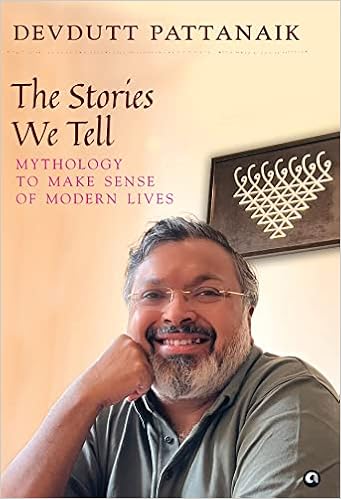
The Stories We Tell by Devdutt Pattanaik (Book Review: 4.5*/5) !!!


10th Book of 2022


Discussing Indian mythology has become my new favorite thing. To discuss, you also need to know about it which has made me incline towards mythology books. There are only few authors who write on this in non-fiction genre trying to state facts as it is without shying. One such author is Devdutt Pattanaik who has become quite popular for retelling mythology from different perspective. He also faces certain criticisms for diluting some facts but it is inevitable to get through this because the topic is sensitive and some people genuinely get hurt if they don’t find things written the way they know about it. I am just done reading Pattanaik’s latest book released by Aleph named “The Stories We Tell” having a tagline that says “Mythology to make sense of modern lives”.


This 212-pages book discusses 72 different topics/tales which speaks about different kinds of mythology not only associated with Indian culture but other cultures and establishments too. Devdutt tries to widen our vision about how some stories are retold in different texts and cultures with the names of every culture’s respective Gods or Kings. The similarities between these stories were really surprising as the cultures are widely separated by the geography yet they speak almost the same thing. I kept on getting astonished in terms of how stories pass not only from one generation to another but even from one culture to another.


There are tales not only from Ramayan and Mahabharat but other vedas and puranas too. This really makes this book unique because the kind of stories and characters we get to know are generally not spoken about in other mythology books. It initially became really overwhelming for me to understand which character belongs to which phase of mythology but it makes you surf Internet to better your knowledge base. It actually helped me understand many different aspects of our Indian culture. There are few chapters which closes with moral or question or author’s perspective on the tale. In any case, it makes you think and realize what did the whole thing mean and that’s the magic the book does with you.


There are few pointers that stayed with me which I would like to mention as bullets below:

-          Author tells how Vishnu’s avatars are shared on social media which relates with the Human evolution theory but Devdutt gives it new outlook based on the caste system which I really found interesting.

-          Different versions of Kartikeya’s birth tells us of India’s diverse and complex layers in its culture.

-          The chapter on “Two Epics One Theme” tells us many similarities between Ramayan and Mahabharat which is surprising. Author also discusses few differences to give the complete view of it.

-          Surpanakha’s chapter was interesting for me as we only know about her from the moment she finds Ram in the jungle but here we get to know about her history before that incident which was a new learning for me.

-          Author clarifies the difference between Asuras and Rakshasas in one of the chapters which I believe is very necessary for people to know because generally we categorize them as the same kind of people.

-          “Hara and Hari” tells us the difference in personalities of Shiva and Vishnu yet author discusses how they are portrayed completely different in their images.

-          I never knew about Goddess Lakshmi’s sister, Alakshmi and even a Diwali ritual dedicated to her made me feel quite ignorant. Haha!

-          Another chapter on prominence of Numbers in our history and vedas is nicely described using which author also explains why he stopped at 72nd tale in this book.

-          The relevance of few animals such as Fish or Horse is dedicated a chapter which makes us understand why we often keep seeing or hearing about them in almost every mythological tale.

-          The difference in versions even in Abrahamic culture is catchy to read because people often say that Hinduism has multiple references whereas other religions doesn’t.


These are just few takeaways from the book otherwise there are many points which you would like to learn and keep in your mind so that you can have enough insights about our stories and culture. I wish I had a great memory to store a wonderful book like this in my brain forever. The chapters are short which makes it easy for you to read 4-5 of them every day and consume them slowly. As Devdutt has put it in his previous books, I would have loved to have him make us understand these stories through some hierarchical diagrams or images because few chapters had so many characters and their relationships explained that I would lose the link again and again.


Except that, this book is a good company to have while traveling or before sleeping every day. I give this one 4.5 stars out of 5. A very knowledgeable and well-researched piece of work.


PURCHASE THE BOOK HERE


Thanks.


WRITING BUDDHA


Tuesday, 16 November 2021

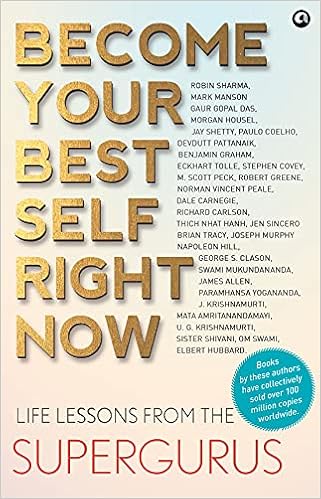
BECOME YOUR BEST SELF RIGHT NOW: LIFE LESSONS FROM THE SUPERGURUS (Book Review: 4.5*/5) !!!


35th Book of 2021


Reading a self-help book even when the concepts become howsoever repetitive gives you the boost you need in your low phase. Still, I have now started avoiding self-help books because I feel almost all of them try to speak the same things which you have read in your first 10 books itself. There are very few authors who speak of concepts which are yet to be revealed or write a chapter/quote which can impact you in a completely new fashion. But as an avid reader, I can’t end up reading every author’s book to find if there’s something new in it hence, I keep myself away from the genre these days.


I got to know about this book named “Become your best self right now” which is a compilation of a chapter or excerpt taken from popular books written by esteemed authors. So, basically, this book shares with you 31 chapters from 31 different bestselling books written by 31 different popular authors. Can you imagine the capacity and scalability delivered in this book in terms of knowledge? On top of that, the book is not even 200 pages which means you can either read a chapter daily for a month and absorb the concepts completely or you can finish it in just a single sitting itself. I must tell you, the book has so many beautiful sentences that I got busy in just highlighting the transformational quotes throughout my reading journey. Every time, I found a quote, it felt as if it was better than all the previous ones I had marked till now. Such is the level of the content compiled for this book!


The few of many chapters from the books which I really liked reading are mentioned below:

-          The Monk who sold his Ferrari by Robin Sharma

-          The Subtle Art of not giving a Fu*k by Mark Manson

-          The Psychology of Money by Morgan Housel

-          The Power of your Subsconscious mind by Joseph Murthy

-          7 Mindsets for Success, Happiness and Fulfilment by Swami Mukundananda

-          Autobiography of a Yogi by Paramhansa Yogananda

-          Om Swami etc.


The book has divided the content in three parts where each of them primarily focuses on Success, Wealth and Life. My personal favourite from which I really learnt a lot are Part 1 and 3. The authors who are speaking on different aspects of Success and how you can achieve it are from the likes of Devdutt Pattanaik, Stephen R Covey, Dale Carnegie, Joseph Murphy etc. Murphy’s book is nicely summarized with two examples which helps you understand the concept aptly. Talking about the Life part, it majorly focuses on spiritual aspect of living where we are regularly told to cherish the moment rather than worrying about past and future. Hence, every excerpt primarily focuses on the same in the initial chapters, but latter chapters are completely diverse; such as the one written by Paramhansa Yogananda. That chapter is written in some different space altogether which will make you read it more than three times to grasp the complete understanding of it. Yet, I am not sure if I have understood the deeper meaning hidden behind it.


Talking about the 2nd part, which is on Money and Wealth, I got quite disappointed as none of the chapters are picked which can tell us about practical ways on focusing upon the wealth factor in our life. Most of them gives us the solution of thinking about getting rich and eventually, with the help of subconscious mind and energies, we will get rich. This is not a great advice to be given for people who need to learn about wealth. This is definitely good for people who are already in the process of investment and multiplication of their earnings and savings but not for people looking for practical tips and suggestions. This section literally frustrated me.


The book, in whole, will definitely teach you on how to focus upon your priorities and happiness rather than others. It has enough motivation to pull you up from the bed and redefine your days, routine and habits. Few chapters will even impose a different way of looking at things within you – the way you never looked at world, people and things before. Now talking about the drawbacks, well, it doesn’t have many. So, the 1st one has already been discussed about the Wealth section. The other one is about skipping some important and effective chapters from the books they have already considered for the compilation and mentioning another substandard chapter from it. Like, Robin Sharma has effectively transformed many lives by making people wake up at 5 AM in the morning whereas the book has picked up a less effective chapter which discusses about living in the moment. There are many such instances which I believe should have been considered to cover as many aspects as possible by compiling diverse topics rather than similar stuffs together.


Overall, this is a good start for you if you have not read any of these popular books to get a crux of how these books speak with the readers and brings the change in us. This will make you pick up at least one book out of 31 mentioned here which will open the reading horizon in your life. I give this one 4.5 stars out of 5. Definitely recommended!


PURCHASE THE BOOK HERE


Thanks!


WRITING BUDDHA 


Thursday, 24 June 2021

Aksara Bhagavad Gita by Haribakth & Vaishnavi (Book Review: 4.5*/5) !!!


21st Book of 2021


As all of you know that Bhagavad Gita is one of my favourite passion and I just love going to it whenever I feel doubtful, sad, clueless, and directionless. Every page of it has an essence that ends up giving you the motivation and meaning you are looking forward to. I find many people talking about the purpose of life. Most of them say just for the sake of it but the people who really wish to seek the meaning of this question tend to turn towards Bhagavad Gita and get the answer they were searching for. The biggest question arises for people when they wish to get into the reading of Bhagavad Gita is – Which is the original Bhagavad Gita and which will give me the best and real meaning of it. This happens because almost all the books are translated and explained by different authors hence a person finds it hard to find the real Bhagavad Gita.


All the problems a reader faces in searching a Gita and then understanding it is discussed in this new book I just completed reading after 4 months. It is named “Aksara Bhagavad Gita” written by the combo of father and daughter – Haribakth and Vaishnavi. Haribakth is the pen name of Mr. Ravindra Rao. Before this, I read the book called “19th Akshauhini: Algorithm of the Gita” written by the same father-daughter duo and it was surely a new experience for me. Haribakth writes every book from a research point of view which sounds like published papers by big Universities of the world. I like the way all the points are articulated and summarized in all the chapters.


The book is of around 600 pages, and it needs a lot of patience for the reader to finish reading it. If you have ever wondered why we find contradiction in several shlokas of Gita (or we perceive it in such manner), then the whole effort of this book is to ensure you understand them well along with the context of it.  It has been written in a conversational discussion mode between the two characters- like the tone in which the original Bhagavad Gita is written. A character asks questions related to her queries on Bhagavad Gita which is then provided as a detailed answer by another character resolving all the doubts and problems. I liked how the characters are evolved from the authors’ 1st book and anyone who has read that will feel nostalgic.


You will start feeling the arrival of the main content of the book from the chapter named “Navaratri Conversation” which speaks about lot of subjects such as how Gita is read, heard, and understood from a semantic perspective but not from conceptual perspective – why only God narrated the Gita and not entrusted upon someone else for the same – Juxtaposition – Dharma – Surrender – Liberation – Sins  - Sacrifices – Knowledge and Silence – God on Memory – Shunya and its reference with God – examples of syllogism in the Gita etc. There are many other ideologies that the author discusses in this chapter giving reference of the chapters which shall arrive in the future in the book. This is basically like a precap of the whole book. In case you don’t have time, you can go through this section itself and you are done knowing a lot of things about Gita and its correct perception.


After this – author begins the real debate and names all the chapters in this section as Kurukshetra. I liked this metaphor as the Gita was actually spoken on the ground of Kurukshetra or say, the Kurukshetra War, and even here in the book, the chapters with real debate on all the main pointers are named as Kurukshetra. This segment discusses many primary teachings of Gita. Author gives many references of how the God is Supreme and no one is beyond him but He is beyond everyone. I liked how author gives the example and reasoning of Algebra to discuss the topic of Perishable vs Imperishable. Author also provides many pointers to state why Gita is complete and self-contained. The book also talks about definition of different concepts such as Spiritual and Mundane, Temporary and Permanent, Crime and Sin etc. Author also talks in detail about one of the important aspects discussed in Gita i.e. three types of Guna – Sattva, Rajas and Tamas. We are also explained the concept of how God is the cause of all actions, gunas – the performer and we – just the medium through which the action is performed.


There are many such explanation, detailing and learnings that are provided through this book which will make your hold on Gita and its messaging more solid and powerful. I liked the tables at the end or between of every chapter which helps in understanding the summary of the section in a very professional manner. The pointers/bullets used throughout the book emphasize every point that the debate discussions need to make. Generally, as a reader, we make notes of all the important points in the book but here, the book is itself written in a way that every sentence of it is important. Just like original Bhagavad Gita, you read any page of this book, and it is going to be insightful for you and the situation you are dealing with. Authors knew it very well how to entertain and inform the readers who are seeking knowledge on Bhagavad Gita and the book is drafted in a very mature manner in the same way.


Talking about the drawbacks of the book, I must say that the length of the book is the biggest concern. This could have either be divided into two different parts so that it could motivate readers to pick it up because a book with 600-pages in such busy life is always going to be a tough decision to read. Secondly, the pricing of the book is on a very high side. I believe it should also be cut short. Thirdly, I must say that the book doesn’t provide a consistent way of writing as you find dialogues in between, then debates, then suddenly pointers and unexpectedly, a table format inserted between them. Author could have worked a little on that front.


Overall, this is a book which I believe you can pick only after you have little knowledge on what Gita is; or even if you have read easier version of Gita by Indian authors. I give this extremely researched and nicely compiled book 4.5 stars out of 5. Recommended to everyone who loves reading Gita or seeks to know the answer on What is God or What is the Purpose of Life.


PURCHASE THE BOOK HERE


Thanks.


WRITING BUDDHA