Sunday, 14 March 2021

Sanskriti Singh: "Karna was not only a man who was wronged by circumstances but he was the only man in the entire epic that was fighting a war with each and every aspect of society" (Interview)


Recently, I read a very good book named “The Flawed Good Man” which was based on the life of Karna during the era of Mahabharat war. I was so happy to read a book based on our ancient history with philosophy being another crux to the writing. I tried knowing a little more about its author, Sanskriti Singh, and got to know that she’s 18 years old. At this age, in her teens, she managed to write about a character like Karna made me more curious about her which led to this interview which is for you to read and enjoy now.


Hi Sanskriti, I have seen that you write majorly on Indian history elements which few people term as mythology these days. Can you please tell us how your interest turned towards this subject?

When I was younger, I had a strong urge to know stories from the ancient Indian Culture. My mother would tell me stories from the epics all the time. Even during Navratri (which is a big affair in Shillong) I would usually go to Ramkrishna Mission and would insist upon buying those illustrated thin story books for children. It was like the more I heard these stories the more I wanted to know and when it comes to Indian culture we can all admit that it is a never-ending flow of beautiful stories and thoughts. I am a strong believer and a spiritual person. I cannot clearly tell as to when was the exact moment I realized how much the subject attracted me towards it but surely the childhood indulgence into this genre made me feel elated So yes I can obviously say that it was a childhood spent in the world of imagination and fantasy that made the love for this subject stronger and also all the time spent listening to stories from my mother. 


You are just 18 years old and you write books on complex characters from our ancient history. How do you find it easy to understand them as not even matured people are able to comprehend the shades behind their characters?
I think when you look around you find a little of every character in those epics somewhere in your surroundings. I have been a loner all along and that made me a very observant person over the years. I paid attention to what a person might be thinking when doing a particular action. The more you read you learn to understand the body language of a person and the psychology. 

It is a misinterpreted fact that it is difficult to understand these characters. People usually put these characters on a pedestal and criticize them but if you want to know them you have to treat them like you would treat a friend. Now that's not easy because you are never made to think like that.  And I would agree that reading made me feel those emotions more clearly. You need to hear your thoughts clearly to understand these characters and the easiest way to do so for me is to distance myself from people. I feel the more people you have the more corrupt your mind gets, they influence your thoughts. I do not like it at all; I like being left alone with my books and thoughts. The more you listen to your natural ideas the more clear these characters become. Every shade of these characters have to be accepted without judgement and you cannot have favourites in these stories you tend to overlook things when favouritism comes in between. 

Tell us something about your latest book - "The Flawed Good Man".

Oh! I can never explain what this book meant to me. The true motive behind writing this book for me was the never-ending news of suicides in and around the world. It's depressing how the numbers are growing. I wanted to write something that can help people understand that no problem can be bigger than the life we have been given. It is easy to kill yourself. It takes mere minutes to kill you but it takes courage to fight back. 

Karna had thousands of reasons to kill him but just one reason to live; his art. I wanted to not tell a story but try and make people realize that it is the most important to find that one reason to live. It is not easy but it cannot be impossible. A man of celestial birth could not escape all the wrongs that happened to him so how can we expect to have our path paved easily?! Karna was a man who never succumbed to the charms of splendour, a throne or power in that case even Narayan because he had his dignity and he knew that he was following his dharma even when he was standing against it. The book is about human emotions and it's pain and suffering and how it's okay to be venerable but that cannot become ones weakness rather make it into strength. I tried my best to bring out emotions of the character that I felt was ignored.

How of all the characters in Mahabharat did you think of picking Karna? 

Karna had a difficult life since he was a child and he faced the consequences of a misinterpreted culture. And for centuries our culture has been subject to such misinterpretation. Karna was not only a man who was wronged by circumstances but he was the only man in the entire epic that was fighting a war with each and every aspect of society. He was not only suffering trauma because the society was unfair to him but he was a symbol of the actual structure of the Indian society when it was first developed. Karnas life stands as an example for all that is wrong and surprisingly it's very relevant in today's world and will continue to be like that. Karnas character was perfect for me to touch the topics that I wanted to address in my second book. Karna is an embodiment of the idea of an ideal society that we want to build while he is also an example of the all the struggle that will go into the making of such a society. Karna was a character through whom I was able to present to people where we went wrong with our culture and how important it is to read and understand the Vedas ourselves than relying on some individuals to spoil it for us.

How difficult it was for you to sideline the character of Krishna as whenever we think of Mahabharat, his prominence and character is most talked no matter what?

Krishna I feel is a very charming character to read about apart from the fact that he is worshipped as well. It was not very difficult to put aside his character because there were rare instances when Karna or Krishna met. Though Krishna knew a lot about what Karna was facing we must also remember that Karna’s dream was to learn from the king of Dwarka but he couldn’t. You can never put apart any character when talking about the other as lives as we see in Mahabharat are intertwined with each other in strange patterns. You can stress over one character and that is what I tried to do. Since, I was dealing with Karna I tried to make sure it remained about him while not forgetting to reflect how others impacted his life. That became a little stressful sometimes because as you said that Krishna is prominent and the moment we talk about Mahabharat, Krishna becomes important. More than difficult it was stressful I would say because instead of Lord Krishna I had to stress over the brilliant Strategist Krishna. Other than a charming mediator Krishna was a very shrewd and complex politician of the epic war. You have to lay your plan well when dealing with such distinguished characters.  

Who are you more inclined towards- Lord Ram or Lord Krishna?

First of all I think both Lord Ram and Krishna are such beautiful characters so distinct from each other yet connected together strangely. I am a Bundela Rajput and my roots from Orchha gives me a unique sense of inclination towards Ram whom we most of the time address as Raja Ram than Lord Ram. Also, over the course of years my ancestors settled in Bhagalpur in Bihar not far away from Mithila made me understand the culture of Ramayan more than that of Mahabharat as a young girl. Orchha being the second Ayodhya of India has a strong cultural influence over the Bundela’s and Ram being the King there is always a strong sense of belongingness that connects me more to Ram ji. I admire Krishna very much though; clever, witty, intelligent, sharp and so-so shrewd that it might annoy you and also make you wonder.

Do you think Ramayan and Mahabharat are just stories or it really happened on our planet?

I do not think that these are mere stories. I am studying Archaeology and frankly speaking there might not be traces of so many people fighting a war or whatever reason people use to deny the existence of the characters I would like to rather say that we must remember that we had an oral culture. Most of the knowledge being translated orally we cannot be sure that facts were not exaggerated. You know human tendency is to exaggerate things and then these stories have been a part of our culture since a very long time. Now you know gossip is more reliable sometimes than documents. There is a clear possibility that the Shaunaks and Vachaks did make things larger than life but that does not end the possibility of truth behind these stories.

I really term these as History than mythology so yes I believe that these characters might have existed in the past sometime.

How easy or hard it is for you to embed philosophy between your storyline?
It is frustrating actually because if you want to reach to a larger mass you must simplify everything and then present it, in the course of doing that you tend to lose control over your own ideas sometimes. Also, I believe in keeping the language lucid so that even if a beginner is reading they will not have to struggle. Philosophy is something very difficult to simplify truly because the ideas come from a complex living culture older than any other culture in the world. Also, people sometimes do not want to hear these philosophies so it becomes a task to inculcate those little aspects of spirituality and philosophy in between the story. It even takes about a month sometimes to finish just one chapter what is again not thrilling. Imagine thinking about the same one line for over a month day and night. But the best part comes when I finally finish it; the satisfaction is beyond words of course.


Which are your favorite Indian authors who write in the same genre as you?

I love reading Kavita Kane mam’s books. She is a brilliant story teller. Amish Tripathi is again wonderful without debate; the originality of his ideas is beautiful. Not precisely mythology but the philosophy that comes from it is also beautifully explained by Osho.

What is the next book that you are working upon and how soon we can read it?

My next book is about a character from Ramayan, I am still working on it but I think I will soon complete it in about a month. I am not sure if I can reveal the name of the character right now but I can surely speak about the central idea.

I am basically trying to bring out the growth of Feminism in our Epics through the new character. Trying to explore the various shades of human character their change in behaviour in different circumstances and also how philosophy and power can be balanced with just how you are mentally.

I hope it comes out this year itself and is also loved by the readers.

Any words for your readers who love reading your book..

Nothing is more important to a writer than their readers. I can only thank each and every person who read the book and sent me their comments. I love reading what the readers think of my book and I can never thank anyone enough for all the responses I got. And every review I received made me realize where I can make things better and I can only try and make the next read better for all. “With not typos and mistakes to be precise” haha…


PURCHASE THE BOOK HERE


Thanks.


WRITING BUDDHA 


Friday, 12 March 2021

Annant Mittal: Enjoy the world of books and your life will always be magical (Interview)


Recently I read a book named “Wadiya Singh visits planet Sparkle” and everything about the book was cool such as its story, artwork, writing style, characters and narration. But something that surprised me more than that was the age of the author of the book, Annant Mittal, who is just 8 years old. Writing such a positive and motivating book at this age has been a wonderful fact which I don’t get to see often in my reading journey. This made me curious to know more about Annant and hence I sent him some questions for interview. I finally have the answer which I want to share with all my readers so that you can support him and read his beautiful book.


Hi Annant, how do you feel after becoming an author and publishing a book?

I’m extremely happy, excited and truly grateful. Now, I’m even more motivated to continue my journey in writing.


Since when are you writing?

I started writing short notes for my mother, on her birthday or as part of treasure hunt when I was about 5 years old. From then on, I started exploring writing short essays about how my day was and sometimes short rhyming poems. When I was about 7, I wrote a story about Wadiya Singh which my parents really appreciated and it became my first published work, ‘Wadiya Singh and the Incredible Sikander’. Since then, I’ve maintained a journal and often write my thoughts and ideas.


Do you remember the 1st piece that you had written? Can you share with us what it was related to?

The first proper essay that I wrote was about animals, specifically about a black racoon. His trials and his journey through the deep dark forest. I love happy endings so everything worked out great in the end. The fun part was writing about his difficult journey.


Tell us something about the inspiration behind what made you think and write about "Wadiya Singh visits planet Sparkle".

I had to write a short assignment on aliens at school. After writing it, I completely forgot about it and last year during the lockdown I found it while looking for something. That’s when I started building on it and included Wadiya Singh and eventually it lead to ‘Wadiya Singh visits Planet sparkle’.


How did you develop the character of "Zazoo"? Did you take any reference from movies or books or you imagined completely by yourself?

For me, Zazoo is an extension of who I am. Right from his hairstyle to his love for science and technology, he is everything I am and aspire to be. Since he is an alien from another planet, I wanted him to look different yet fun.


We saw that you have talked about caring for planet in your book. How do you try at your personal level to take care of the same?

In my house and at school, we are taught to be as eco-friendly as possible. For example, I don’t use plastic or foil paper at all. I try and recycle a lot, be it with paper or card boards. I don’t use the shower, instead use buckets. I use bamboo tooth brush, seed pencils, steel straws and segregate my waste. I also love growing plants at home.


What are you going to write in your next book? Can you please share with us?

Somethings should be a surprise. Don’t you think so?

Stay tuned…


Any message for the readers who are picking your book and enjoying the same?

Enjoy the world of books and your life will always be magical.

Most importantly, Stay Wadiya


PURCHASE THE BOOK HERE


Thanks.


WRITING BUDDHA 


Wednesday, 10 March 2021

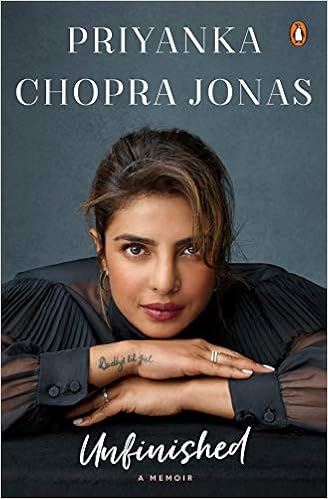
Unfinished: A Memoir by Priyanka Chopra Jonas (Book Review: 2.75*/5) !!!


5th Book of 2021


Well, everyone who knows me are aware of my craziness for Priyanka Chopra. This started right from when I saw her in her first small appearance in the movie “The Hero” and later when the promos of her Bollywood movies started back to back, I just kept falling in love with her. And this stayed till 4 years back after which she moved out of India and left Bollywood as if it didn’t matter to her. When I learnt that she is releasing a book on her life, I got very excited and purchased one for myself and completed reading it within 4 days itself.


To start with, I had lots of expectation with Priyanka Chopra’s book named “Unfinished” but unfortunately, I couldn’t find anything motivating enough to move me out of my current mindset. Yes, there are few quotes here and there which are effective but the way her life story has been written without a proper flow makes it hard to understand what’s exactly happening and with a new occurrence in her life, what kind of transformation she really goes through and how challenging it is for her to cope up with it. Most of the times, she ends up discussing and introducing her family members or Nick Jonas’.


Most of the people who know Priyanka Chopra know through her Bollywood career and let me tell you, the way she has completely ignored her journey with Hindi film industry speaks a lot about a person’s attitude towards being gratitude for the platform which gave the utmost recognition and success. She looks completely in awe of whatever is happening with her in USA and has no inclination or nostalgia attached with her own country anymore. This feeling can be experienced as a reader in every page that you’ll read and it becomes irritating after a point of time. At times, you will even feel as if the book is written only for her new American friends who don’t know about her as she ends up describing Indian culture most of the times in the book.


The book starts with her childhood and school days where she tells how she had to live away from her parents with her relatives and then how she migrated out of India for a long time (even then) from where she learnt many things on how to handle herself against bullies, discrimination and competition. Later, she talks descriptively about various challenges she and her mother faced when they entered Miss India and Miss World competition in her late teens. Reading the final part of that story does give some inspiration for sure but nothing which will wake you up from your dull life.


Then she tells on how she prepared for her acting career and the challenges faced there as she got rejected from movies and replaced by other actresses who had better connections with the respective actors of the movie. But again, as I said above, there are many stories about Priyanka Chopra that we have heard from media – some of them must be true as well as false on which she could have shed some light and helped us know her perspective but what she has done is – spoken only about those factors which are already available in the public forum or where she has already given some lights before. This was very disappointing as we don’t get to know any more about her personality than what we are already aware of. I was also looking for certain instances as to what would be her 1st reaction when she would be meeting Bollywood legends like Amitabh Bachchan or Shahrukh Khan etc. but alas, there is no mention of all these at all.


Overall, this is quite a disappointment considering that you don’t learn anything from this autobiography which is generally an intention of a reader when he/she picks up a book from such genre of such a personality. How she maintains her hard schedule, her workout style, her view on yoga and meditation, her opinion about being workaholic, multi-tasking, Me-too campaign, nepotism in Bollywood, fight against depression etc. is not discussed at all. I believe all of this is her USP and it could have been a magical book if she focused more on what kind of efforts one has to invest to reach from being a normal girl to an International artist than talking in depth about her marriage ceremonies, Miss India/World competitions, UNICEF campaign in details etc. At some places, she is telling us things about how it happens in India – well, why do you need to focus on that? The focus should have been on her attitude towards things, people, work etc. Also, the book sometimes looks as if a newcomer is trying to grab attention even when Priyanka Chopra is now world-known.


I seriously couldn’t understand why this memoir has been written at all when it didn’t have any good self-help or opening-oneself-to-all agenda. I give this book just 2.75 stars out of 5. And yes, in the kind of pricing this is being made available to the readers, don’t think twice in ignoring this book while surfing on Internet or browsing at a bookshop. A very anticipated book has been written in a very careless form – at times in a language and vocabulary sounding like a teenager.


Well, that’s all.


PURCHASE THE BOOK HERE


Thanks.


WRITING BUDDHA 


Friday, 5 March 2021

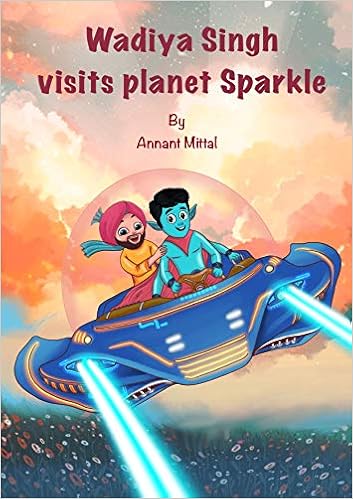
Wadiya Singh visits planet Sparkle by Annant Mittal (Book Review: 4.5*/5) !!!


4th Book of 2021


Well, it has been quite some time that I got chance to go through my childhood books which I have kept it very neatly like some important assets of my life – the ones like Chandamama, Champak, Wisdom etc. But I miss those innocent books and even the innocence in me which made me love those beautiful stories. Haha! I have a 5-years old kid whom I have seen and observed since she was just 6 months old and therefore, I keep on gifting her something or the else on her birthdays. She recently had her 5th birthday and I thought of finally starting to gift her books rather than dresses and games. I found this very interesting book named “Wadiya Singh visits planet Sparkle” written by an 8-years old kid named Annant Mittal.


It was such a surprise knowing that an 8-year old can imagine such a beautiful story and even write it so perfectly that you won’t find any childishness or immaturity throughout the 35-odd pages. It is a short story which talks about the character named Wadiya Singh who is one among us on our Planet Earth but ends up meeting Zazoo, an alien who landed upon Earth from his planet Sparkle. It talks about how they end up becoming friends and share their respective lifestyles with each other. I liked how Annant has designed the story where he talks about many fantasy-related stuffs and even ends up describing another planet which is bit different from planet Earth. The way he has converted his imagination and thoughts into words is applaudable.


Through the story, the author has also tried to give some knowledge to his readers where there are few good words which the target audience of this book might not be familiar with. For the same, he has provided a separate list in the end of the book where the words and their respective meanings are enlisted for reference which one can read and learn and further use in their daily life. Along with this, he has very beautifully explained what is meant by galaxy, planets, asteroids and the concepts such as revolution and the impact of distance between the Sun and the respective planets.


Author has tried giving several social messages through his short story too – such as:

  • -        How healthy food needs to be adopted for healthy lifestyle
  • -       Why plastic bags should be completely boycotted from our planet to ensure environment-friendly life.
  • -      The need to have compassion towards animal and feel empathy and sympathy with them.
  • -      Treating the whole planet as our home and not littering anywhere we want.
  • -      The importance of planting trees and being associated with the nature as it is the source of all the lives of the planet.


Along with the story, with each section of it, author has included very beautiful artwork which makes it more exciting to read as we get to visualize through the illustrations, drawings and paintings how the world of Wadiya Singh and Zazoo is. I really appreciate the efforts made behind these artworks on every page. Author has also added certain puzzles and riddles in the end of the book which will make it very exciting for anyone to enjoy it after completing the book. Along with the book, you get a very cute stuffed toy which is given form of Zazoo. I must also appreciate Sonalika Publications for giving such a good publishing quality to this book which does more justice to the story and motivation of the author.


This book is a very cool pick for your kids or neighbours where children are between the age range of 4 to 9 years. They will surely love the magic this book has for them. I give this effort considering all the factors a good 4.5 stars out of 5. It deserves more but I want Annant to write more and better than this hence I am not giving him 0.5 stars which he rightly deserves.


PURCHASE THE BOOK HERE


Thanks.


WRITING BUDDHA  


Tuesday, 23 February 2021

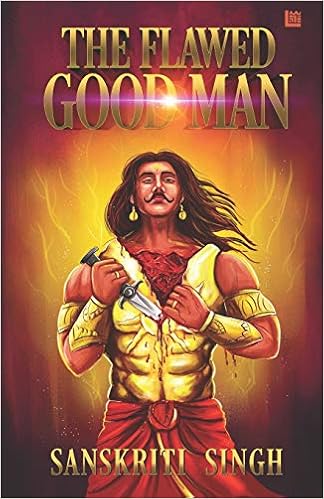
The Flawed Good Man by Sanskriti Singh (Book Review: 4.25*/5) !!!


3rd Book of 2021

As I had said in one of my previous year’s blog post that I need to read as many religious and historical epic books as possible in my lifetime – the process for which I wanted to initiate right from this year. I am lucky enough to find a very good book based on Mahabharat named “The Flawed Good Man” in the 2nd month of the year itself which is based on the life of Karna and his role in the biggest war ever fought on this planet. The book is written by an 18-years old writer, Sanskriti Singh. Yes, you read it right- Just 18 Years Old. This is completely unbelievable for me to accept that someone in their teen can write a book on our epics and do so much justice to it that it seems someone matured enough has written the story. And let me tell you, the book is not a short story but a full-fledged novel of 320 pages. Kudos to the authoress!


“The Flawed Good Man” talks about the life of Karna and what all he went through right before he took birth due to which he never got the respect he deserved and desired. He always struggled for his rights starting with right to education and regularly got humiliated in public for some or the other reasons. Being from an upper-class family, he was identified to be from the caste of Suta who had less privileges comparatively. Due to caste system quite prevalent during those days, he had to regularly prove himself at every step. Whenever I read about Mahabharat before this, it has been more inclined either towards the role of Krishna or Draupadi or Kunti or Arjun but this is the first time when I have read from the point of view of the most talked personality in the Mahabharat- Karna.


The narration is very simple, and author keeps it as basic as possible. Anyone who is even beginning with their reading journey will find it easy to grasp something as complex as historical epic. The vocabulary used is very convenient for one to keep enjoying the story rather than disturbing their reading cycle by picking up dictionary at regular intervals.


The chapters are short and very smartly divided which are either about Kunti’s character and struggle initially and then later talks about several major landmarks in Karna’s life and finally moves into the tangent where the chapters are even based on few other characters with whom Karna had some instances which defined his role further in the war and at times, changes his life for good or bad. These short chapters made the experience of reading more delighting and peaceful.


Along with talking about Karna’s life, author also keeps giving some philosophical inputs which at the age of 18 the way Sanskriti has spoken through her words sounds too matured, spiritual and insightful. I liked how she balanced the book with Karna’s tale, the role of other characters in his life and along with it, managed to add these concepts too which will help the readers understand the messages about Dharma, righteousness, promises, relationships, responsibilities etc. Sanskriti has just made me her fan with these knowledgeable pieces as I got to learn a lot.


I would like to specially mention few parts that mesmerized me as a reader:

-          Ramayan philosophy during Kunti’s swayamwar

-          Dharma Vyadh and Kaushik is a great chapter on many life lessons and how as society, we are doing wrong by discriminating people. The chapter also has lots of spiritual knowledge.

-          The funny conversations between Suyodhan, Ashwatthama and Karna.

-          Krishna’s entry in the book and his conversation with Karna on injustice met with him.

-          The whole Draupadi vastra haran scene which tells you how tough a woman can be even after being at her worst and weakest moment.

-          The relationship between Karna and Draupadi is written with maturity which I believe is very complex to handle.

-          The romantic chemistry between Karna and his second wife, Supriya, is also nicely handled.

-          The Kurukshetra scene

-          The climax of the book right from Karna’s realization that he is going to die till his death scene made me cry. And if an author does that with their writing, I believe nothing more is expected from a reader’s point of view.


Now, talking about the drawbacks of the book, well, from the writing perspective, there is nothing. But I am too angry with the quality of editing and publishing. There are more than 100 typos in the book along with mistakes made in the names of the character as well as grammatical errors. Even spelling mistakes has not been eliminated while proofreading. I am seriously surprised how could both- author and publisher end up missing so many mistakes and what made them publish it in such a hurry that could cost bad feedbacks for the book. Also, it terms of publishing quality, on many left-hand pages, the extreme right words have got blurred so reading even those pages are quite a pain.


Other than these points, the book is a very nice and informative read and I am glad I completed it on the day of Jaya Ekadashi and co-incidentally, even Bollywood has announced a movie on Karna today the dialogues and lyrics of which will be written by Kumar Vishwas. I give this book 4.25* out of 5. I had to reduce 0.5 stars due to the drawbacks I mentioned above. I highly recommend this book to everyone who is interested in reading these stories in simple language.


PURCHASE THE BOOK HERE


Thanks.


WRITING BUDDHA 


Monday, 15 February 2021

Whole by Pamela Puja Kirpalani (Book Review: 4.5*/5) !!!


2nd Book of 2021


As a reader, reading a non-fiction book is another charm in itself. This year in my target of 36 books, I have just completed my 1st non-fiction book named “Whole” written by the first-time author, Pamela Puja Kirpalani. The book also comes with a tagline which says “11 Universal Truths for An Inspired Life” and spreads across 180 pages. It took me around 2 weeks to finish this book as it is very insightful and inspiring. The thing with non-fiction and self-help books is that once you are done reading few of them, every book starts sounding the same hence I am always sceptic picking up one in fear of getting disappointed. Hence, I would like to mention here that Pamela has not disappointed here as she touches upon the topics that generally the self-help authors haven’t discussed in the same light as her.


The book is written in very simple language which I believe is the key behind ensuring that the readers grasp as much information as possible rather than getting confused in the terminologies and vocabulary. I liked the way author begun her book by describing about how the concept of Happiness came into her mind thinking on which she further talks about 11 such factors which can lead us towards it. The book then starts discussing each of these 11 universal truths for an inspired life where every chapter describes one of these truths. I liked the structure how author started every chapter with a quote said by some eminent personality which gave a brief about what we are going to learn further. And just after that, in italic font, author elaborates on the subject and what she is going to discuss with us. And I must tell you, these italic paragraphs in italic font are in itself so inspiring and thought-provoking that you would want to stick each one of them in your room.


The 11 truths discussed are Willpower, Creativity, Integrity, Humility, Alignment, Self-care, Awareness, Acceptance, Altruism, Courage and Forgiveness. In the chapter of Willpower itself, author talks about positive side of self-control and to my surprise, also about how it can drain us which leads us towards stress and upsetting attitude. Then author takes us further into other chapters and discusses important technical concepts such as procrastination, alpha waves and beta mode and their impact on our brain, how neurons work in our brain, the chemical creation due to the same which can lift our mood or depress us to the core, amygdala, rational thinking, fight or flight mode etc. Another applause-worthy research that author has done is to bring several statements from neuroscientists and psychologists which helps us learn a lot about how our brain functions and how we can control it with our attitude towards external factors which are impacting us.


“Integrity” is a very beautiful chapter the concept in which I believe since a very long time. Author helps us understand how to maintain it and what exactly it means. Similarly, the chapter on “Humility” is given a different touch altogether as author discusses about profound self-growth, personal freedom and diverted energies. In “Self-Care”, Pamela explains how just exercising, meditation and prayer/spiritual reading can bring multi-dimensional change in our lives. How waking up early morning and following certain practices can build our whole persona is elaborated reading which can influence many readers.


The book serves its purpose candidly as it is able to deliver some very beautiful quotes – some by eminent personalities, famous authors and many of them by the authoress herself. If a self-help book doesn’t provide any new ideas then there’s no point in writing something which is already up there in published works or online articles- and here, as per my reading experience till date, authoress have really introduced many detailed explanations which I haven’t read before. So, there are definitely topics where I believe Pamela has delivered what other authors couldn’t. This has been a very fresh read overall. She even goes a step further and doesn’t shy at all in sharing her personal experiences and her vulnerable states in life.


Now talking about some drawbacks, I think few chapters doesn’t do the kind of justice which I was expecting from the authoress considering the way she has managed other chapters. I was also looking forward to some meditation techniques and more details on how one can write journals, manage social connections, family life and other such factors which comes in between us and our goals. Lastly, I felt that the concepts and detailing that the author provided in few chapters were completely different from the title of the chapter which confused me a bit.


Overall, this is a very nice read and I recommend it to everyone who love reading self-help books and want to read something different now. This book really provides insights which aren’t discussed much yet. I give this book 4.5* out of 5.


PURCHASE THE BOOK HERE


Thanks.


WRITING BUDDHA 


Thursday, 4 February 2021

The Forever Years by Vivek Kumar (Book Review: 3.25*/5) !!!


1st Book of 2021


It took me quite some time to finish the first book this year all because I was going through some personal pain and issues. Somehow, I am here writing the 1st review of this year of the book named “The Forever Years”. The book is written by the debutante author, Vivek Kumar, in around 270 pages. I ordered the Kindle edition of the book from Amazon and I hope, the paperback of the same shall be available soon.


The book talks about a young boy and his journey from moving to a hostel from his home and how the experiences of living alone shaped his life. The title of the book corresponds with the situation the protagonist of the book is in. Earlier, I thought why the book is named so when the plot is completely different from fishbowl but later I understood the reference of fish with the boy while reading and getting deeper into the journey of the character.


I have lived in a hostel for around 7 months and hence I was able to relate to few of the anxieties, trouble, fun and several other emotions that the protagonist goes through in this story. If you have been from a lower middle-class or middle-class background or even if you belong from 2nd tier city in India, you will be able to relate and comprehend with the incidents and psychology of the characters in the story. I liked how author was able to keep the situations lighter and funnier in some segment whereas he was also able to explore the dark truth of living alone too.


Talking about the characters, I must say the protagonist is very nicely developed in the story and you would be taking him with you even after finishing the book. I must also applaud author for including multiple characters in the story along with their funny nicknames. Haha! It is not easy to write a story with multiple characters in picture where everyone has certain chemistry with each other and the same needs to be explored continuously.


The book gives the same vibe as the series like Gullak or Panchayat where you can feel rural India closely where the small things as celebrated as the biggest happiness of life whereas the big problems are also solved considering them to be just another thing in life. Read it not in a single sitting but as a filler while reading several other books. It is written in such a way. Also, there are many elements in the book which shall make you feel nostalgic as it made me for couple of times.


Now, talking about the drawbacks, I found the narration quite weak due to which it took me time to complete this book. The chapters are short which is a good point but I couldn’t find the story written seamlessly. It is like several short stories woven and converted in a single story. Secondly, there are many characters but except the protagonist, you will not find much depth in any other character which is a turn-off for me as a reader. Lastly, I felt that the book is based since school times hence it could have been written in such a way that even the kids could read it but due to some intimate scenes in the latter part, this becomes a book for say 16+ readers only.


Overall, I give this book 3.25* out of 5.


Thanks.


WRITING BUDDHA