Saturday, 25 October 2025

The Fierce and the Free by Virender Kapoor (Book Review: 4.5*/5) !!!


9th Book of 2025


This Independence Day, I decided to revisit my childhood and read the kind of books that shaped those years. I picked up “The Fierce and the Free” by Virender Kapoor, published by Rupa Publications. The tagline itself tells you what the book is about — “25 True Tales of India’s Boldest Freedom Fighters.” Kapoor has written a book that can be equally engaging for a child in 4th grade as well as for a 70-year-old reader.

Year after year, we keep reading and hearing about the same prominent figures — Mahatma Gandhi, Jawaharlal Nehru, Bhagat Singh, Subhash Chandra Bose, and a few others. But there are countless lesser-known heroes who were equally instrumental in securing India’s freedom. Kapoor revives their stories and introduces readers to these forgotten fighters, allowing us to rediscover the freedom struggle from a fresh perspective.

At one point, the book highlights famous figures like Rani Lakshmibai, Bal Gangadhar Tilak, and Bhagat Singh, while at another, it brings to light inspiring yet lesser-known names such as:

  • Sido and Kanhu Murmu – who led the Santhal Rebellion of 1855–56 against British rule and exploitative landlords.

  • Matangini Hazra – who, even when shot by the police, continued chanting “Vande Mataram.” Her courage at an advanced age remains a symbol of indomitable spirit.

  • Baji Rout – India’s youngest martyr, only 12 years old, from Odisha. He was shot dead by British police for refusing them passage across a river during a protest. His fearless act became a rallying symbol of youth resistance.

Each chapter is dedicated to one freedom fighter and doesn’t extend beyond five pages, making it easy to read and grasp the essentials of their stories. For readers who wish to explore further, it’s a great starting point — for example, after reading about Baji Rout, I couldn’t resist researching more about him online.

Virender Kapoor doesn’t follow a typical biographical style listing parents’ names, birthplaces, or dates of birth. Instead, he divides each chapter into clear sub-sections and narrates the most defining events from each person’s journey in India’s struggle for freedom.

The book also reveals how many of these revolutionaries were connected — either by geography, ideology, or shared missions. A few fascinating interrelations that I learned from the book include:

  • Sido and Kanhu Murmu, Mangal Pandey, Rani Lakshmibai, Tantia Tope — all part of or inspired by the 1857 Revolt, India’s first organized rebellion against British rule.

  • Tilak, Pal, and Lala Lajpat Rai formed the Lal–Bal–Pal trio, symbolizing early assertive nationalism.

  • Tilak’s writings inspired younger revolutionaries like Savarkar, who later founded secret societies in London and India.

  • Chittaranjan Das influenced Bengal’s revolutionary network, which produced figures like Khudiram Bose.

  • Kartar Singh Sarabha (Ghadar Party) inspired Bhagat Singh, who called him his “guru.”

  • Bismil, Ashfaqulla Khan, Rajguru, Sukhdev, and Azad were all linked through the Hindustan Republican Association (HRA), later renamed Hindustan Socialist Republican Association (HSRA).

  • Khudiram Bose, Basanta Biswas, and Amir Chand were part of Bengal’s earlier revolutionary network that influenced the HRA’s strategies.

  • Sardar Udham Singh admired Bhagat Singh and drew inspiration from his ideals of revenge and justice.

  • Captain Lakshmi Sahgal headed the Rani of Jhansi Regiment under Subhash Chandra Bose’s leadership.

Now, speaking of drawbacks — I feel the author could have managed these interconnections between fighters more cohesively. At times, the repetition of overlapping events makes a few chapters sound familiar, as similar incidents are retold from different perspectives.

Other than that, this is a perfect book for school students — something you can gift them without hesitation. It’s informative, patriotic, and inspiring without being heavy or monotonous.

I give this book 4.5 stars out of 5.


PURCHASE THE BOOK HERE

Thanks!
WRITING BUDDHA

The Higher Education of Geetika Mehendiratta by Anuradha Marwah (Book Review: 4*/5)!!!


8th Book of 2025


I remember reading Anuradha Marwah’s Aunties of Vasant Kunj last year and enjoying it enough to rate it 4 out of 5. This year, I came across another book by her titled “The Higher Education of Geetika Mehendiratta.” I was surprised to see that she had written another book within a year, but only after reading the back cover did I realize that it was originally published in 1993. It has now been republished by Rupa Publications in 2025, spanning around 225 pages. Since the author had already impressed me with her previous work, I didn’t think twice before picking this one up.


The book reads like a chick-lit novel, the kind that became popular after Chetan Bhagat during the decade of 2010–2020. However, it’s fascinating to discover that Anuradha had written this story almost ten years before Bhagat even came into the picture. The language isn’t overly simple — it takes a little time to get into the rhythm — but her command over literary English becomes evident within the first few pages itself.


The character of Geetika begins by describing her locality, particularly her village named Desertvadi in Rajasthan. It’s fun to read such a fictional name because you can almost guess which real towns it might be inspired by. The author very wittily portrays the lifestyle of people living in such a place, completely detached from the urban way of life.


You also get a glimpse of how girls were ambitious even in those days, despite growing up in rural settings. Geetika’s dreams come true when she gets an opportunity to visit Lutyenabad — a full-blown city that people from Desertvadi aspire to reach. She makes the most of it, never restricting herself from making choices that would have been unthinkable back in her hometown. It’s exciting to read how she transforms her mindset and personality once she becomes a regular at Lutyenabad.


Her growing interest in boys, and the way her thoughts and feelings differ when she interacts with Andy and Ratish, are portrayed beautifully. You can clearly sense how a woman reflects deeply when it comes to marriage — knowing that compromise is inevitable; it’s only a matter of how much. Anuradha makes this dilemma very relatable through Geetika’s inner conflict.


Geetika’s experiences with her parents and in-laws reveal how she manages to liberate herself despite so many external factors trying to confine her. The book feels like a girl’s diary, chronicling her dreams while showing the heavy price she pays for living them each day. Her support from a few friends — and their surprise at her constant evolution — reflects the author’s understanding of how individuals often get trapped by societal expectations and slowly lose the ability to make unbiased decisions.


The last four lines of the book truly moved me — the part where Geetika speaks with her papa. It made me think about people who live courageously, knowing they’ll be judged even by their own family, yet choose to stay strong for what lies ahead.


Overall, The Higher Education of Geetika Mehendiratta was a joy to read. I give it 4 stars out of 5.

PURCHASE THE BOOK HERE

Thanks!
WRITING BUDDHA


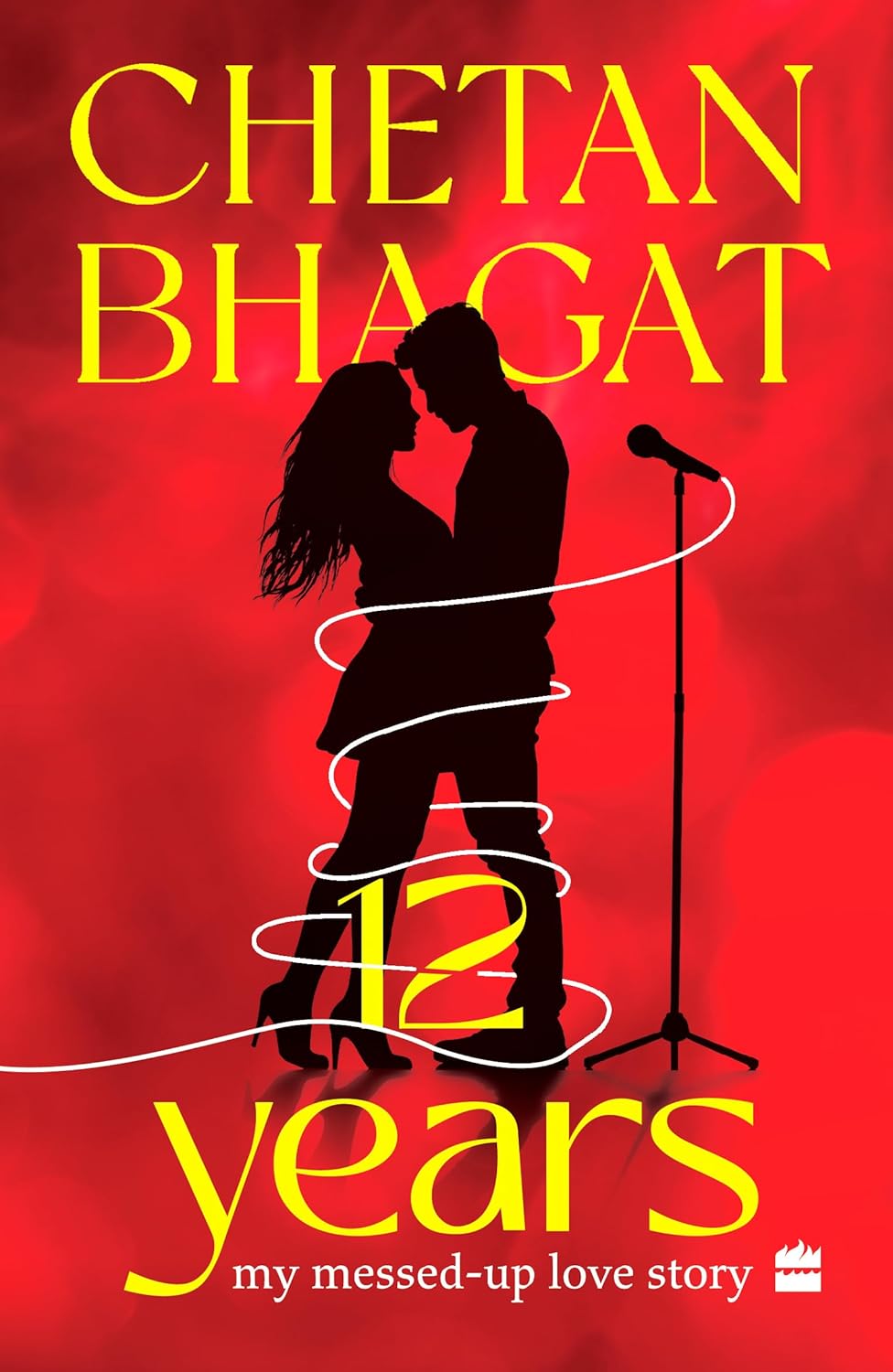
12 Years: My Messed-up Love Story by Chetan Bhagat (Book Review: 3*/5) !!!


7th Book of 2025!


Anyone who began their reading journey with Indian authors more than a decade and a half ago knows what Chetan Bhagat means to the Indian book ecosystem. If you haven’t read him, you probably don’t realize how his success paved the way for countless other authors to find a place in the Indian fiction section of bookstores. Having read all his previous books, I was quite excited about his new release, especially since it arrived after a four-year wait. I finished reading his latest novel — “12 Years: My Messed-up Love Story” — in just two sittings, despite it being his lengthiest book to date at 432 pages!


Chetan Bhagat returns to his signature style — easy narration, simple English, and a conversational tone — the very traits that brought him massive popularity back in 2005. The book flows effortlessly, allowing readers to get through it quickly and comfortably. It revolves around the love story of a 33-year-old man, Saket Khurana, and a 21-year-old woman, Payal Jain. Saket is recovering from the wounds of a divorce while trying to navigate a new career path, whereas Payal is stepping into the corporate world, finding her footing. The title 12 Years is aptly chosen, representing the age difference between the two protagonists.


At first glance, one might expect the story to focus primarily on the challenges the couple faces due to their age gap and differing ideologies. Surprisingly, though, they connect rather effortlessly. The initial dating conversations are engaging, and Bhagat effectively builds the personalities of both characters through those exchanges. The stand-up comedy scenes, a recurring element in the plot, are handled well — light, humorous, and easy to visualize. Alongside the main characters, Bhagat gives fair attention to the supporting ones too — whether it’s Saket’s friend, Payal’s parents, or her influencer best friend.


There are a few romantic and intimate scenes, written with the familiar flair that Bhagat is known for — something that has earned him both praise and trolling over the years. He executes them tastefully, making readers feel the same passion as the characters. The funniest moment in the book is when someone catches them in the middle of an intimate act — a scene that genuinely made me laugh out loud. I even made my friends read that part, and they all had the same reaction! Bhagat also injects humour through a Punjabi character’s perspective on the restrictive lifestyle of the Jain community but does so respectfully, ensuring it never comes across as offensive.


The story later shifts from Mumbai to Dubai, which adds freshness to the narrative. It’s rare to see Indian love stories travel beyond domestic settings, and the Dubai chapters add a nice visual variety. However, I wished Bhagat had explored the setting a bit more; it felt somewhat underutilized.


One major difference this time is Bhagat’s attempt to integrate real social issues into the storyline. He raises strong points about India’s gender-biased divorce laws that often work against men, the trend of unreasonable alimony demands, the social taboos surrounding caste, age gaps, and the “divorcee” label in matchmaking, the evolving dating culture, and the need for youngsters to balance career and relationships. He also highlights how marriages can fail without anyone being a “villain,” how Indian parents still try to impose their choices on children, the struggles of start-up funding, and how social media often masks the reality of people’s lives.


Despite being one of my go-to authors, I must admit that this book didn’t completely satisfy me. Bhagat’s return to love stories feels somewhat dated, offering nothing particularly fresh or groundbreaking, given his experience in the genre. His writing still caters largely to college-going readers rather than evolving to appeal to a wider, more mature audience. The narrative slows down noticeably in the second half, which affects the overall momentum. The plot also follows Bhagat’s familiar formula — two people fall in love, parental opposition arises, separation follows, and fate brings them together again. It feels a bit too Bollywood-esque, which can get repetitive.


I wish Bhagat had experimented more with the storyline, just as he did with the themes he courageously touched upon. The book could have benefited from tighter editing — it didn’t need to stretch to over 400 pages; somewhere around 250–300 would have sufficed. Moreover, the age-gap theme, while central to the title, doesn’t contribute much depth to the chemistry between the protagonists, making its prominence slightly puzzling.


Overall, “12 Years: My Messed-up Love Story” is a casual, breezy read that may appeal to new readers or young couples who enjoy light romantic fiction. For seasoned Bhagat readers or those seeking something deeper, it might not leave a lasting impact.

 PURCHASE THE BOOK HERE

⭐ Rating: 3 out of 5


Thanks!
WRITING BUDDHA

Wednesday, 20 August 2025

A Stitch in Time: The Biba Story by Meena Bindra (Book Review: 4.25*/5) !!!


6th Book of 2025


Reading autobiographies gives me the much-needed kick every time I complete one. Be it written by a person from any field—Movies, Politics, Entrepreneurship, Sports, or Social Causes—it always inspires me. This time I got a chance to deep dive into the life of Meena Bindra, the founder of Biba stores in India, which is one of the leading brands for women’s clothing. This 215-page hardcover book titled “A Stitch in Time: The Biba Story” is one of those rare books written with complete honesty and purity.


The book is nicely divided into small chapters, which makes it perfect to read one a day if you’re not a binge reader. The author starts by describing her childhood and the status quo of her parents and siblings. She shares her upbringing in a way that helps us understand its impact on her later years. Meena narrates her college life and clearly explains how girls were perceived in those days. She talks about an instance where one of her friends got married very early, which reflects the mindset among girls then. Her initial meetings with her to-be husband and how things fell into place leading to marriage make for a very interesting read—it’s hard to imagine people falling in love and proposing romantically 4–5 decades back.


The whole event where Meena hosts a small exhibition with a friend in Vishakhapatnam by sourcing clothes from Delhi highlights her courage and entrepreneurial spirit, even when she had no vision of becoming one at that point. Earning ₹8000 in a single day during those times was a huge amount, and it inspires us to try something on our own instead of just talking about self-employment. She describes her life as the wife of a navy personnel with deep interest which explains us about the multiple shifting to different cities, staying in an isolated environment, inaugurating ship standing beside her husband etc. We often just hear about the life of defence officers but very rarely get an insight into the life of their spouses- the gap that Meena fills successfully in this book.


The story then moves towards her early motherhood days and the challenge of managing budget with two children, which eventually led Meena to decide to earn for her family. The entire journey of BIBA is described in detail—from starting at her home, experimenting with block printing, people loving her designs and spreading the word, Bollywood actresses like Sharmila Tagore and Ratna Pathak shopping from her store, tie-ups with brands for supplying at their outlets, to finally being recognized as one of the best SKD stores in Mumbai and other milestones. The interactions of BIBA with Shoppers Stop and Mr. Biyani of Future Group are very interesting, as they highlight critical thinking, tough decision-making skills, and the importance of trusting one’s instincts.


The last one-third of the book focuses on how her children grew up and began participating in the BIBA business, bringing their own vision. It reflects Meena’s open-mindedness, as she allowed them to implement their modern ideas without letting her own thoughts restrict them from trying and failing. She also candidly shares the scenario of a rift between the brothers that eventually led one to leave the business. She never directly criticizes anyone, but through her narration, we can understand who disappointed her at different stages of her life and entrepreneurial journey.


In the last segment, I particularly liked the essay Meena wrote on Fashion, which carries a philosophical tone that excited me enough to re-read it twice. She also includes a monologue-like piece on girls and how they must lead their lives with genuineness—something often missing in today’s feminist articles. She speaks about what is truly required for girls to progress and compete against the opposite gender and societal prejudices.


The author hides nothing—she even shares intricate details of her growth in business and describes her failures with the same enthusiasm. This honesty makes the book very special and highly recommendable. I would rate this book 4.25* out of 5 and recommend it to everyone who thinks business can only be started with great capital and a big team.

 PURCHASE THE BOOK HERE

Thanks!


WRITING BUDDHA

Tuesday, 19 August 2025

Dark Star: The Loneliness of Being Rajesh Khanna by Gautam Chintamani (Book Review: 3.75*/5)!!!


5th Book of 2025


Being a Bollywood fan, reading a book based on movies gives me the same excitement and thrill as watching films. I always look out for books that speak about the changes in cinema over the years or narrate the lives of popular figures through biographies/autobiographies. This quest led me to Gautam Chintamani’s Dark Star: The Loneliness of Being Rajesh Khanna, which has been re-published by Rupa Publications after 10 years of its first launch. I never knew about this book, but thanks to Rupa for bringing it into the spotlight once again.

Gautam, as an author, has a wide range and vast experience, having written for years across different forays covering everything from movies to politics. This was my first opportunity to read his work, and I must say his writing style is adapted to make the book a fast read. Even though the book is around 270 pages, I never felt that any of the chapters or segments were stretched. He knows how to keep you hooked by regularly changing gears and providing insights into different aspects of the same topic.

The author has written the book on Rajesh Khanna in a way that feels like a case study, explaining how he struggled to find his first successful movie, then moved towards the peak of his career with 15 consecutive hits, and finally witnessed his career graph falling drastically, never reaching those heights again. Generally, when a biographer chooses a personality, the writing is often in awe of him/her, but this is one of the rarest books I’ve read where the author remains completely neutral towards the subject. He talks about both his good and bad aspects—professional and personal—very courageously, without worrying about how it might be perceived by his family or fans.

Gautam has covered his filmography, describing each movie and its story in detail, which helps us understand the nature of films made in those days. He also highlights how Rajesh Khanna came across as a completely soft, romantic hero without borrowing traits from the then-hit actors like Dev Anand. Similarly, after Amitabh Bachchan became a phenomenon in his ‘angry young man’ avatar, which impacted Rajesh Khanna’s career immensely, the author has been able to compare and discuss both these actors consistently throughout the narrative. At one point, you do feel that Gautam is definitely a fan of Bachchan, given the way he speaks so highly of him every time he mentions him. Haha!

One thing that disappointed me was the non-coverage of Rajesh Khanna’s life as a family man. You get all the details about his behavior off the sets—at home, with colleagues, producers, directors, co-stars, and girlfriends—but you never get an idea of how he was as a son, husband, father, or father-in-law. Since the title of the book refers to him as a “Dark Star,” there must have been a certain amount of darkness in his family life too, which should have been covered.

Overall, the book is written for the new generations who can only relive the era of Bollywood in the 60s, 70s, and 80s through such stories, and this one helps in understanding Bollywood’s first superstar—Rajesh Khanna. This is definitely a page-turner, as you want to know what happens next with a personality like his, someone who constantly tried to reach the heights he experienced right at the start of his career. The author must be appreciated for even covering the last phase of his life, diving deep into his final advertisement shoot for Havells fans and his funeral, which was covered by the media as one of the big events of our country. I would rate this book 3.75* out of 5.

 PURCHASE THE BOOK HERE

Thanks!


WRITING BUDDHA 


Saturday, 19 July 2025

The Heroes Among us by Sanjeev Sanyal/Sonia Mehta (Book Review: 5*/5) !!!

4th Book of 2025


I remember my parents purchasing me small biographies of famous personalities during our train journeys in childhood. I would read about them and feel the possibility of achievement and success one can reach in their lifetime. It helped me become disciplined, punctual and a routine-person right from my college days. The impact that such books have on children in their growing years is immense. I still get such books to read for nostalgia as well as dose of inspiration even now. I am glad that Rupa Publication keeps on releasing such books hence I always go through their latest collection on Amazon. My latest read has been “The Heroes Among Us” which consists of small chapters each dedicated to an extraordinary Indian.


The book has been written by Sanjeev Sanyal and Sonia Mehta. This 200-pages book is specifically created for children aged 8 and above – exactly the age when I had become friends with such motivating and inspiring books. Authors have ensured that they write it in a friendly language so that it’s understandable by children easily. Even as an adult who is in his mid-30s, I was able to enjoy the book and never felt it’s not for my age. Authors have kept it relevant for everyone.


The chapters don’t talk about every personality in the same tone or follow the same pattern while narrating their heroics. It is written in a casual approach with short divisions in the chapter based on a particular event associated with the personality, a major experience or just an incident which impacted them to become what they are. It doesn’t consist of the basic details such as their birth date, birth place, name of parents etc. the way we, millennials, were taught in our school books which only bored us whereas this book makes us want to read more even after we finish it.


Another appreciable initiative by the authors are the 25 personalities they chose to cover in this book. It doesn’t speak about the popular or modern public figures only but also talks about some lesser-known personalities who made an equal effort to transform India towards betterment. For e.g. every one knows about Indira Gandhi, Narendra Modi, Dhirubhai Ambani, Rakesh Sharma, Kiran Bedi, Vishwanathan Anand, Mary Kom, Neeraj Chopra but not many knows about Nambi Narayanan who helped ISRO with his technologies to make Rocket launching easier, E. Sreedharan whose expertise in railways helped India develop metros in several cities and build lines on difficult ghats of Konkan railways, Verghese Kurien whose willpower and management helped India bring a white revolution and made it capable of providing milk to its big population on daily basis.


Authors have also concentrated upon ensuring the coverage of Indians from different fields such as sports, politics, engineering, management, space missions, aviation, literature etc. This will help open the mindset of children towards developing their interest in any field and excel in the same. Overall, this is one of the best children books based on small biographies of multiple personalities which is suitable for adults as well for a short-read. I give this book 5 out of 5.

PURCHASE THE BOOK HERE

Thanks!


WRITING BUDDHA


Thursday, 17 July 2025

The Ayodhya Alliance by Ashwin Sanghi (Book Review: 4.5*/5) !!!


3rd Book of 2025!


There are few authors whose announcement of a new book brings you the same excitement as Tom Cruise’s fans who wait for his Mission Impossible series. Ashwin Sanghi, one of India’s top authors, have created the same fanbase and cult following where every new book seems like an opportunity to read the same conceptual novel but with a completely different storyline using the elements of ancient knowledge and strong Indian culture. I just completed reading one of the thickest books of my life named “The Ayodhya Alliance” which is Sanghi’s 8th book in his Bharat Collection. This book has the same flavour as his previous books and right from the word- GO- you can start feeling nostalgic of all his previous works read by you.


The Ayodhya Alliance mixes fact with fiction seamlessly which makes us question what is real and what has been written using creative liberty. The story navigates from 7000 years ago till the present time. It also makes you travel to different continents and countries such as India, Korea, Syria, Europe, Damascus, Switzerland etc. Even within India, it travels to different states and historical monuments. The way it ties all these places with the concept of Dvaitalingam which has the power to create harmony as well as massive destruction with its unique feature of managing the duality of everything under the umbrella is interesting. Every time the reference of two-fish design enters the story, the reader in you gets glued to the book.


The blend of history, mythology and religion is common in such books but the way Ashwin further marinates it with science, geopolitics, spirituality, anthropology, philosophy, archaeology and many other such concepts is unbelievable. His hard and smart work behind researching for this book is evident in every chapter. I was astonished at times that how could he even think of a concept and then find about it in subjects which are enough critical for us to understand it properly to blend it in our fiction story. This is what makes Sanghi a unique author and the reason why he is compared with popular foreign authors as well.


The book could become heavy and boring if it would consist all the above concepts that has been covered by Ashwin in his novel but he knows that he has to keep the readers hooked for more than 500 pages which makes him narrate his story bringing in the human emotions at play. The story revolves around friendship, betrayal, love, romance, childhood issues, jealousy, relationships etc. This makes him create few important characters who form the crux of this book such as Soju, Mithra, Suriratna, Bhadraketu, Padmasen, Indumati, Kulasekara etc.


The characterizations are wonderfully handled considering different personas belong to different region and language spread over different continents and timeline. I was completely engrossed in how the characters in different timelines are fighting for themselves and bigger purpose at the same time. The character of Aditya and Somi are equally important in the modern context. I just wished if the modern antagonists were also narrated as dangerous and powerful as Talhae who is based 2000 years ago.


Ashwin Sanghi’s respect for Indian culture and religion is evident from the way he narrates the characters and stories whenever it involves references from Ramayan/Mahabharat or mentions the names of Gods and Goddesses. Even the book starts with the plot where Ravan is on his deathbed and Ram sends his younger brother, Lakshman to learn whatever he can from a knowledgeable being like Ravan.


Talking about the drawbacks, I must say that the regular shift of story’s timeline with short chapters makes it difficult for readers to read it in fast pace. It takes an extra effort to regularly remember the storyline in each timeline and region. There are few chapters wherein I had created notes to refer later on in the story but I identified that there wasn’t much fallback to those subplots at all or didn’t have that impact. Sanghi could have easily shorten the book by 80-100 pages to make it more fast-paced. I was expecting a surprising revelation in the climax but it isn’t as thrilling as few books of Sanghi such as The Krishna Key.


Overall, reading this book has definitely given an unforgettable experience with its vast research and beautiful characterization based around the story distributed in several timelines. The mixture of multiple concepts blend into a single book keeps you in awe of both- the creator and the creation. The title of the book- The Ayodhya Alliance is very strategically handled in the story on how several countries are involved in safeguarding a concept that keeps them and the world harmonious. I give this book 4.5* out of 5. Recommended for the readers who have read similar books before. Beginners might find the story tough to read due to complex timeline shifts.

 PURCHASE THE BOOK HERE

Thanks!


WRITING BUDDHA