Sunday, 28 June 2020

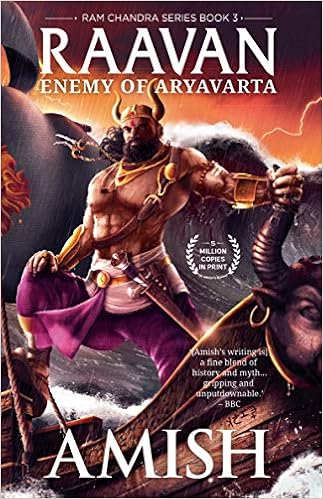
Raavan: Enemy of Aryavarta by Amish Tripathi (Book Review: 4.5*/5) !!!


19th Book of 2020!

It is such a wonderful feeling when you finish a book by your favorite author and also end up finding the book as one of his best works. I am just done reading “Raavan: Enemy of Aryavarta” – the latest i.e. 3rd book written in the Ram Chandra series by Amish Tripathi. The first two books in this series were based on the characters of Ram and Sita respectively which I have already reviewed. I had found Ram to be engrossing as Amish had redefined the story in his version but I wasn’t much impressed with Sita due to the repetitiveness in respect to Part 1. But talking about the latest book in the series which is based on Raavan, I must say that this is the best book among the three and something which is now making me look forward to the 4th and 5th book in this series curiously.

This book is also of almost the same number of pages as Ram and Sita but Amish’s writing in this one is what he is known for- great incidents, retelling of epics in his own way, giving religious insights, acknowledging the facts of Vedas, sharing Sanskrit shlokas and mantras in between, deciphering the philosophical aspect out of the scenes etc. Even when the book is of about 370+ pages but it never bores you with the way narration has been done with regular time-jumps to ensure only the special events from Raavan’s life are given big coverages. The description of events, aesthetic values in scenes and characterizations along with their correlation is done in a crisped manner which makes you imagine so much throughout that after finishing, you’ll feel you have just done watching something on screen. The action-packed scenes are just too good and I must say it is the USP of this book.

Raavan as a character has always been misunderstood by us who are aware about Ramayan but this book makes him so known to us but still kept unknown. Yes – that’s the way the story and character has been presented to us. Sometimes, you’ll find him genuine or barbaric or emotional or pitiful or justifying or non-dharmic or you might love him at times and detest otherwise. Raavan’s characterization by the author makes this book a landmark in Indian writing. Similarly, Kumbhakarna’s portrayal is something which wins your heart in each and every chapter.

Some points that I would like to mention which impressed me are as follows: - the importance of “108” number in India in the initial chapters itself which makes you excited to know many such stuffs further in the book. The whole description of Vaidyanath temple celebration made me feel the same ecstasy as Raavan. Recently, when I started getting involved in religious activities, I always wanted to understand why Lord Vishnu’s idol is made in black with such big eyes which is very well explained by Amish in a sequence of Jagannath temple. A scene where Raavan makes a little girl kill her father is speechless- I don’t know how to explain the impact of that scene on me as a reader. There’s one poetry that’s mentioned which has been written on the relationship of Sun and Earth – it’s so beautiful that I don’t even find such poetries in the Poetry collection books by the new-age authors. Raavan’s emotions for Vedavati and that whole big section which covers the major segment of this book is very beautiful- little Bollywood-ish but it keeps you glued. And talking about the climax of the book- IMPACTFUL! It makes you excited to read the further part eagerly.

Now talking about the drawbacks of the book:- Well, there is not much I could find out but I must say that the book has few scenes which are very violent. Hence, some people who can’t take it might feel uneasy while reading it. Secondly, not all characters are given equal weightage like Raavan and Kumbhakarna which makes the other characters almost negligible in this story. But this has also been a good point about this book that like every book written based on mythology and epics, this one doesn’t have too many characters to confuse the readers. Thirdly, I felt that the story is written in a manner which sounds quite modern whereas I feel that author should keep the aesthetics of the ancient India more alive while writing so that it keeps us connected with our roots – It shall be another benefit of reading such books.

Overall, this is one of the best works of Amish Tripathi for sure. I give this book 4.5 stars out of 5 undoubtedly. Please do read it to experience an impactful story about Raavan – the biggest villain we ever had.

<iframe style="width:120px;height:240px;" marginwidth="0" marginheight="0" scrolling="no" frameborder="0" src="//ws-in.amazon-adsystem.com/widgets/q?ServiceVersion=20070822&OneJS=1&Operation=GetAdHtml&MarketPlace=IN&source=ss&ref=as_ss_li_til&ad_type=product_link&tracking_id=a07e2-21&language=en_IN&marketplace=amazon&region=IN&placement=9388754085&asins=9388754085&linkId=db4f62b71c7c209ee328baca69c9bcb4&show_border=true&link_opens_in_new_window=true"></iframe>

Thanks.

WRITING BUDDHA 


Thursday, 11 June 2020

"Index Investing" by Abhishek Kumar (Book Review: 3.75*/5) !!!


18th Book of 2020!

One thing that I have realized the most while talking with my friends during this lockdown phase is – people have started believing that earning money is comparatively easy than saving it as everyone understood the importance of having money in their accounts during such times when salaries are being cut, not being given at some places, employees being laid off etc. And it becomes very important for people to understand how to multiply their saved money in order to reap benefits of their hard-saved money also. Abhishek Kumar’s book titled “Index Investing” is an effort to help us understand how to approach stock markets and putting our money in that direction with safety. The book also has the tagline which says "A Low-cost, low-risk strategy to investment success".

After completing the book, I realized that I had reviewed Abhishek’s 2nd book exactly a year back named “Master your Money, Master your Life” which was an excellent read which taught me some great tips on saving money. This book is just next level to it where it talks about what to do with the hard-saved money. The writing style of Abhishek Kumar is really very intriguing and it keeps you hooked through the philosophies, suggestions and ideologies he endorses. Even at points where you feel that author is being too aggressive or opinionated, you still go along with him rather than disliking him.

This book is divided into four different sections: 1. The Theory of Investing 2. The Psychology of Investing 3. The Business of Investing and 4. The Solution. The chapter names are very interesting and the way author begins each chapter taking us slowly by holding our finger towards the topic and then dives deep into it gradually makes it very easy for you to cope up with this domain. Stock Market and Financial terms are never easy for a layman to understand but Abhishek has ensured that we understand as much as possible – though at few places I felt that author could have given us little more understanding of few terms.

The best part is that author doesn’t discuss only the technical aspect of investing but also about the psychology and attitude that each one of us have in this ecosystem- the Investors, the agents, the stock broker, financial advisor, broking firms, media etc. Author tells us how no one can predict the future of any stock or shares available in the market and makes us aware about the different kinds of tactics that these people play with investors to fool and extract money out of them. Author also discusses how we end up paying more in form of many charges that we never understand and how major chunk of our returns are not credited directly to us- but goes to these people who invest on our behalf.

Lastly, author discusses how we should be doing all the stuff towards investing in stock market all by ourselves by intelligently investing in Index funds. Author shares with us many pros of the same along with the quotes by famous people in the field on Index Investing. I liked how author opens our eyes regarding not to think of becoming rich through this medium of money multiplication but ensure that we are only ahead of the inflation rate always. This is something that shall stay with me for long.

Talking about the drawbacks now, as I said even in the review of author’s 2nd book, author takes quite a long time in providing his final solution. It can be better if author keeps on giving the Pros of his suggestion over what is happening wrong elsewhere rather than listing down all the wrongs first and lastly mentioning about the solution by the time which reader becomes all negative about the topic as the book carries only the criticism. Secondly, the chapter on Solution is so short that it could have been a blog or a Linkedin article. I wish author could have given examples, graphs, diagrams etc. to make his readers understand the concept and its affect more rather than being confident that the readers shall take up the solutions without any doubts. Also, I wished author suggested few Mobile applications etc. which can help us in Index investing and ways to understand that on the name of it, we are not being made to invest in something else.

Overall this book is informative and shall help you discover a lot of things in both the cases – if you are already an investor or thinking to be one. I give this book 3.75* out of 5. Recommended for young generation who have started earning.

<iframe style="width:120px;height:240px;" marginwidth="0" marginheight="0" scrolling="no" frameborder="0" src="//ws-in.amazon-adsystem.com/widgets/q?ServiceVersion=20070822&OneJS=1&Operation=GetAdHtml&MarketPlace=IN&source=ss&ref=as_ss_li_til&ad_type=product_link&tracking_id=a07e2-21&language=en_IN&marketplace=amazon&region=IN&placement=B08661S9MZ&asins=B08661S9MZ&linkId=1a94bc82055ecb82332c142e60544b8c&show_border=true&link_opens_in_new_window=true"></iframe>

Thanks.

WRITING BUDDHA 


Sunday, 7 June 2020

"Satya : Tumhara saath hi shashvath hai” by Satyendra Singh “Apurna (Book Review: 3*/5) !!!

17th Book of 2020!


It is not every day that I pick up a Hindi book for my reading time but when I do, I ensure that the language of the book makes me feel mesmerized and fall in love with my mother tongue more. My Hindi is good but the slightly difficult vocabulary that I get to experience in Hindi fictional books is what I love rejoicing as it helps me develop my language further. This time I picked up the book named “Satya : ...Tumhara saath hi shashvath hai” written by Satyendra Singh “Apurna”. I read the e-book format of the same on Amazon Kindle which was around 250 pages and took me 10 hours to complete due to my less experience with reading Hindi books. 


The book is basically a love story between the two characters- Satya and Shobha based in the times of 1999 and 2000. The millennials might find the movement in the love story quite slow but as I have seen the love blooming in those phase, I can understand the old school format in which the book has been written. The narration of the book is nice as you shall feel that it is being spoken by the characters themselves even when the same is written in 3rd voice. The characterizations are done very neatly in the book which makes you understand the mental state of both the main protagonists of the book and also of the other characters who are involved in the story either as Satya’s or Shobha’s acquaintances.


The 1st half of the book is bit slow and I really enjoyed the book when it went into its 2nd half as it is when certain other layers of the story starts to get revealed and you understand the background and other struggles of the characters too. The values that both the characters possess makes them come together and fall apart several times but when they get to know each other’s condition it is then that they realize the power the other character had been displaying all these days.


There are several poems in the book as the character of Satya is someone who loves writing as per his situations which is also something that you shall cherish while reading. Similarly, another thing that I would like to appreciate author for is to exclude any kind of vulgar scene in the book just for adding intimacy. Author has written this book based on pure love and feelings without getting into any cheap thrills to sell it.


Now talking about the few drawbacks:- As I have already mentioned, I felt that the book is quite slow in the 1st half and even in 2nd half too- Author could have easily made this book 50-60 pages less by keeping the story crisp. Secondly, I felt that many segments sound repetitive as regularly, the characters keep on calling each other or meeting below the hostel or library – author could have made these segments sound unique and new by varying the locations and conversations. Lastly, I felt that author didn’t do justice with many of the characters who are spoken in the book such as Pooja- the lost love of Satya- there is no mention about that story at all. Similarly, other one or two characters disappear all of a sudden and are not mentioned later on.


Overall, if you love reading school/college romance and also want to try to read a book in Hindi, this book shall surely help you go through. I give this book 3 stars out of 5.

<iframe style="width:120px;height:240px;" marginwidth="0" marginheight="0" scrolling="no" frameborder="0" src="//ws-in.amazon-adsystem.com/widgets/q?ServiceVersion=20070822&OneJS=1&Operation=GetAdHtml&MarketPlace=IN&source=ss&ref=as_ss_li_til&ad_type=product_link&tracking_id=a07e2-21&language=en_IN&marketplace=amazon&region=IN&placement=B084MKW1RJ&asins=B084MKW1RJ&linkId=b60c3053d10f7f2590391de08250032a&show_border=true&link_opens_in_new_window=true"></iframe>


Thanks.


WRITING BUDDHA 


Wednesday, 27 May 2020

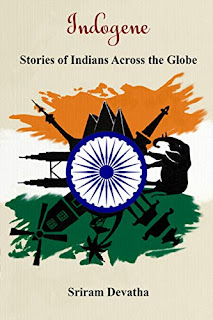
Indogene by Sriram Devatha (Book Review: 3.5*/5) !!!

16th Book of 2020!

Add caption
In the time of pandemic situations, getting any kind of delivery for paperback books was out of the question until recently hence I thought of going through a short e-book. I found this book named “Indogene” written by Sriram Devatha. This is his 2nd book. The book also has the tagline which says “Stories of Indians Across the Globe”. The book is a kind of an anthology which consists of 10 short stories – each speaking about an Indian-originated protagonist who is settled somewhere out of India and is still somehow tied to their roots.

This Kindle read is all about maximum 2 hours and you shall enjoy it as the content is altogether distinct – something that I have not read until recently. Author has tried his best to ensure that he covers the characters whom we generally don’t hear about. The book doesn’t talk about the usual NRIs that we read or watch in movies but about the personalities who are either going through some sort of dilemma, trauma or are still thinking about how they landed up where they are today being so grounded. The stories speak flavours that talks about communism, politics, religion, blind faith, spirituality, God, business, lust, values, legality, love etc.

The diversity in the story makes you go through each story one after another as every chapter presents you something new. The 1st story begins with a taxi driver noticing a small observation between a couple whereas the 2nd story about Nair is all about his post-life and view on communism. “Extradition” speaks about what a man goes through before knowing that he shall be in Breaking News within sometime whereas “Love’s the Idea” is all about how love is interpreted differently in different cultures. The latter chapter is also a good break from the seriousness of topics that were discussed in 1st three stories.

Another story is about how a Gujarati family does a great business in a country like Uganda is nicely portrayed with the concept on regionalism whereas “Sanctum Sanctorum” is all about Vinayak’s spiritual and religion devotion which he himself starts questioning after what happens with his fellow devotees. One of the last chapters that I enjoyed reading was “#sinetronscandal” which was about how a cultured and traditional wife is expected to behave as per husband’s command in private and later she comes to know about his involvement in external affairs in which she becomes a key to save him from embarrassment.

How each story is vivid and unique is evident from the above descriptions. Now talking about the drawbacks of the book: - I believe author has chosen very difficult vocabulary in some of the chapters where it shall become difficult for people who must be picking this book for light-read. Similarly, I feel that author could have re-ordered the stories starting from the ones which are based on simpler concepts than the critical ones. It ends up giving a sense to the user that all the further stories are going to be on such complex issues only. Furthermore, I wished if author could have mentioned Indian culture little more deeply in every chapter – it would have been an eye-opener for every one of us reading this book regarding how we have forgotten or ignored most of our beautiful culture even when staying in India.

Overall, this is a light read if you are looking for an anthology. I give this book 3.5 stars out of 5.

<iframe style="width:120px;height:240px;" marginwidth="0" marginheight="0" scrolling="no" frameborder="0" src="//ws-in.amazon-adsystem.com/widgets/q?ServiceVersion=20070822&OneJS=1&Operation=GetAdHtml&MarketPlace=IN&source=ss&ref=as_ss_li_til&ad_type=product_link&tracking_id=a07e2-21&language=en_IN&marketplace=amazon&region=IN&placement=B087QPLC93&asins=B087QPLC93&linkId=3c32a787805be402724823df4497a819&show_border=true&link_opens_in_new_window=true"></iframe>

Thanks.

WRITING BUDDHA  

Monday, 4 May 2020

Neha Mehrotra: "I made peace with myself about my marital failure and still found strength to rise" (Interview)


I read Neha's book "How much is too much? : Divorce in India" during the lockdown phase and I was so moved about the subject of divorce and what women goes through during marriage and even during the process of divorce and post it that it made me ask her for an interview. She has given each and every answer as detailed as possible which shall help everyone going through this interview understand the complexity and seriousness of this topic. 


1.       Hi Neha, please do let us know how you landed up becoming a writer in the first place.
           My journey has been long and extremely difficult over last 2 decades. I realised I had so much to say and contribute, once I made peace with myself about my marital failure and still found strength to rise. I always wanted to tell my story, as I really felt it was a journey that tested every single semblance of my core being, so I started writing in 2016 but it was rather slow and painful. Also I was amazed to realise that marriage was supposed to just be a segment of one’s life but how impactful it really was in India. For the longest time, I felt my decision to leave and heal was highly stagnated due to the societal complications and had I not found the courage, I perhaps would not have survived this.

In 2018, I heard about demise of someone who was known to me, due to domestic violence & emotional trauma. She apparently committed suicide by jumping off her residence rooftop. Highly successful & independent, financially very well-off, extremely beautiful & a super strong woman - but she found jumping off a 4-storied building easier than taking a step towards separation or a divorce. Something about it shook me to reality that while I escaped a disastrous end, many might not. We women get to the edge and lose that belief that we can overcome bad marriages. We lose that hope that even if, things are not working out in our marriages/relationships, it is not the end of life. Often we don't know who to turn to for advice and for consolation that it would all be fine no matter how bad is the situation. We just need to look at this differently and find that courage to change our life’s course.
I decided to finish the book and touch some relevant topics, so even if I could save one life, it would serve its purpose. By stating my own experience, I am hoping to ease it out for those who fear the unexpected. I don't advocate divorces, I advocate choices that women can make and should.


2.       Please tell us something about your first book- “How much is too much? : Divorce in India”.
This book is a self-help guide to understand what to do when you feel stuck in a bad marriage or a relationship. This tells you about my personal experiences, mistakes made due to the inability to gauge my relationship and how I subsequently feared the consequences of initiating a separation/divorce once I realised that this wont bring me happiness ahead. The purpose of this book is to let women feel comforted by the thought that just incase they have similar situations but fear uncertainty, this was how my journey panned out. While it was painful and depressing initially, I did overcome it and it is possible to find happiness by everyone again. I would like all those women who feel hopelessness, despair and no reason to go on - to find solace  in the thought of re-starting their lives. The focus of the book is to highlight the social stigmas in our society, families influence & personal dilemmas and how it often becomes deterrent for seeking a step towards finding the lives we all deserve. Marital failure is a sheer regressive taboo and should not be given more importance than required. This book highly advocates the fact that a separation or a divorce is not a woman’s identity - it is just a mistake & life needs to continue!


3.       How easy or difficult was writing this book as it’s based on your own experiences?
It wasn't easy as there were lots of moments where I had to revisit and go back to relive the painful times. Most memories that were buried deep, had to be remembered and articulated rightly. Often I felt anger and deep pangs of pain which came from all that I had to revive in my head. Had to separate my own personal issues and be non-judgemental while explaining what was the purpose of this book with complete clarity. The story was largely mine but several other relationships were observed, so I could get a wider perspective on what a woman goes through in depth. I came to realise that despite varied reasons, the primary dilemma in most women’s head and subsequent societal stigma were largely similar. It was not a great feeling to realise that, having experienced it first-hand. But the satisfaction I feel now, knowing I survived it all and perhaps many others would also find their grounds, is amazing to say the least.


      4. How do you think will this book help the Indian women and girls?
Indian women & girls need to be vigilant about their own happiness more than ever before! They need to be a bit selfish and think about their own lives more practically now.  We need to talk about topics like these more often and educate our children about how to differentiate between bad and worse in relationships. Abuse, violence, trauma etc needs to be identified in time and our daughters should know that they should not loathing in self-pity & despair. Not make kids/family shame/financial instability an excuse instead not fear society by striving for self-esteem & respect.
The purpose of this book largely is to make countless young girls and women aware about my journey and few other of those observed around me. There are lots of mistakes I made, signs I ignored and learnings that I overlooked. Indian women need to understand that they are as important as the men in the relationship. There has to be undisputed equality on all matters for both the man & the woman. Our perspectives need to change now with changing times. These women need to know that should a reason arise, they have a choice that they can make and re-attempt getting their lives no matter the situation. There is NO reason to feel suffocated and live on like Indian women have been since centuries. Crudely put - no relationship or shame is worth your life & self-respect!


  5. How difficult was getting this book published as it has a topic which is quite impactful
It was pretty difficult as earlier I tried hard to go the conventional way of finding a publishing house that would accept my draft. I did approach many leading ones however all turned it down citing some or the other reason. Few didn't do self-help genre and others wanted me to turn it into some masala fiction but I wanted the narrative to remain as is and decided to self-publish this. I am glad it is impactful as someone has to question these relevant topics. Women are not the quieter sex, they just are ones with more endurance however, when the line is breached, we need to take matters in our own hands and go against these regressive stigmas. For the longest time, women stayed in bad marriages due to varied reasons  to prove that we could make relationships last no matter the price we paid, but I see no reason why this should continue ahead.


   6. Do you think that Marriage as an Institution shall survive in India after a decade or so?
It might survive in the eyes of the society but it already is dying in the minds of many. Most marriages feel like total pity, which have eroded the essence of monogamy  & commitments altogether. Wives don't know what their husbands are doing or thinking and men are oblivious to the real needs of their own partners. However, both continue putting best pretentious faces for the sake of the society, family and kids. It is rare to find real relationships now where both want to really make each other happy. Abuse is rampant as frustrations grow and both feel trapped. What is the point of all of this? Why cant one focus on being happy than on remaining married? As mentioned in my book, maybe an annual contract or larger acceptance to live-ins would be the turning curve ahead. Don't get me wrong, I love the idea of being married even now, but my point is it should work for you, else know it that you have a way out. There isn't any reason to end life or live a robotic life ahead.


  7. What is your view on Indian parents in terms of Marriage as many youngsters now doesn’t want to get married but get into the bond due to family pressure and later on, face consequences of the same?
There is an entire chapter dedicated to this unnecessary pressure in my book. Parents need to understand that this isn't the question of their upbringing, culture or how well they know their child. When one is cornered, even a saint would react, so why get into that forced situation? You have educated your child, bought him/her up with so much love & care, why push them into complications of a marriage which they have to drag life-long just because you want to see them ‘settled’? Let them be free to make their choices and mistakes. Be there for them but please don't live their lives for them. Guide them by all means but don't think you can decide if they can pull a relationship ahead all their lives.  If they can choose a wrong career, they can also make a mistake of choosing a wrong partner. If so, just support them but dont make such big deal about it that they fear their decisions. So, yes I am strongly against the idea.


  8. Tell us something about the work that you do as we found some great content on your Instagram page.
I am a destination wedding planner & stylist and run a company called Foreign Wedding Planners since last 12 years now. You can view my work on foreignweddingplanners.in on Instagram. My passion-turned-profession is a symbol of my strength and perseverance and I absolutely love it. It was the biggest reason which helped me regain my financial stability when I had to move out. Ironically I create happy memories for all those who want to celebrate love. Initially I was worried about my own doomed marital life, considering I was a wedding planner myself, but later I realised that there is a huge difference in marriages and weddings! While, I take care of the latter, the former is highly personal and subjective. To each his own.


  9. Tell us something about your next book?
Haven't planned ahead yet but do want to explore the complications which is faced between a couple. There are so many shades of grey that need to be understood and talked about which stems from centuries of conditioning for either sexes apart from the genetic compounding which at most times doesn't help. Basically, I want to write about the difference between a man and woman as individuals and then as ones who want to co-exist in an harmonious relationship. As of now in my head, this seems like an oxymoron for majority. :)


10. In the end, what is your message for Indian husbands and wives?
Look around you!
‘During this lockdown, domestic abuse in India has doubled.’- Outlook  (7th April 2020).
There is a reason for this! Stifling, suffocating relationships where couples hid behind mundane everyday routines & professional commitments suddenly vanished. Having long lost the love and respect for each other, they now find it difficult to live under the same roof and co-exist. This is a blatant proof that there are many families like yours and mine, who might appear happy on surface but internally the women are suffering miserably. They think they are being brave by enduring abuse but someday they would crumble. Their entire lives would pass by and they would never know what they could have opted for instead.
Marriage or a relationship is not only a celebration of a strong passion, love and desire that you first feel for each other. That is just the initial & less-lasting part. It is more of the understanding of the differences you share, the habits you dislike and all the reasons which you eventually realise and know you would not ideally want in your partners. It is about the emotions you then have to contribute keeping in mind that let the reason be both your happiness rather than just your own. I have always advocated that the strength of a relationship isn't how you love each other but more of how you fight & makeup.
Both men and women should get into a commitment with an absolute clear understanding that equality in all aspects will be maintained at all times and both parties are entitled to mental, physical and emotional happiness. If not, end it gracefully rather than make it torturous and dragging the corpse. Mistakes happen but then either sort it out or move on - there is NO middle ground without repercussions and a possible vicious cycle.


Saturday, 18 April 2020

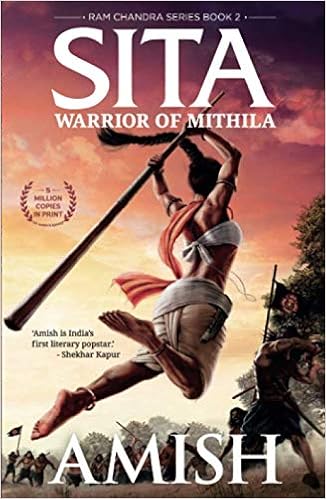
Sita: Warrior of Mithila by Amish Tripathi (Book Review: 2.5*/5) !!!


15th Book of 2020!


Well, so as I didn’t have Work From Home access earlier, I thought of completing Amish Tripathi’s Ram Chandra series peacefully by reading all three books written till date but unfortunately just after completing the first book itself, I got the access and since then life has been terrible. Somehow, I have managed to complete the second book in the series named “Sita: Warrior of Mithila” and got the chance to draft this review after a week of completing it. Tough days working from home!

Amish Tripathi has become the king of this genre where mythology is being fictionalized through the author’s imagination and creativity. Hence, the expectation from the author is very high considering that now there are many authors writing in this segment. Unfortunately, the charm of Amish which was displayed in Shiva Trilogy can’t be seen in at least the first two books of Ram Chandra series. And mostly, I am very disappointed with this book- “Sita: Warrior of Mithila”.

Amish has mentioned in the beginning regarding how he is using the hyperlink concept while writing the first three books in this series where the story of three characters- Ram, Sita and Raavan are narrated parallelly and from 4th book onwards, the story shall take forward inter-linking all of them together post Sita haran scene. Reading Ram was still a nice experience considering the detailing and new aspect of story-telling of Ramayan in Amish’s version as everything was fresh. But with Sita, the problem is that Sita, herself, is nicely introduced in the 1st book itself, even her friends, her acquaintances, her land- Mithila- everything is mentioned. This book offers no new insight at all.

More than 70% of the book is repetitive as all of it is already been covered in Part 1. Even about Sita, we don’t get to know anything new even after this book is meant to get deep into her character. But more than her, the law and different aspect of morality is discussed but very less about Sita. Also, somewhere author was trying to discuss Ram as less as possible as the book on him is already out but that makes you feel that your favorite character and the Hero of Ramayan is being ignored and avoided. If you want to read this series, I can very confidently say that you can skip the Book 2 of the Ram Chandra series.

I hope the 3rd book on Raavan shall be something different as he has not been discussed much in the first two books and his journey up till Sita haran is in different world altogether. I am really looking forward to finding the Amish Tripathi I know again. I give this book 2.5* out of 5, unfortunately. At least, the book could have been summed up in less than 250 pages, it would have been better for readers.

<iframe style="width:120px;height:240px;" marginwidth="0" marginheight="0" scrolling="no" frameborder="0" src="//ws-in.amazon-adsystem.com/widgets/q?ServiceVersion=20070822&OneJS=1&Operation=GetAdHtml&MarketPlace=IN&source=ss&ref=as_ss_li_til&ad_type=product_link&tracking_id=a07e2-21&language=en_IN&marketplace=amazon&region=IN&placement=9386224585&asins=9386224585&linkId=6a32d8762f598a38d25f5539d8c9fc89&show_border=true&link_opens_in_new_window=true"></iframe>

Thanks.

WRITING BUDDHA 


Sunday, 5 April 2020

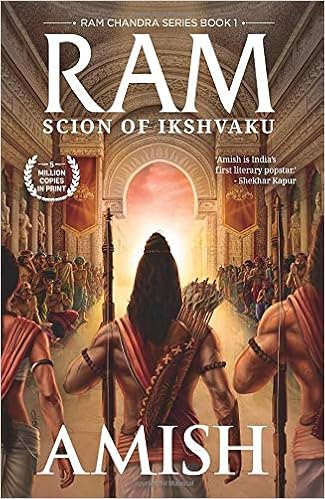
Ram - Scion of Ikshvaku by Amish Tripathi (Book Review: 3.75*/5) !!!


14th Book of 2020!


One of the first good news that excited people during the phase of lockdown was the announcement of re-telecast of Ramayan series on DD National. As I have already watched the series with great concentration in my childhood, I remember 90% of it and hence I thought rather than watching the same, it is a great time for me to read the three books written by Mr. Amish Tripathi in the Ram Chandra Series- there are more books to come in this series. The first book on Ram came in the year 2015 with the title “Scion of Ikshvaku”. I had not read it until now because I wanted to read when all the books are out as my memory is very weak and I have to re-read all the books once a new book in a series releases. But finally, it took me 3 days and I have completed the book.

Amish is the man who changed the whole literary scenario when he came up with Shiva Trilogy and taught all- publishers, writers and readers that a book based on mythology with a writer’s own version can do well even with the new generation. Post that there have been many books released by many young authors who wrote on the same topic which made it easier for me to analyse if Amish Tripathi has gone a level up with his new series.

Scion of Ikshvaku is the story based on Ramayan - the epic and this book majorly focuses on Ram and how he is a blamed prince and then goes on to become a leader people loved in his kingdom and then a law-abiding citizen who goes on for 14 years of exile just because he believed that something he did to protect citizens wasn’t the right approach. Author has taken a lot of liberty here and the kind of modifications done to the originality of Ramayan is surprising and shocking as well. Few things are surely going to make you smile and curious but few modifications surely disappoint you. The best part about the narration is that Amish has not boosted the speed of the book to make it sound fast-paced and action-oriented but kept it very light and simple. The narration goes very slowly for the readers to consume it with the same speed.

The characterizations are superb and not many characters are introduced just for the sake of making the story complex. Even those are mentioned in the start of the book which makes it easy for you to refer while reading. There are few characters whom I didn’t know about such as Manthara’s daughter- Roshni which has been introduced in the book which comes as an exciting element. Also, author knows how to make readers emotional as few scenes really makes you feel lump in your throat such as the scene when Ram first feels love for Sita, another where he ties sacred thread given by Sita etc. Another observation I had is that Amish doesn’t add “a” in the end of the character’s name and keep it as per our Indian tradition such as Ram (and not “Rama”), Lakshman (and not “Lakshmana”) etc.

Author has made great efforts in trying to make the story sound as contemporary as possible due to which there are references of Nirbhaya’s gangrape, how law is necessary for a region etc. It works sometimes whereas it doesn’t work at some places. You will also find references of Shiva trilogy and Mahabharata in this book. Amish has embedded a lot of his imagination and interpretation and therefore, if one needs to know the real Ramayana, this book is not the right one to pick up. Hence, I would always call this series as Amish’s Ramayan set for 21st century.

Now talking about the drawbacks- I have already mentioned few loopholes above. Secondly, I felt that very less part of Ramayan has been covered even after 360 pages of story. This is definitely slow. Some originalities of the Ramayan are the base of it which I believe shouldn’t be touched at all- rest can be played with. There are very few philosophies discussed in this book whereas I was expecting more of them due to my impression of Shiva trilogy- another problem is - whatever discussed is repeated too often.

Overall, this is definitely One-time read which you shall love exploring when you wish to read something very light and even-paced. Amish Tripathi is an example for the new writers to understand balance of how much detailing and description needs to be made of any situation, character, scenario or nature. I give this book 3.75* out of 5.

<iframe style="width:120px;height:240px;" marginwidth="0" marginheight="0" scrolling="no" frameborder="0" src="//ws-in.amazon-adsystem.com/widgets/q?ServiceVersion=20070822&OneJS=1&Operation=GetAdHtml&MarketPlace=IN&source=ss&ref=as_ss_li_til&ad_type=product_link&tracking_id=a07e2-21&language=en_IN&marketplace=amazon&region=IN&placement=9385152149&asins=9385152149&linkId=67734b4cc76cf1d84188d5738ecbbe23&show_border=true&link_opens_in_new_window=true"></iframe>

Thanks.

WRITING BUDDHA